In a place where the air conditioner runs half the year, your roof is either working with your AC or against it. Energy efficient roofs, often called cool roofs, reflect sunlight and shed heat instead of soaking it into your attic, and in Arizona that translates directly into lower summer bills. Here are the roofing types that do it best and how to upgrade the roof you already have.
Key takeaways
- Cool roofs reflect solar energy and emit absorbed heat, keeping the attic and the house cooler without any extra installation complexity.
- The top performers for Arizona are tile, cool asphalt shingles and coated foam, each with a different budget and look.
- You don't always need a new roof: reflective coatings, better insulation and ventilation upgrades improve the roof you have.
Understanding energy-efficient roofs
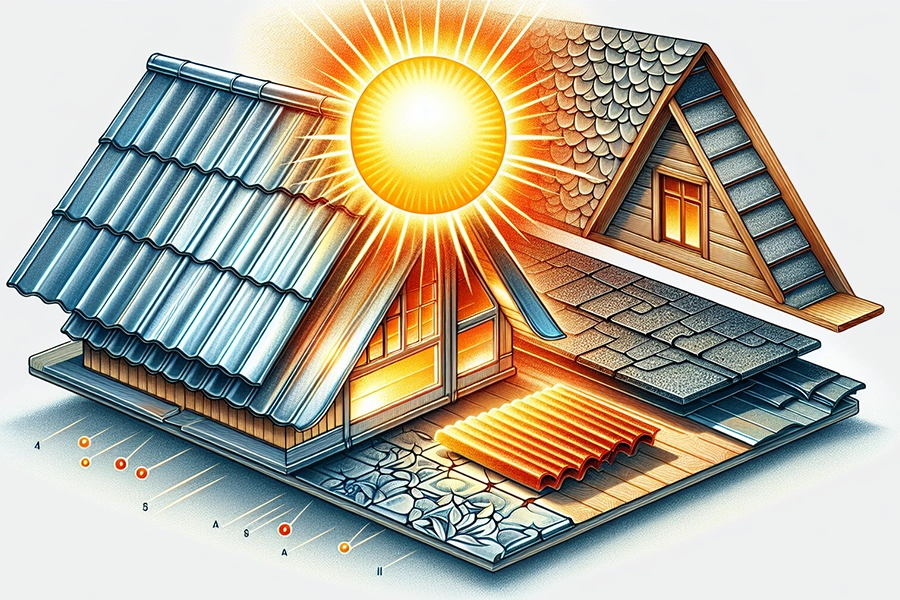
A roof's energy performance comes down to three things: the material, the color, and any coatings on top, plus how well air moves underneath it. A dark roof in Phoenix can run far hotter than the air around it and radiates that heat into your attic all evening. A reflective one bounces most of that energy back where it came from.
Solar reflectance and emissivity
The industry measures this with the Solar Reflectance Index (SRI), which combines how much sunlight a roof reflects with how well it releases the heat it does absorb. Higher SRI means a cooler roof surface, a cooler attic, and less work for your air conditioner. When comparing materials, it's a fair spec to ask about.
Importance of proper ventilation
Reflectivity gets the attention, but ventilation does the quiet work. A properly vented attic lets hot air escape and cooler air replace it, which protects the roofing materials from cooking in their own heat and keeps the ceiling below livable. An efficient roof surface over a sealed, unvented attic wastes half its potential.
Top energy efficient roofing materials
Tile roofing
Tile works differently: thermal mass. Tiles absorb heat slowly through the day and release it after sundown, smoothing out the temperature swings your attic sees, and the air gap under each tile acts as built-in insulation. Light colors and reflective treatments push tile's performance further. There's a reason it's the default roof in East Valley subdivisions.
Cool asphalt shingles
If shingles fit the budget, cool shingles are the smart pick. Their granules are engineered to reflect more sunlight than standard shingles, in the same colors, at a modest premium. They're the easiest efficiency upgrade for anyone already planning a shingle roof.
Foam roofing
For flat roofs, coated spray foam is the efficiency standout: it insulates at roughly R-6.5 per inch and wears a reflective coating on top, attacking the heat problem from both directions. It's most of the reason foam dominates the Valley's flat-roof market. (Green roofs get mentioned in every national article on this topic; in the desert, foam is the practical answer.)
Enhancing existing roofs for better energy efficiency
Not ready for a new roof? Three upgrades work on the one you have.
Adding reflective coatings
Reflective elastomeric coatings act like sunscreen for flat and low-slope roofs, dropping surface temperatures substantially. They're standard practice on foam and flat roofs here; they're generally not suited to shingle roofs, so match the coating to the material.
Improving insulation
Attic insulation and radiant barriers slow the heat that does get through the roof surface. Modern underlayment options with radiant barrier properties are a worthwhile upgrade whenever a tile roof gets re-felted, since the labor is already paid for.
Installing solar panels
Solar panels generate power and shade the roof beneath them at the same time. If you're considering panels, the sequencing matters a lot: read my post on whether to replace your roof before installing solar, because removing panels to fix a roof later is expensive.
Want to know what your roof is costing you in cooling?
I'll inspect your roof and attic for free and tell you which upgrades would actually pay off for your house, and which ones wouldn't. Honest answers either way.
Call or text Andy: 480-363-2898Financial and environmental benefits
Lowering energy bills
A cooler roof means the AC cycles less during the brutal months, and in a climate where cooling dominates the utility bill, that's where the savings live. The exact number depends on your current roof, attic and insulation, which is why I'd rather look at your specific house than quote you an internet statistic.
Reducing environmental impact
Less air conditioning means less electricity and fewer emissions, and reflective roofs also ease the urban heat island effect that keeps Phoenix nights hot. Your roof choice is a small climate decision that repeats every day for decades.
Choosing the right roof design for energy efficiency
Color and slope considerations
Color is the cheapest efficiency decision you'll make: lighter roofs reflect, darker roofs absorb. In Arizona, light wins. Slope affects sun exposure and ventilation patterns, which feeds into material choice.
Flat vs. pitched roofs
Pitched roofs ventilate more naturally, while flat roofs, which Arizona has in abundance, achieve excellent efficiency through foam and reflective coatings. Neither shape is stuck being inefficient; they just get there differently.
Finding a reliable energy-efficient roofing contractor
Efficiency claims are easy to make and hard to verify from a sales brochure, so vet the contractor the same way you'd vet any roofer: verify the Arizona ROC license (mine is #325377), read reviews that go back years, and ask to see comparable local work. A contractor who can explain SRI, ventilation and coating choices in plain English, and tell you when an upgrade isn't worth it for your house, is the one to keep.
Summary
An energy-efficient roof is one of the few home upgrades that pays you back every single summer. Tile, cool shingles and coated foam all get there by different routes, and coatings, insulation and ventilation can upgrade the roof you already own. The right choice depends on your roof's shape, your budget and how long you're staying, and figuring that out starts with a free look at what's up there now.
Frequently asked questions
What are the top materials for energy-efficient roofing?
Tile, cool asphalt shingles, and coated foam for flat roofs. Each suits a different budget and roof shape.
Can I make my existing roof more energy efficient without replacing it?
Yes. Reflective coatings (on compatible roofs), added attic insulation, radiant barriers and improved ventilation all help without a tear-off.
Does the color of my roof affect its energy efficiency?
Significantly. Lighter colors reflect more sunlight and keep the roof surface cooler, which matters enormously in the desert.
How much can I save with an energy-efficient roof?
It depends on your current roof, insulation and attic ventilation, so be skeptical of one-size-fits-all percentages. A free inspection gives you an answer based on your actual house instead of an average.
How do I find a reliable contractor for an energy-efficient roof?
Verify licensing with the Arizona ROC, check long-term local reviews, and ask pointed questions about materials and ventilation. Clear, specific answers are the credential that matters.