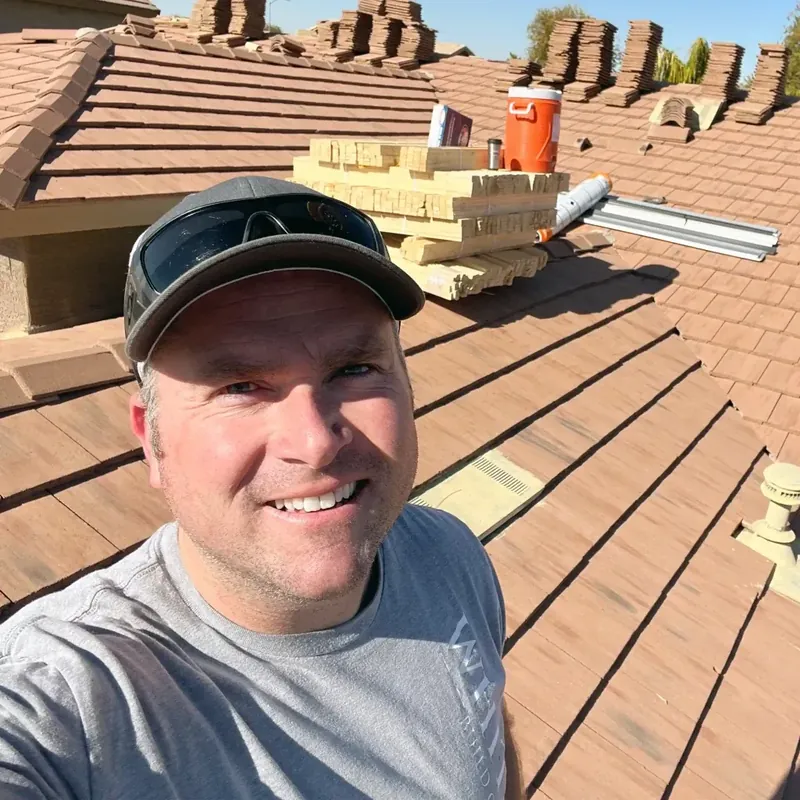
Here's the thing most Arizona homeowners don't know until I'm standing on their roof: your tiles aren't the waterproof layer. The underlayment beneath them is. Tiles shed most of the water and block the sun, but when a tile roof leaks, it's almost always the underlayment that failed. So choosing the right one matters more than choosing the tile. This guide compares felt, synthetic, and self-adhering underlayments for our heat and monsoons, and tells you what I actually install. When the underlayment wears out, the fix is a tile underlayment replacement: same tiles, new waterproofing underneath.
Key takeaways
- Arizona's heat and monsoon winds demand a heavier-grade underlayment. This layer, not the tile, is what keeps water out of your house.
- You have three main options: felt (SBS-modified bitumen), synthetic, and self-adhering. Each trades cost against lifespan differently.
- Underlayment wears out long before tile does. Have it checked every three to five years, and expect to replace it once or twice in the life of the tiles.
Why Arizona is brutal on underlayment
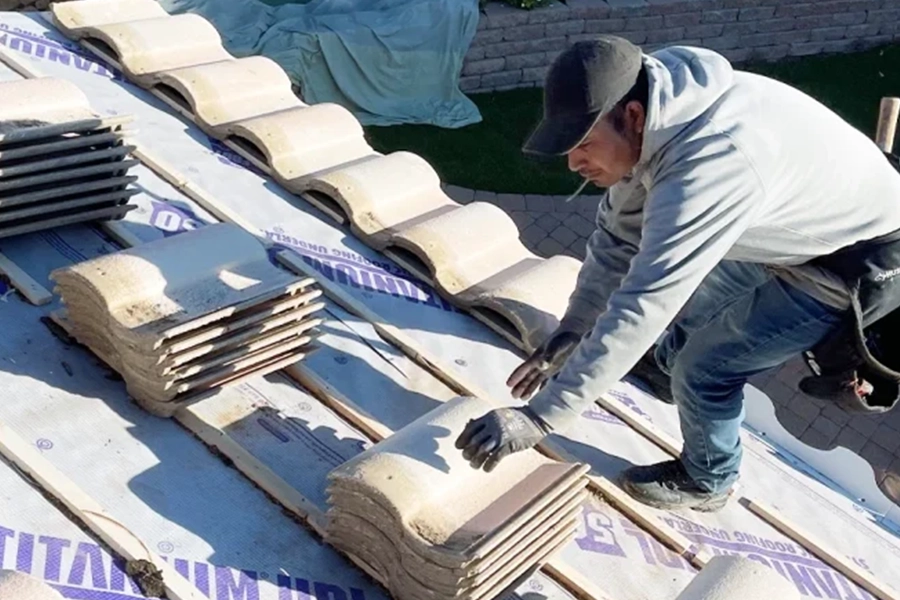
Underlayment on an Arizona roof lives a hard life. Summer attic-side temperatures bake it, daily expansion and contraction stress it, and monsoon storms drive rain sideways underneath the tiles. A product that lasts 30 years in a mild climate can be brittle here in 15. That's why the grade of underlayment matters more in the East Valley than almost anywhere else in the country.
The failure is invisible until it isn't. From the street the tiles look fine, while underneath, the underlayment is cracking and the first hard storm finds its way to your drywall. That's why I tell homeowners with roofs past the 15 year mark to get the underlayment looked at even if nothing is leaking yet.
Why tile is the East Valley standard
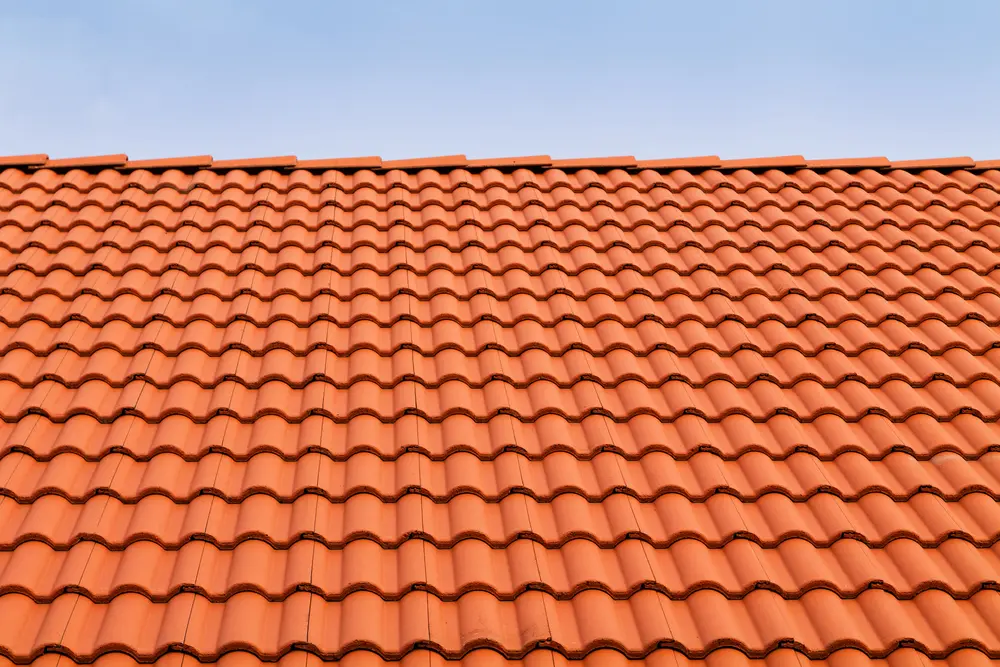
Tile earns its place on Arizona homes. It handles heat far better than asphalt shingles, doesn't rot, doesn't feed insects, and the tiles themselves can outlast the house. Clay and concrete tile also fit the Southwestern look and can help resale value. The whole system works, as long as the layer underneath is doing its job.
The three types of tile roof underlayment
1. Asphalt-saturated felt (SBS-modified bitumen)
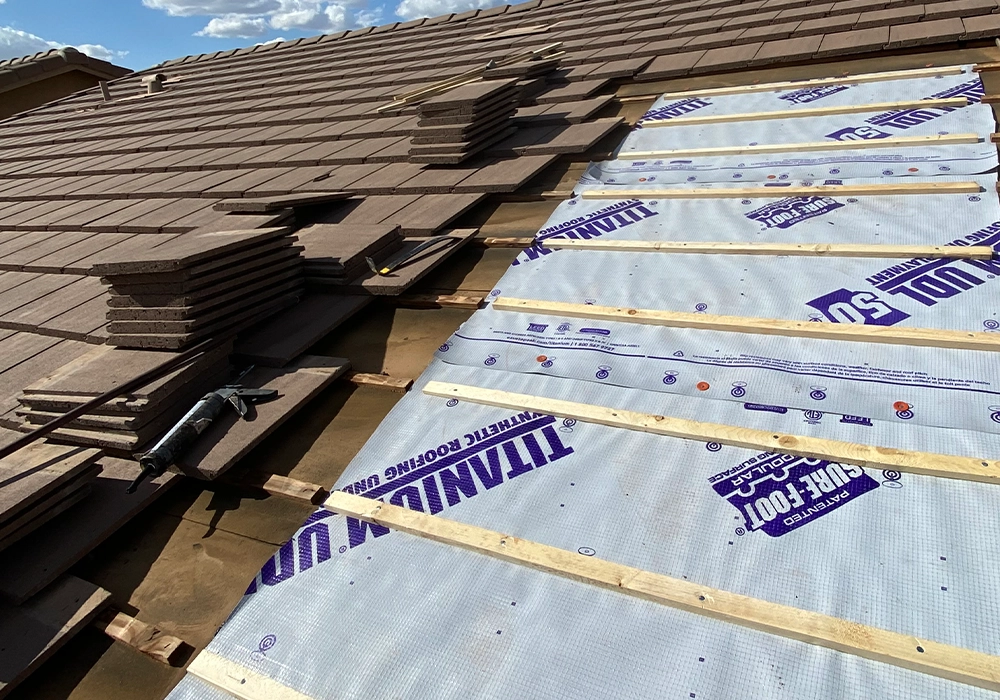
Felt, or "tar paper," is the traditional choice and still a legitimate one when you use the right grade. For Arizona tile roofs that means a heavy 40 pound SBS-modified product, not the thin 15 pound paper that goes under shingles elsewhere. Quality modified felts like Eagle True 2-40 or MB Technology Layfast TU43 hold up well under tile because the tile itself shields them from direct UV.
The trade-off: standard felt degrades faster in extreme heat, so cheap felt is the most common thing I find under leaking tile roofs. If a bid seems too good, ask exactly which underlayment is being installed. That one line item is usually the difference.
2. Synthetic underlayment
Synthetics are woven from polypropylene or polyethylene. They're lighter, stronger against tearing, and more UV-resistant than felt, which makes them nice to install correctly in our wind. Their weakness is sealing around fasteners: synthetics don't self-seal around nails the way rubberized products do, so installation quality matters even more. Done right, a good synthetic is a solid mid-range choice for Arizona tile.
3. Self-adhering (peel-and-stick) underlayment
This is the premium option: a rubberized asphalt membrane that sticks directly to the deck and seals itself around every fastener. It's the most watertight of the three and handles heat well, with service life in the 25 to 35 year range under tile. It costs more upfront, but on a roof you plan to keep for decades, the math usually works out in its favor because you buy fewer roof underlayment replacement over the life of the tile.
Wondering what's under your tiles?
I'll pull a few tiles, look at the actual underlayment, and tell you honestly how much life it has left. The inspection is free and I do it personally.
Call or text Andy: 480-363-2898Comparing cost and lifespan
- Felt (heavy SBS-modified): lowest upfront cost. Roughly 12 to 20 years of service in our climate, longer with quality product and installation.
- Synthetic: moderate cost, longer expected life and better tear resistance, but depends heavily on correct fastening.
- Self-adhering SBS: highest upfront cost, longest life and best waterproofing. Often the cheapest option per year of service.
Labor is a bigger share of an underlayment job than material, since the tiles come off and go back on either way. That's exactly why I push homeowners toward the better membrane: upgrading the material adds a little to the bill, while doing the whole job twice as often doubles it.
What I recommend for East Valley tile roofs
Choose an underlayment rated for high heat, in the heaviest grade your budget allows, and treat the manufacturer's rating as a minimum, not a promise. For most Chandler and Gilbert tile roofs I quote a heavy SBS-modified felt as the solid baseline and a self-adhering membrane as the upgrade, and I'll tell you plainly which one makes sense for your roof and how long you plan to stay in the house.
Then have it inspected every three to five years. Underlayment problems caught early are repairs; caught late, they're drywall, insulation, and mold problems too.
Signs your tile roof underlayment is failing
- Water stains on ceilings or interior walls after storms
- Slipped, cracked, or missing tiles exposing black material underneath
- Debris and granule bits collecting in gutters and valleys
- Sagging or deteriorating fascia and eaves
- The roof is 15 to 20 years old and has never had the underlayment touched
Any of those is worth a look. Start with a free roof inspection before assuming the worst; sometimes it's a handful of tiles, not the whole membrane.
Choosing who installs it
Underlayment is where corner-cutting hides, because the evidence gets covered with tile the same day. Protect yourself with three checks: verify the contractor's ROC license (mine is ROC #325377, verify it here), get the exact underlayment product named in the bid, and ask who is physically doing the work. I'm on every White Leaf job myself, which is exactly why I work this way.
Common questions
How often should tile roof underlayment be replaced in Arizona?
Plan on every 15 to 25 years depending on the product. The tiles get reused; only the membrane is replaced. Details on the process are on my tile underlayment replacement page.
Is synthetic better than felt for tile roofs?
It's stronger and lighter, but it doesn't self-seal around fasteners. A heavy modified felt installed well beats a synthetic installed poorly. The installer matters as much as the material.
Can you replace underlayment on just part of a roof?
Yes. If one slope took the brunt of sun and storm exposure, a partial replacement is sometimes the honest recommendation. An inspection tells us whether that's your situation.