Free roof inspections in Chandler & Gilbert, done by the owner. Call or text 480-363-2898
Home / Tile Underlayment Replacement

The East Valley specialty · Owner-led · ROC #325377

Roof underlayment replacement for Arizona tile roofs

I'm Andy Johnson, owner of White Leaf Roofing. Here's the best-kept secret in East Valley roofing: your tiles are probably fine. It's the felt underneath that's failing. We lift your tiles, replace the underlayment, and relay your same tile, for far less than a full new roof.

Serving Chandler, Gilbert, Queen Creek, Sun Lakes, Gold Canyon and Mesa.

50+
Years your tiles can last
15-20
Years before felt fails
5.0 ★
Google · HomeAdvisor · Thumbtack

The Arizona tile roof problem

Tiles last 50 years. Felt doesn't.

Concrete and clay tile is the perfect Arizona roofing material. It shrugs off UV, handles monsoon rain, and often lasts 50 years or more. But tile isn't actually the waterproof layer of your roof. The real waterproofing is the underlayment, the felt membrane between the tiles and the wood deck, and in our heat it typically gives out at 15 to 20 years.

Summer after summer of heat cycling bakes the felt brittle. It cracks, tears and slides, and once that happens, monsoon water gets past the tiles and finds your decking, your insulation, and eventually your ceiling. From the street, the roof looks perfect the whole time.

Most of the East Valley was built in the 1990s and 2000s, which means entire neighborhoods in Chandler and Gilbert are sitting on original underlayment that's past its service life right now. It's the single most common problem I find on inspections.

If you are still working out what this layer even is, I wrote a plain guide to what roof underlayment is and why it matters in Arizona. This page is about the job itself: replacing it.

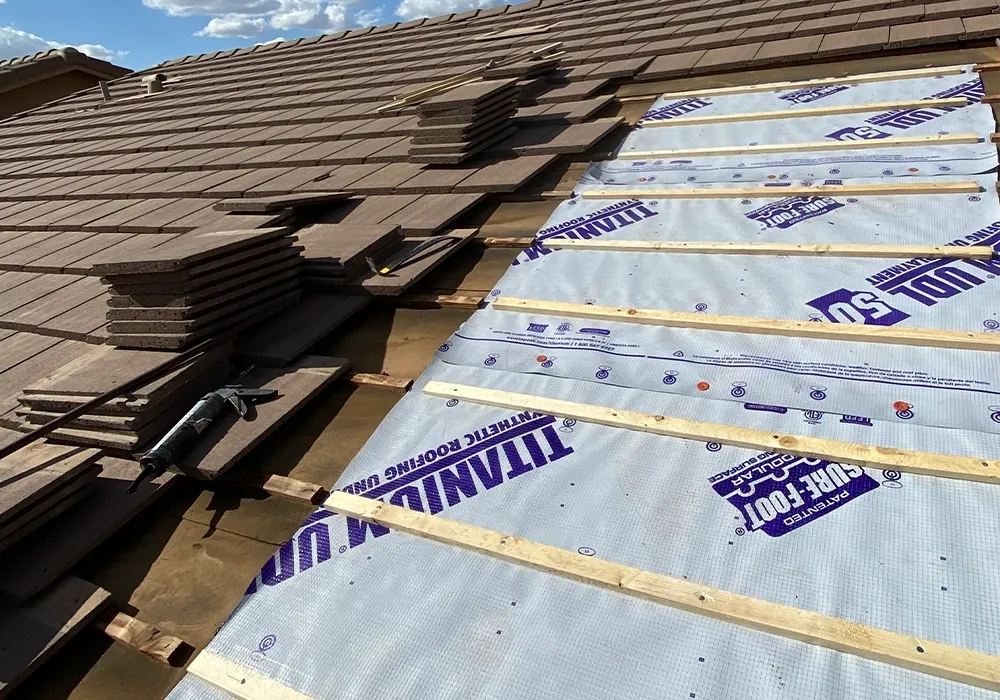
Tile roof with tiles lifted to expose failed underlayment on an East Valley home

How it works

Lift, re-felt, relay. Same tiles.

Free inspection

I walk the roof myself and check the underlayment condition directly. If it has years left, I'll say so and go home.

Lift the tiles

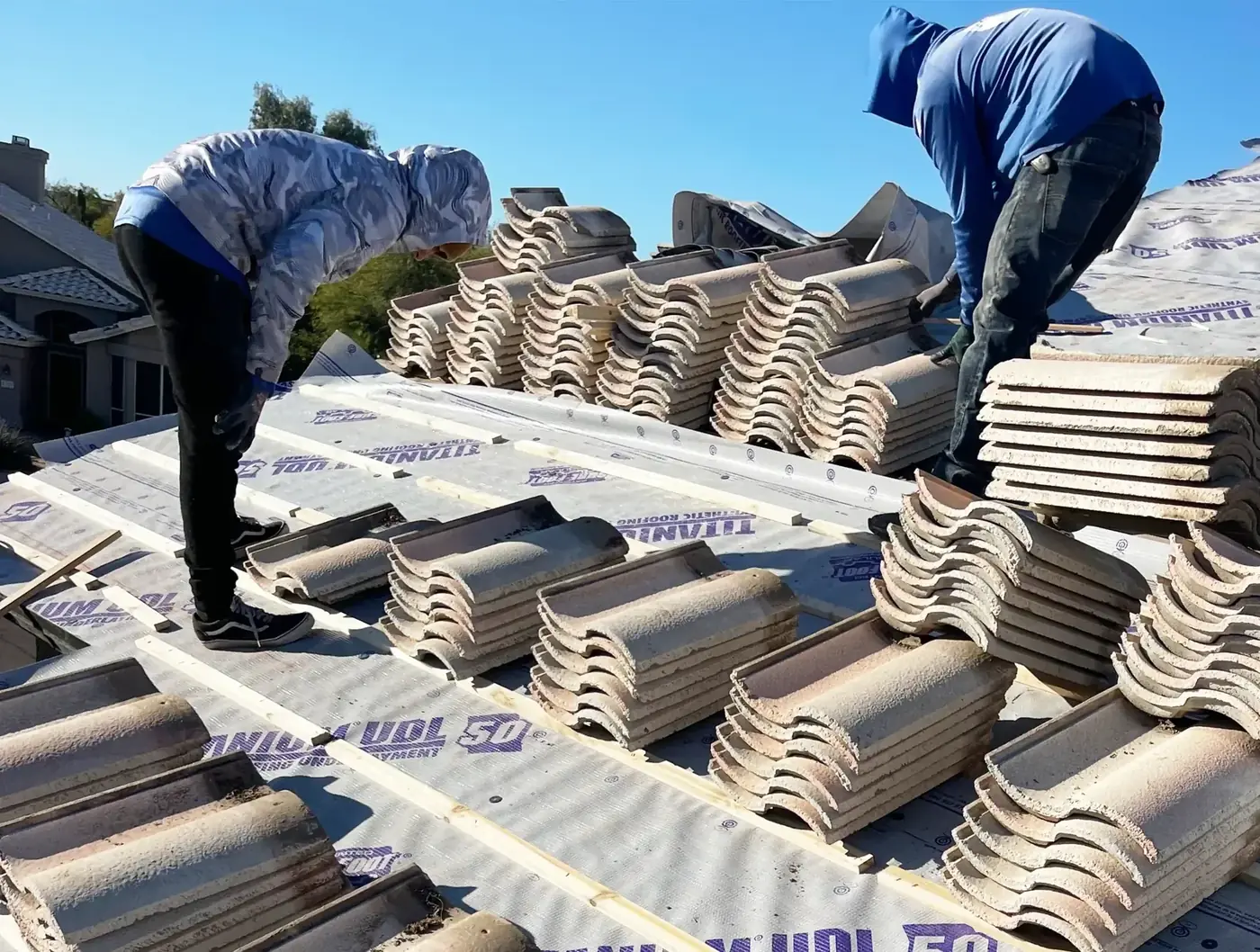
My crew carefully lifts and stacks your existing tiles. The tile you already paid for is the most expensive material up there, so we treat it that way.

Replace the underlayment

Old felt comes off, decking gets checked and repaired where needed, and the new underlayment you chose goes down.

Relay your tile

Your same tiles go back, cracked ones get swapped, and the roof looks exactly like it always has. New waterproofing, decades more life.

Why this beats a full replacement

Far less money, same result

A full roof replacement means paying for all-new tile plus everything underneath. Underlayment replacement keeps the expensive part, your tile, and replaces the part that actually failed. That's why it costs far less than a full new roof while solving the exact same problem: water getting into your house.

You also choose what goes under your tiles. I bring physical samples of several underlayment options to the estimate so you can compare them in your hands and pick the price and quality point that fits how long you plan to be in the house. Manufacturer warranties depend on the material you choose, and I'll show you the real documentation. If you want to study up first, I wrote a plain-language guide to the best underlayment for tile roofs in Arizona.

If the damage goes beyond the underlayment, I'll show you photos of exactly what I found and we'll talk honestly about a full replacement. For budgeting either way, see the Arizona roof cost guide.

White Leaf Roofing crew relaying tiles over new underlayment on a Chandler home

The timing question

When a re-felt is actually due

This is the question I get more than any other, and the honest answer is that roof age tells you most of it. Felt underlayment on an East Valley tile roof generally has 15 to 20 years in it. Not because it wears out from rain, we barely get any, but because it spends two decades baking. A west-facing slope with no shade gets there sooner than a north slope. Original builder-grade felt gets there sooner than anything I would put down today.

Roof age What I usually find under the tiles What I tell the homeowner
Under 10 years Felt still pliable, seams intact Nothing to do. If there is a leak on a roof this young, it is almost always flashing or a cracked tile, not the underlayment.
10 to 15 years Drying out, edges starting to curl Watch it. Take the free walk-around every couple of years so you see this coming instead of finding out during a monsoon.
15 to 20 years The failure window. Brittle felt, cracking at valleys and penetrations first This is when I start recommending a re-felt, and when planning it beats reacting to it. You pick the timing instead of the weather picking it for you.
20 to 25 years Felt tearing where the roof was walked, black grit in the gutters Overdue. Every monsoon from here is a coin flip, and water that gets in stops being an underlayment job and starts being a decking job.
25 years or more on original felt Felt effectively gone in places, wood often stained Replace it, and budget for some wood repair. I will show you photos of what I found before I quote a dollar of it.

Age is the starting point, not the verdict. The four things that actually move a roof up the list are water stains on a ceiling after monsoon rain, black grit and felt fragments washing into the gutters, tiles that have slipped out of line, and daylight visible from inside the attic. Any one of those and I would rather look at it now than in August.

And sometimes the answer is that you are fine. I told Roger Edwards his fifteen-year-old roof had about five years left, went home, and he has been sending me referrals ever since. There is no version of this where I sell you a re-felt you do not need yet.

Repair, re-felt, or replace

Which job you actually need

Roof underlayment replacement is one of three things I might recommend after walking your roof, and it is the middle one. Here is how I sort it, so you can see the logic before I am standing in your driveway.

What I find on the roof What it means What I recommend
One leak, felt sound everywhere else A local failure, usually flashing, a valley, or a cracked tile Targeted repair. Typical repairs run $500 to $3,500. Replacing a whole roof over one bad spot is the pitch I keep talking people out of. See roof repair.
Felt brittle across the whole roof, tiles in good shape The waterproof layer is at end of life, the expensive layer is not Roof underlayment replacement. Lift, re-felt, relay your same tile. This is the page you are on, and for most East Valley tile roofs it is the answer.
Felt gone, plus soft or stained decking underneath Water has been getting in for a while Re-felt plus wood repair. I photograph every board I replace, so you are not taking my word for the count.
Felt gone and heavy tile breakage Both layers are done, not just one I price the re-felt and a full replacement side by side and let you see which way the math falls.
Tile profile discontinued, many broken Sourcing matching tile is the real problem Usually full replacement. There is little point re-felting under tile I cannot source the next time one cracks.
A flat or low-slope section over an addition Different roof, different system That area needs foam or a coating, not felt. Plenty of houses here need both jobs, and I quote them separately.

What moves the price

There are four real drivers: the size and pitch of the roof, which underlayment you pick, how many tiles break during the lift, and what the wood looks like once the felt comes off. That last one is the only one nobody can price from the ground, which is why I will not quote a re-felt over the phone. I have written the whole breakdown out, driver by driver, in my guide to tile roof underlayment replacement cost in Arizona, including why I would not trust a per-square-foot number you found online.

The material choice is yours, not mine. I bring physical samples to the estimate so you can handle them and pick your own price and quality point, and the trade-offs are laid out in my guide to the best underlayment for tile roofs in Arizona.

Underlayment customers talking

They shopped around first

★★★★★

"Andy and crew did an excellent job with my roof underlayment replacement at a fair price. I got 12 estimates from various roofing companies before I decided on White Leaf. The crew showed up on time, worked hard, and cleaned up after they were done."

Lowell Luplow Underlayment replacement · 12 estimates
★★★★★

"He explained that our roof, being fifteen years old, seemed in pretty good shape and would need new underlayment in the next five years. We liked his honesty, professionalism and attention to detail."

Roger Edwards Told his roof was fine, for now
★★★★★

"He offered us several underlayment options, as well as samples for us to compare. I liked that I was able to choose the product and price point that suited our needs... he was here everyday."

Bill Durham 20-year-old roof replaced
5.0 on Google, HomeAdvisor and Thumbtack. 90% of our work comes from referrals.

Underlayment questions

What homeowners ask me

What is roof underlayment replacement?

It is the job of replacing the waterproof membrane underneath your tile, without replacing the tile. My crew lifts and stacks your existing tiles, strips the failed felt, repairs any bad decking, lays new underlayment, and relays your same tile. In the trade we call it a re-felt and relay. From the street the roof looks unchanged, and the layer that actually keeps water out of your house is brand new.

How much does tile roof underlayment replacement cost?

It depends on roof size, the underlayment you choose, and how many tiles need swapping, so every job gets a free individual bid. The headline is that reusing your existing tiles costs far less than a full roof replacement, because the most expensive material on the roof stays right where it is.

Why does underlayment fail when the tiles look fine?

Tiles often last 50 years or more here, but the felt beneath them typically gives out at 15 to 20 years. Arizona heat cycling bakes it brittle, and once it cracks, the tiles alone won't keep water out of your house.

Can you really reuse my existing tiles?

Usually, yes. If the tiles are in good shape we lift them carefully, replace the underlayment, swap any cracked tiles, and relay your same tile. The roof looks the way it always has, with brand new waterproofing underneath.

How often should roof underlayment be replaced in Arizona?

Plan on 15 to 20 years for felt on an East Valley tile roof. Sun exposure is what sets the pace, so a roof with no shade and a lot of west-facing slope lands at the short end of that. Tiles are not the clock. They often go 50 years or more, which is exactly why so many houses here need underlayment work while the roof still looks perfect.

Do I have to do the whole roof at once?

Not always. If one slope is failing and the rest genuinely has years left, I will say so and we can do that section. But felt on the same roof was installed on the same day and has been under the same sun, so partial work is usually a way of paying mobilization costs twice. I will tell you honestly which situation you are in.

Is underlayment replacement the same as a re-roof?

People use the words loosely, so it is worth pinning down. A re-felt and relay reuses your existing tile and replaces what is under it. A re-roof usually means new roofing material going on. Both are different from a full tear-off replacement. I walk through the differences on my roof replacement versus reroofing page.

Will my homeowners insurance pay for it?

Generally no, and I would rather you hear that from me before you file. Insurers cover sudden damage from a storm, not a layer that wore out on schedule. If a monsoon actually tore your roof up, that is a different conversation and I can help with the documentation, which I cover on my roof insurance claims page.

Which underlayment should I choose?

I bring physical samples of several options to the estimate so you can compare them side by side. Manufacturer warranties depend on the material you choose. My written guide to the best underlayment for Arizona tile roofs covers the trade-offs.

How do I know if my underlayment is failing?

Water stains after monsoon rain, felt debris in the gutters, and simple age. If your home was built in the 1990s or 2000s and still has original underlayment, it's in the failure window. A repair inspection settles it either way, free.

Is the inspection really free?

Yes. I walk the roof personally and tell you honestly whether the underlayment is failing or has years left. I told Roger Edwards his roof was good for several more years, and he sends me referrals to this day.

Free inspection · Keep your tiles · ROC #325377

Find out what's really under your tiles

Call or text me. I'll walk the roof myself, free, and tell you straight whether your underlayment is done or has years left in it.

White Leaf Roofing · 3210 S. Gilbert Rd Ste. 1, Chandler, AZ 85286