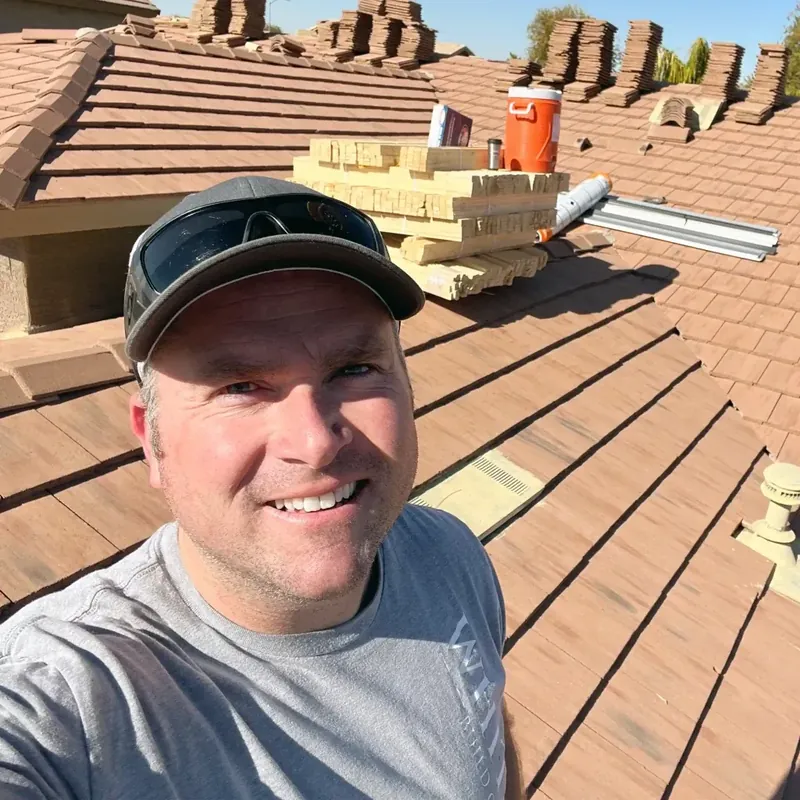
If you've started getting bids to re-felt your tile roof, you've probably noticed the numbers land all over the map, and nobody wants to explain why. I'll explain why. I do roof underlayment replacement across the East Valley week in and week out, and the cost of the job comes down to a handful of drivers you can understand in one read. I'm not going to throw made-up dollar figures at you, because any roofer quoting your roof without standing on it is guessing. What I can do is show you what moves the number up or down, so the bids you collect actually make sense. And every roof I look at gets a free individual bid, so you can have a real number instead of an internet estimate.
Key takeaways
- On Arizona tile roofs, the tiles usually outlive the felt underneath. The fix is a re-felt and relay: lift your tiles, replace the underlayment, relay the same tiles.
- The cost drivers are roof size and pitch, the underlayment grade you choose, the tile breakage allowance, and any wood repairs found once the tiles come up.
- A tile underlayment replacement costs far less than a full new roof, because the most expensive material up there, your tile, stays right where it is.
Why tiles outlive the felt
Concrete and clay tiles handle Arizona sun for 50 years or more. The felt underlayment beneath them is the actual waterproof layer, and our heat cycling typically bakes it brittle in 15 to 20 years. So most East Valley "roof failures" aren't tile failures at all. The tiles are fine. The waterproofing under them is done. That's why the honest fix here is usually a re-felt and relay rather than a full new roof, and it's why the cost question is really an underlayment question. If you want the deeper background, I've written a full post on what underlayment is and why it matters in Arizona.
What the job actually involves
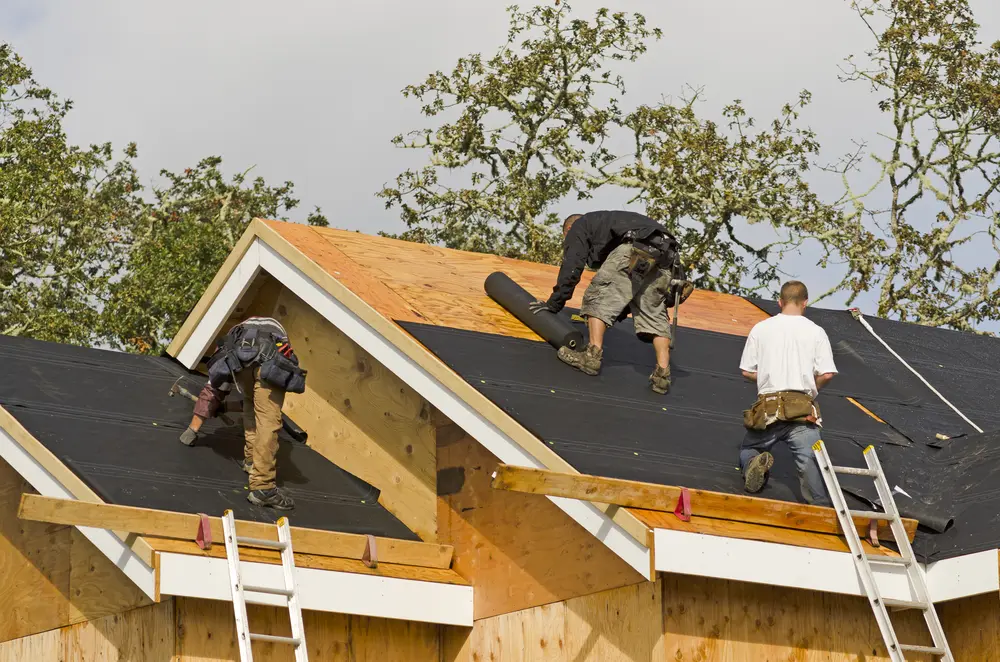
Understanding the work makes the pricing make sense. A re-felt and relay runs in four stages. First, my crew lifts and stacks your existing tiles carefully, because that tile is the most expensive material on the roof and we treat it that way. Second, the old felt comes off down to the wood deck. Third, the deck gets inspected, any damaged wood gets repaired, and the new underlayment you chose goes down. Fourth, your same tiles go back on, with cracked ones swapped for matches. The roof looks the way it always has. The waterproofing underneath is brand new. The full process is on my tile underlayment replacement page.
The four cost drivers
1. Roof size and pitch
The obvious one. More roof means more labor and more material. Pitch matters almost as much as size: a steep roof slows every stage of the work, from lifting tiles to loading material, and complicated rooflines with lots of valleys, hips, and penetrations take more flashing work and more time than a simple gable of the same square footage.
2. The underlayment grade you choose
This is the one you control. Felt, synthetic, and self-adhering underlayments sit at different price and lifespan points, and the grade you pick moves the total meaningfully. I bring physical samples of several options to the estimate so you can compare them in your hands and match the material to how long you plan to be in the house. My guide to the best underlayment for Arizona tile roofs walks through the trade-offs in plain language.
3. Tile breakage allowance
Some tiles crack during removal no matter how careful the crew is, and some were already cracked and hiding it. Every bid should include an allowance for replacement tiles. If your tile profile is still manufactured, matches are easy. If it's discontinued, sourcing salvage tile takes more effort and can add cost. A crew that's sloppy with your tiles turns a small allowance into a big one, which is a reason to ask any bidder how they handle lifting and stacking.
4. Wood repairs found underneath
Nobody knows the condition of the deck until the tiles and old felt come up. If the old underlayment failed a while ago, water has been reaching the wood, and rotted decking or fascia has to be repaired before new underlayment goes down. On most roofs I open up, the wood is in decent shape. When repairs are needed, they're usually isolated, and typical roof repairs at White Leaf run $500 to $3,500 depending on scope. The protection for you is a bid that states wood repair pricing up front, before anyone finds anything.
Want a real number for your roof?
Call or text me. I'll walk the roof myself, check the underlayment directly, and give you a free individual bid with the options priced out. If the felt has years left, I'll tell you that instead.
Call or text Andy: 480-363-2898Why per-square-foot quotes mislead
You'll find plenty of "underlayment cost per square foot in Arizona" numbers online, and I'd take every one of them lightly. Here's the problem: a per-square-foot figure flattens all four drivers into one fake number. It can't know your pitch, your tile profile, your underlayment choice, or what the deck looks like, and those swing the real total substantially in both directions. Two houses with identical square footage can come in far apart, and both bids can be honest. Per-square-foot math is fine for comparing your own bids against each other after the fact. As a way to predict your cost from a search result, it mostly sets people up to feel cheated by accurate bids or reassured by lowball ones. The lowball version is the expensive one.
Underlayment replacement vs a full new roof
Here's the comparison that matters for your budget. A full roof replacement means paying for new tile plus everything underneath it. A re-felt and relay keeps your existing tile and replaces only the layer that actually failed. That's why a tile underlayment replacement costs far less than a full new roof while solving the same problem: water getting into your house. If the tiles themselves are at the end of their life, or the damage underneath goes beyond re-felting, I'll show you photos of exactly what I found and we'll talk honestly about replacement. For that side of the decision, my Arizona roof replacement cost guide covers what full replacements involve, and if you're in town my Chandler and Gilbert roof replacement pages walk through how I do them locally.
How to get an accurate bid
Simple: have someone stand on the roof who is also the person pricing the work. When I bid a re-felt, I've checked the underlayment condition myself, counted the penetrations, looked at the tile profile, and noted anything that will slow the crew down. The bid you get is itemized, the underlayment options are priced side by side, and wood repair pricing is stated before we start. Every roof gets a free individual bid, because that's the only kind that means anything. You can request a callback here or just call or text me directly.
Common questions
What does "re-felt a tile roof" mean?
It's the trade term for this exact job: lift the tiles, strip the old felt underlayment, install new underlayment, and relay your same tiles. You may also hear it called a lift and relay or a tile relay. Same work.
Can my existing tiles really be reused?
Usually, yes. If the tiles are in good shape, they come up, get stacked, and go back down over the new underlayment, with cracked ones swapped out. Reusing them is precisely why this job costs far less than a full replacement.
How do I know if I need this yet?
Age and evidence. If your home was built in the 1990s or 2000s and still has original underlayment, it's in the failure window. Water stains after monsoon rain and felt debris in the gutters are the confirming clues. A free inspection settles it either way, and sometimes the honest answer is that your roof is fine for now.
Does the underlayment choice change the warranty?
Manufacturer warranties depend on the material you choose, which is one more reason to compare the actual samples and documentation at the estimate rather than picking a grade off a price sheet.