Roof underlayment is the protective membrane installed directly on your roof deck, underneath the tiles or shingles you can see. You'll never look at it, but it's the layer actually keeping monsoon rain out of your house. In Arizona it matters more than almost anywhere, because our heat destroys cheap underlayment years early, and when a roof here "fails," this hidden layer is usually what failed. Here's what it is, the types used locally, and how to choose well.
Key takeaways
- Underlayment is your roof's real moisture barrier. Tiles and shingles shed most water; the underlayment stops what gets past them.
- Three types dominate in Arizona: asphalt-saturated felt, synthetic, and rubberized asphalt (peel-and-stick). Heat tolerance is the deciding factor here.
- On tile roofs, underlayment wears out decades before the tiles. Replacing it (a roof underlayment replacement) renews the roof without buying new tiles.
Understanding roof underlayment
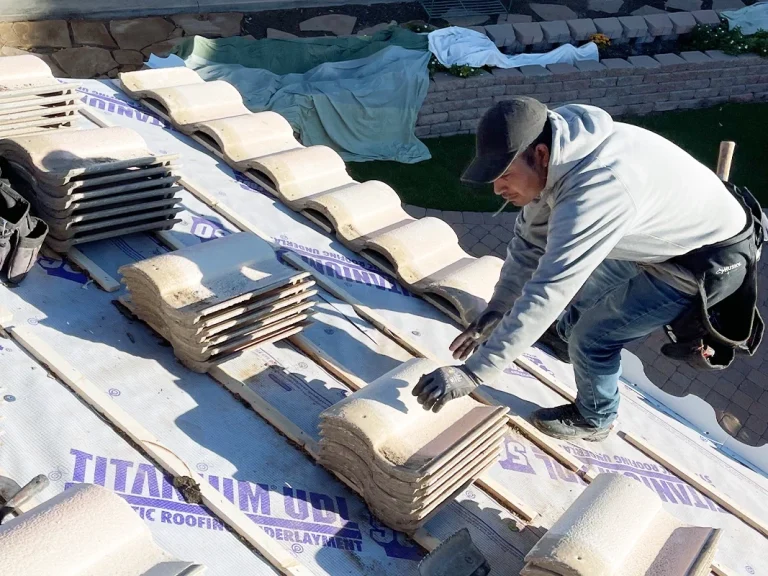
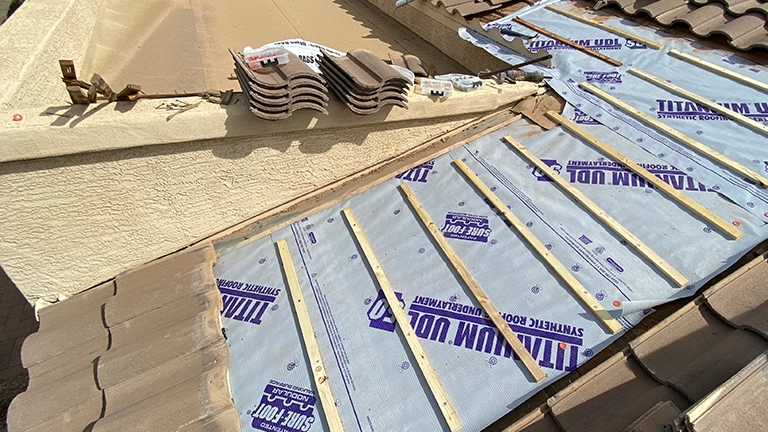
Think of your roof as two defenses. The covering you see, tile or shingle, takes the sun and sheds the bulk of the rain. The underlayment beneath is the waterproof backstop that catches everything wind drives underneath: sideways monsoon rain, water backing up at valleys, seepage at penetrations. Without a sound underlayment, water reaches the wood deck, and rot, mold, and ceiling stains follow.
In Arizona the underlayment also takes a beating the covering partly shields it from but can't eliminate: heat. Attic-side temperatures bake the membrane every summer, and cheap material turns brittle years ahead of its rating. That's the core reason underlayment choice matters more here than in mild climates.
The three types used in Arizona
Asphalt-saturated felt
The traditional choice: felt paper saturated with asphalt, available in lighter and heavier weights. It's affordable, familiar, and fine work when the heavy grade is used and installed well. Its weakness is longevity under heat; thin felt is the most common failure I find under older East Valley tile roofs. If felt is going on your roof, it should be the heavy SBS-modified grade, full stop.
Synthetic underlayment
Engineered polymer sheets (polypropylene or polyethylene). Stronger against tearing, lighter to handle, doesn't absorb moisture, and tolerates heat better than basic felt, which is why synthetics pair well with hot climates generally. The caveat: quality varies widely between manufacturers, and synthetics don't self-seal around fasteners, so installation discipline matters.
Rubberized asphalt (peel-and-stick)
The premium tier: a fully waterproof, self-adhering membrane that bonds to the deck and seals itself around every nail. It costs more, and it earns it, with the best heat tolerance and the longest service life of the three. On tile roofs, where the labor of lifting tiles dominates the job cost, upgrading to this membrane is usually the smartest money on the bid. My tile underlayment comparison goes deeper on that decision.
Curious what's protecting your house right now?
If your roof is 15 plus years old, the honest answer is "maybe not much." I'll check the underlayment condition myself, free, and tell you how much life it has left.
Call or text Andy: 480-363-2898What good underlayment does for an Arizona roof
- Keeps monsoon rain out. Wind-driven rain gets past tiles and shingles routinely; the underlayment is what stops it there.
- Extends the roof's life. A sound membrane protects the deck, and a sound deck is the difference between renewing a roof and rebuilding one.
- Adds fire protection. Underlayment is part of how roof assemblies earn their fire ratings.
- Buys time during work and after damage. Quality peel-and-stick membranes can be exposed to weather for months without degrading, which protects your home mid-project and after storm damage.
Choosing the right underlayment for your home
Three questions decide it. What's the roof covering? (Tile wants high-heat-rated membranes; shingle specs differ.) How long do you want this roof to last? (The membrane's lifespan sets the system's lifespan.) And what does the bid actually say? A bid that just says "underlayment" without naming the product and grade is hiding the most important line item. Ask for the product name; a good contractor will happily tell you.
Installation quality is the other half: overlapped seams, correct fastening, flat and wrinkle-free. Underlayment gets covered the same day it's installed, so hire someone whose work you can verify. Every legitimate Arizona roofer has an ROC license (mine is #325377, verify it here).
Common myths
- "All synthetics are the same." No. Quality ranges from excellent to barely adequate, and the label matters more than the category.
- "The tiles are the waterproofing." Tiles are armor and sun protection. The membrane is the waterproofing, which is why a roof with perfect tiles can still leak.
- "Underlayment lasts as long as the roof." On tile roofs, it doesn't, not in Arizona. Plan on renewing it every 15 to 25 years; my guide on tile roof lifespan explains the full timeline.
Common questions
What is roof underlayment and why is it important?
It's the waterproof membrane between your roof deck and the visible roofing material. It's important because it's the layer that actually stops water; everything above it is primarily sun and impact protection.
Which underlayment is best for Arizona?
For tile roofs, a heavy SBS-modified felt at minimum, with self-adhering rubberized asphalt as the premium pick. The unifying rule: buy heat tolerance.
How do I know if my underlayment is failing?
Ceiling stains after storms, debris in gutters, slipped tiles exposing black material, or simply age past 15 years. A free inspection answers it definitively; I pull a few tiles and look.