"Can't you just put a new layer over the old one?" I get this question a lot, and it's a fair one. A re-roof (also called an overlay or nail-over) costs less than a full replacement, so plenty of contractors are happy to sell you one. Here's the honest version of what a re-roof actually is, when it works, when it backfires, and what most East Valley roofs actually need.
Key takeaways
- A re-roof lays new shingles over the existing layer. It's cheaper and faster, but it only works on a shingle roof with ONE existing layer and no underlying damage.
- A replacement strips everything to the deck, which is the only way to find and fix hidden wood damage before the new roof goes on.
- Most East Valley tile roofs need neither: the tiles are fine, the underlayment beneath them is done. That's a tile underlayment replacement, a different (and usually cheaper) job.
What a re-roof actually is
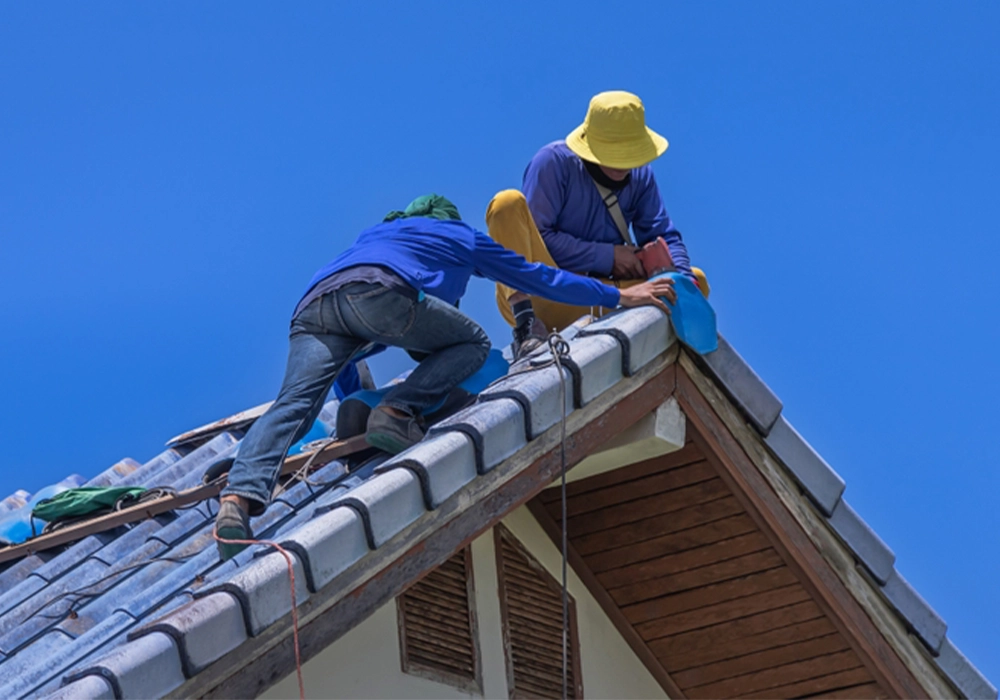
Reroofing means installing a new layer of shingles directly over your existing shingles. No tear-off, less labor, less mess, done in a few days. Arizona building code (like most of the country) allows a maximum of two layers, so this only works if your roof has a single layer today.
The catch is what you can't see. The old layer stays, which means nobody inspects the decking underneath. If there's soft wood, old leaks or hidden damage under those shingles, the overlay seals the problem in. Future leaks also get harder to trace, because water can travel between the two layers before it shows up in your ceiling.
What a full replacement gets you
A replacement strips the roof to the deck. Every sheet of decking gets seen, anything soft or rotten gets fixed, and the new roof starts from a known-good foundation. It costs more and takes longer (most of our replacements run 4 to 5 days), but you're not gambling on what's underneath.
On one Chandler job we found a stretch of hidden wood damage after tear-off. We fixed it at no extra cost to the homeowner, and it's exactly the kind of problem an overlay would have buried for another decade.
Re-roof vs. replacement vs. underlayment, side by side
Here's the quick comparison I'd give a neighbor. Note that in the East Valley the third column is the one that applies to most homes.
| Re-roof (overlay) | Full replacement | Underlayment replacement | |
|---|---|---|---|
| What it is | New shingles over the old layer | Stripped to the deck, all-new roof | Lift tiles, re-felt, relay the same tiles |
| Roof type | Shingle only, one existing layer | Any roof at end of life | Tile roofs with sound tile |
| Sees the decking? | No, it stays hidden | Yes, every sheet | Yes, once tiles are lifted |
| Relative cost | Lowest up front | Highest | Middle, reuses your tile |
| Lifespan | Shortest, inherits old layer | Longest, fresh start | Decades, tile outlives the felt |
Not sure which one your roof needs?
That's what the free inspection is for. I'll walk the roof myself and tell you honestly, even if the answer is "your roof is fine."
Call or text Andy: 480-363-2898The East Valley twist: it's usually the underlayment
Here's what the generic reroof-vs-replace articles miss about Chandler, Gilbert and the rest of the East Valley: most of our roofs are concrete tile, and tile doesn't get overlaid. Tile lasts 50 years or more. What fails at 15 to 20 years is the underlayment beneath it, cooked by our summers.
If your tiles are in good shape, the right job is a tile underlayment replacement: lift the tiles, replace the failed underlayment, relay your same tiles. You get decades more life without paying for a roof you don't need. This is one of the most common jobs we do. If you're weighing a whole new roof material instead, my honest breakdown of metal roofing pros and cons in Arizona covers where that does and doesn't pay off.
How to decide
- Shingle roof, one layer, no leaks, decking solid: a re-roof can be a legitimate money-saver. Ask your contractor to justify why it's safe on YOUR roof, not just cheaper.
- Shingle roof with two layers, active leaks, curling shingles, or a sagging deck: replacement. An overlay over problems is money thrown away.
- Tile roof with tired underlayment: underlayment replacement, reusing your tiles.
- Not sure: get it inspected before anyone quotes you anything. Mine are free, and I do them personally.
On cost: every roof gets bid individually, so I won't pretend there's a universal number. The Arizona cost guide covers the real factors and honest ranges. If you already know you want a full replacement in town, my Chandler roof replacement and Gilbert roof replacement pages walk through how I do it.
Common questions
What is a re-roof?
A re-roof, also called an overlay or a nail-over, means installing a new layer of shingles directly over your existing shingles instead of tearing the old roof off first. There is no tear-off, so it takes less labor and less time. Because the old layer stays put, nobody inspects the decking underneath, and Arizona code caps you at two layers, so a re-roof only works if your roof has a single layer today.
What is the difference between a re-roof and a roof replacement?
A re-roof lays new shingles over the old ones with no tear-off. A full replacement strips the roof to the deck, so every sheet of decking gets inspected and anything soft or rotten gets fixed first. A re-roof is cheaper and faster but only fits a sound single-layer shingle roof. A replacement costs more and takes longer, but it is the only option that fixes what is hidden underneath.
Is a re-roof the same as a new roof?
No. A re-roof reuses your existing roof as the base and adds one layer on top, so it inherits the age and condition of the layer beneath it. A new roof, meaning a full replacement, starts from bare, inspected decking. A re-roof is a budget move that buys some years, not an equal product.
Can you re-roof over a tile roof?
No. Overlays are a shingle practice. Concrete tile here is not overlaid, and it does not need to be. Tile lasts 50 years or more while the underlayment beneath it typically fails at 15 to 20 years. When the tile is sound, the right job is a tile underlayment replacement. If you are still choosing between the two materials, I compare them in shingle roof vs tile roof.
How many layers of roofing are allowed in Arizona?
Two, at most. A re-roof is only legal if your roof has a single layer today. If it already carries two layers, a full tear-off and replacement is required.
Does a re-roof last as long as a replacement?
No. An overlay typically gives you fewer years than a full replacement, because it inherits the heat and condition of the layer beneath it. It's a budget move, not an equivalent product.
Will a re-roof affect my home's resale?
It can. Inspectors and buyers can see a second layer, and some see it as deferred maintenance. A documented replacement (or underlayment replacement on tile) reads much better in a sale. If you're prepping to sell, read up on pre-sale roof inspections.
What about warranties?
Material manufacturers set their own warranty terms, and some limit or void coverage on overlay installations. Whatever contractor you use, get the manufacturer's terms for your specific material in writing.