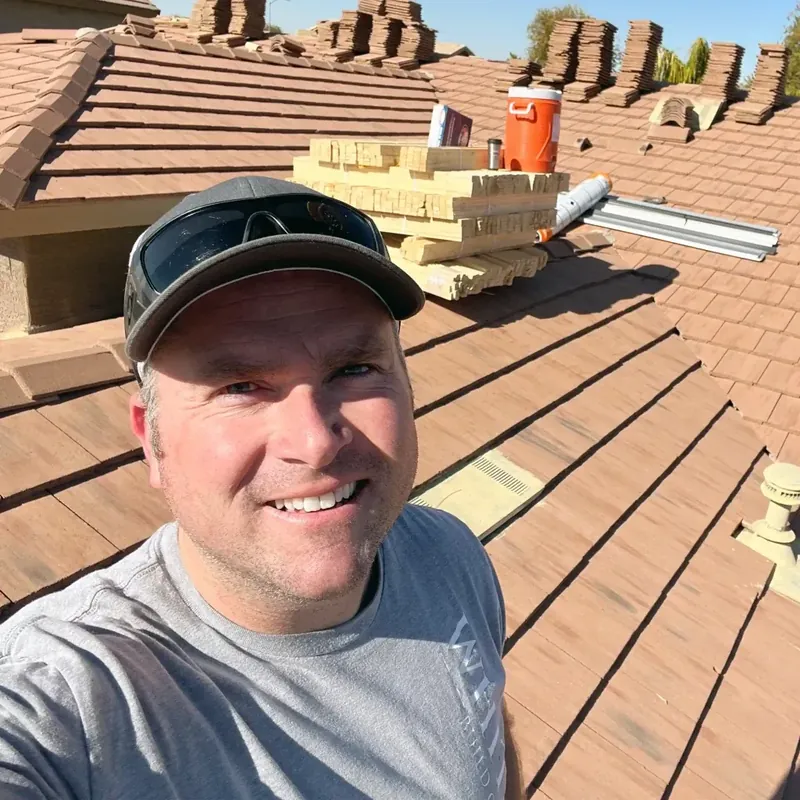
Every few weeks a homeowner asks me whether they should put a metal roof on their East Valley house. Fair question. Metal gets a lot of attention online, and some of that attention is deserved. Full disclosure up front: I install tile, shingle, and foam. I don't sell metal roofs, which means I have no reason to talk you into one and no reason to talk you out of one. So here's the honest read on metal roofing pros and cons for Arizona, from someone who spends his days on the roofs metal is competing against. If you want the wider comparison of everything that goes on Arizona homes, start with my guide to the best type of roofing in Arizona.
Key takeaways
- Metal handles Arizona sun well. A reflective finish sheds a good share of the sun's energy instead of soaking it up the way dark shingle does.
- The main trade-offs are upfront cost, expansion noise, HOA restrictions, and the simple fact that few East Valley crews install residential metal well.
- For most tile and shingle neighborhoods here, metal is a niche choice, not a wrong one. It makes the most sense on custom homes, rural properties, and owners planning to stay for decades.
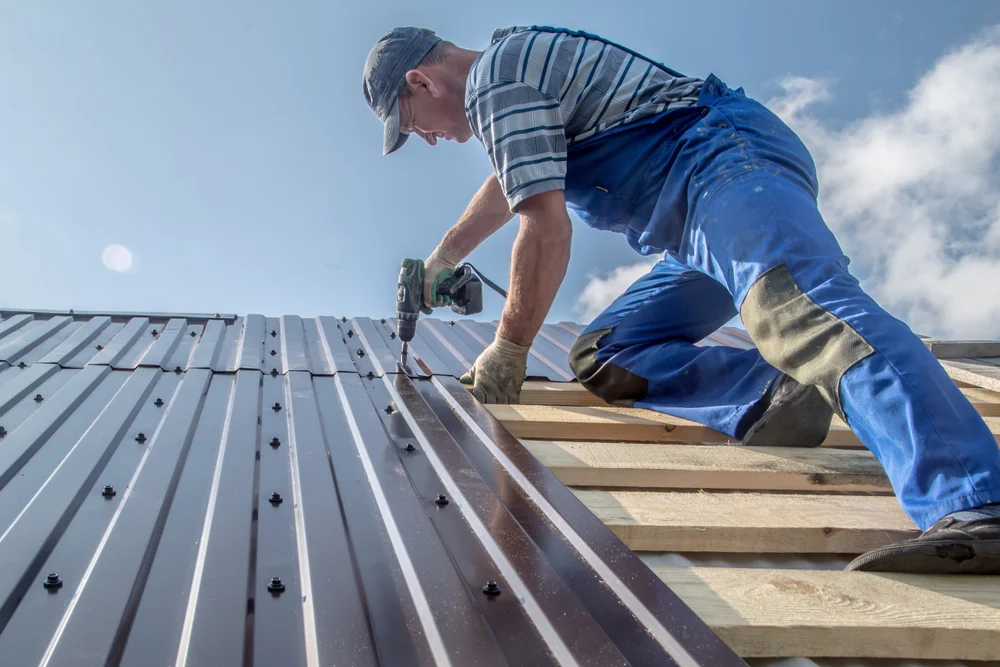
How metal performs in Arizona heat
This is the first thing everyone asks: doesn't a metal roof turn the house into an oven? Mostly, no. Metal reflects sunlight better than asphalt shingle does, especially in the lighter colors and reflective coatings most residential panels come with. And because metal holds very little heat in the material itself, it cools off quickly after sunset instead of radiating into your attic all evening the way a heat-soaked roof can.
The honest caveat: performance depends heavily on the installation details. Color, coating, ventilation, and whether the panels sit on battens with an air gap all matter. A dark, uncoated panel screwed straight to the deck gives up most of the advantage. Tile earns its keep in our climate a similar way, through mass and the airflow under the tiles, which is part of why the two materials end up closer in real-world heat performance than the marketing suggests.
The pros of a metal roof here
Longevity
A properly installed standing seam roof is a genuinely long-lived roof. The panels shrug off UV that chews through asphalt shingle, and there's no felt baking brittle under them the way there is under tile. Metal's lifespan claims get inflated online like everything else, but the core point stands: installed right, it's one of the longest-lasting systems you can put on a house.
Monsoon and hail behavior
Wind is where metal earns respect. Standing seam panels are mechanically locked to the structure along their full length, so there are no individual tiles to slide or shingles to peel in a monsoon gust. Hail dents metal rather than cracking it, which is cosmetic damage instead of a water problem. Compare that with tile, where a hard hailstorm can crack tiles outright, something I cover in my post on storm damage to Arizona roofs.
Weight and fire resistance
Metal is light. That matters on older homes where the framing was never designed for concrete tile. It's also noncombustible, which is worth something anywhere embers can travel.
The cons, and they're real
Upfront cost
Metal costs more than shingle upfront, and residential standing seam usually lands at or above concrete tile once you factor in the specialty labor. The long lifespan can justify that math if you're staying in the house long enough to collect on it. If you're selling in five years, you're buying a roof for the next owner. For context on what full replacements involve here, see my Arizona roof replacement cost guide, and if you're deciding between a new roof and a cheaper overlay, my re-roof vs. roof replacement guide lays out when each one is the honest call. When you've settled on a material and want a real bid, I handle roof replacement in Chandler and across the East Valley personally, in tile, shingle, or foam.
Expansion noise
Metal expands and contracts more than any other roofing material, and Arizona's temperature swings give it a daily workout. A well-designed standing seam system is built to move quietly on its clips. A cheaper screw-down panel roof is not, and as it ages you can get popping and ticking as the panels drag against their fasteners. Most of the time you'll never hear a good metal roof. A bad one sounds like the house cracking its knuckles.
Fastener wear on screw-down systems
That same daily movement works exposed screws loose and wears out their rubber washers over time. Screw-down metal roofs need their fasteners checked and eventually replaced, which is maintenance most buyers don't hear about at the sales stage.
HOA rules and neighborhood fit
Most East Valley subdivisions were built as tile neighborhoods, and plenty of HOAs have rules written around that look. Before you fall in love with a metal roof, read your CC&Rs. A metal roof on the one non-tile house on the street is also a resale question worth thinking about honestly, whatever the HOA says.
Repairs and matching
When a metal roof does need work, panels often come in long runs that can't be patched the way a tile or shingle field can. Finding a crew that does residential metal well in this market takes effort, and finding one to fix somebody else's metal roof takes more.
Weighing roofing materials for your house?
Call or text me. I'll tell you what I'd put on your specific roof and why, including when the answer is a material I don't install. The inspection and the advice are free.
Call or text Andy: 480-363-2898Metal vs tile in Arizona
This is the real comparison for most East Valley homes, and it's closer than either side admits. Tile handles our sun through sheer mass and the air gap under the tiles, and the tiles themselves can last 50 years or more. The catch with tile is the underlayment beneath it, which wears out long before the tiles do and needs replacing once or twice over the roof's life. Metal skips the underlayment problem but costs more upfront and fights the neighborhood aesthetic. Tile matches the neighborhood, spreads its cost over time, and has an army of local crews who know it cold. If you're comparing the mainstream options instead, my shingle vs tile comparison walks through that decision the same way.
Standing seam vs screw-down for homes
If you do go metal on a house, the system matters more than the metal. Standing seam conceals the fasteners, locks the panels so they can move with temperature swings, and is the version of metal roofing that earns the longevity reputation. Screw-down (exposed fastener) panels are the budget version, built for barns and shops, and they bring the fastener maintenance and noise issues with them. On a home you plan to keep, standing seam is the only version I'd take seriously.
Why metal is still rare on East Valley homes
Drive through Chandler or Gilbert and count the metal roofs. It won't take long. The reasons are practical: the neighborhoods were built around tile, the HOAs codified that look, tile already handles our climate well, and the local labor market is deep in tile and shingle crews rather than residential metal specialists. Metal being rare here isn't proof that it's a bad roof. It's proof that tile got here first and fits the conditions well enough that few people pay the premium to switch.
When metal genuinely makes sense
Custom homes outside HOA control. Rural and desert properties where the modern or agricultural look fits. Homeowners planning to stay for decades who want to buy one roof and be done. Homes where framing weight is a concern and tile is off the table. In those situations, metal is a legitimate first-choice material, and you should hire a crew that does standing seam residential work specifically, not a general roofer who is willing to try.
Common questions
Do metal roofs make your house hotter in Arizona?
Generally no. Reflective finishes send a good share of the sun's energy back before it becomes attic heat, and metal cools off fast after sunset. Color, coating, and ventilation decide how much of that advantage you actually get.
Are metal roofs loud in the rain?
On an open patio roof, yes, and some people like it. Over an insulated attic with a solid deck, rain noise is far tamer than the reputation. The noise to actually ask about is thermal expansion on cheap screw-down systems.
Does White Leaf install metal roofs?
No. I install tile, shingle, and foam, which covers the vast majority of East Valley homes. That's exactly why you can trust this comparison: I make the same money whichever way you decide.
Is metal better than tile for monsoon season?
Standing seam handles wind extremely well, and hail dents it rather than cracking it. A tile roof with sound underlayment also gets through monsoons fine. Either way, the roof that fails in a storm is usually the one that was already compromised, which is what a free inspection before the season is for.