Arizona monsoons don't ease into anything. Microbursts, hail, driving rain and haboobs can do a season's worth of roof damage in twenty minutes. This guide covers how to spot storm damage, what to do in the first 24 hours, and how to get it fixed without getting burned by a storm-chasing contractor.
Key takeaways
- Check your roof from the ground after every serious storm. Missing or creased shingles, cracked tiles, debris piles and granules in the gutters are the tells.
- Document everything with photos and video before anything gets moved or repaired. Your insurance claim depends on it.
- Storms bring out door-knocking contractors. Never sign with anyone whose license you haven't verified with the Arizona ROC.
Why fast identification matters
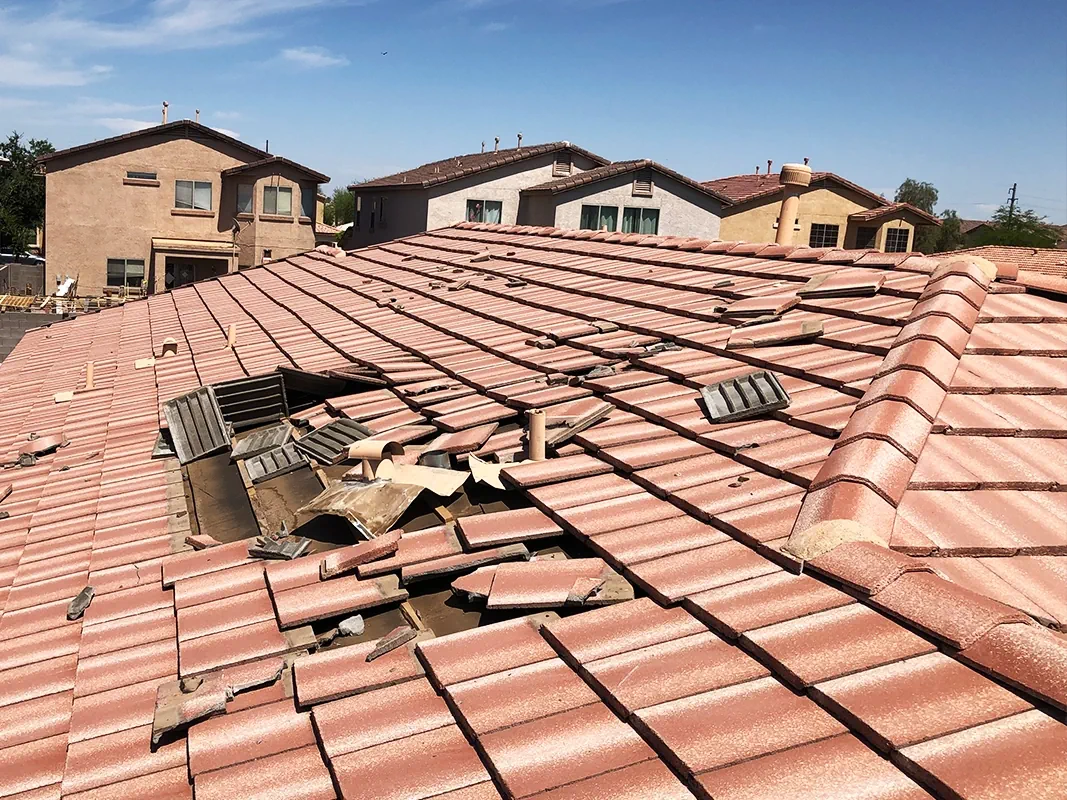
Storm damage compounds. A lifted shingle or cracked tile that would be a small fix today becomes soaked decking, stained ceilings and mold after the next storm exploits it. The gap between a minor repair and a major one is usually just the time nobody looked. After any storm with real wind or hail, walk the perimeter of your house and look up. If anything seems off, get a professional set of eyes on it; my storm inspections are free and I do them personally.
Identifying storm roof damage
Stay off the roof itself. Wet tiles and loosened materials after a storm are genuinely dangerous, and everything important can be assessed from the ground and the attic.
Recognizing wind damage
Monsoon winds and microbursts lift and displace roofing. From the ground, look for missing shingles (often scattered in the yard), creased or torn shingles, slid or cracked tiles, and flashing that's bent or out of place. Wind damage concentrates at edges, ridges and corners, where uplift is strongest, so look there first.
Detecting hail damage
Hail leaves dents and pockmarks on shingles, cracked or shattered tiles, and dents in gutters, vents and AC fins (a handy ground-level clue). On shingles, hail knocks off the protective granules, leaving dark spots where the mat shows through, and you'll often find a pile of granules in the gutters and downspout splash zones after a hailstorm.
Spotting water damage
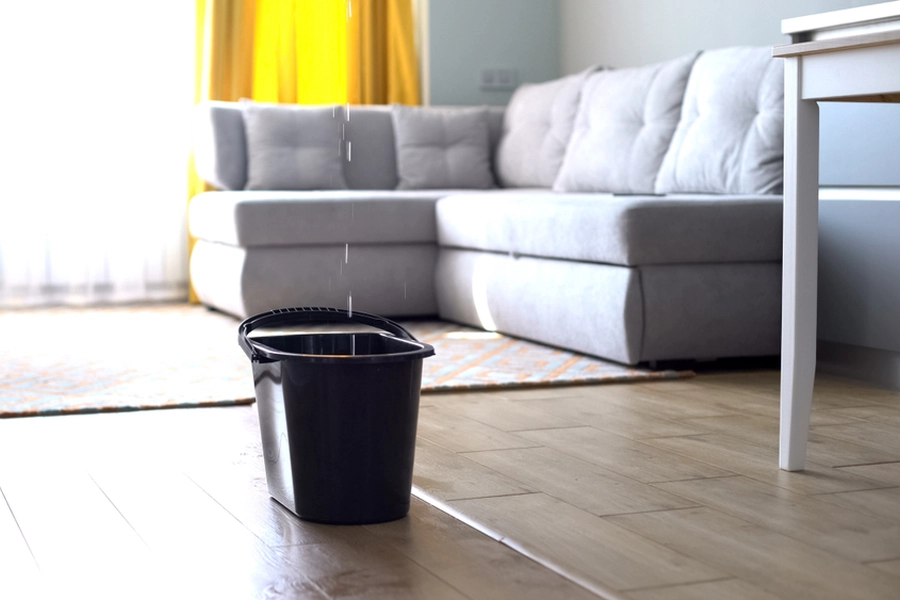
Inside, check ceilings and the attic after heavy rain. Water spots around light fixtures, damp insulation, drips on rafters and musty smells all point to water getting through. On flat roofs, standing water that hasn't drained a day after the storm is a warning sign. Slow leaks are sneaky: my post on how fast a leak needs attention explains why waiting is the expensive option.
Common signs of roof damage after an Arizona storm
Missing shingles
The most obvious sign, often visible from the street with pieces in the yard. Every missing shingle is a patch of exposed underlayment with a countdown timer on it. This is a fast, inexpensive fix when handled promptly.
Shingle granule loss
Granules are the shingle's sunscreen. After hail or wind-driven debris, check gutters and downspouts for granule buildup. Heavy loss ages a shingle roof fast in Arizona sun, even when the shingles look intact from the street.
Visible cracks and dents
Dented, torn or curled shingles, cracked or displaced tiles, and dinged-up metal flashing all compromise the roof's ability to shed the next storm. Dents in gutters and rooftop accessories are a reliable proxy: if the hail dented your gutters, it hit your roof too.
Storm just came through?
Call or text me and I'll come check your roof for free. If there's damage, I'll document it properly for your insurance claim. If there isn't, I'll tell you that too and you can sleep easy.
Call or text Andy: 480-363-2898Immediate steps after discovering roof damage
Document the damage
Before anything is moved, tarped or repaired, photograph and video everything: wide shots, close-ups, the yard debris, interior stains, all of it with timestamps. Thorough documentation is the difference between a smooth insurance claim and a fight.
Contact your insurance company
Report the damage promptly; most policies have time limits on storm claims. Your insurer will want your documentation and will typically send an adjuster. It helps to have your own roofer's assessment alongside the adjuster's. I walk homeowners through this all the time; my insurance claims page covers how the process works and where homeowners commonly lose money in it.
Temporary repairs
If water is actively getting in, temporary protection like tarping prevents the damage from spreading while the claim and permanent repair get sorted. Don't get on the roof yourself; call for emergency roof repair and let someone with fall protection and experience handle it. Keep receipts, since reasonable emergency measures are usually claimable.
Hiring a roofing contractor after a storm
Big storms bring out two kinds of contractors: local roofers you can find again next year, and out-of-town storm chasers you can't. Choose carefully.
Finding a trusted contractor
Verify the Arizona ROC license before anything else; it takes thirty seconds and eliminates most of the risk (mine is #325377). Then look for a local address, local reviews going back years, and jobs in your neighborhood they can point to. I'm based at Gilbert Rd and Queen Creek Rd, so post-storm work usually means roof repair in Chandler, Gilbert or Mesa, and I'm still here next monsoon.
Questions to ask
Ask about their storm damage experience, whether they'll meet the insurance adjuster on site, what materials they recommend and why, and exactly what's included in the written scope. Clear answers are the product; vague ones are the warning.
Avoiding scams
Red flags: door-knockers who "just happened to be in the area," pressure to sign today, offers to eat your deductible (that's insurance fraud, and you're the one exposed), and demands for large payments up front. If a deal sounds too good, it is. Trust your gut and get everything in writing.
Understanding storm repair costs
Cost depends on what got hit and how badly. Shingle and tile repairs at the surface level cost far less than structural or decking work, and most roof repairs I do fall between $500 and $3,500 depending on scope. When damage is storm-caused, insurance often covers the repair minus your deductible, which is why the documentation steps above matter so much. If the damage is extensive enough that replacement enters the conversation, my Arizona roof replacement cost guide lays out the honest math.
Preparing for future storms
Regular maintenance
Roofs that are maintained before monsoon season survive it far better. Fixing loose tiles, sealing exposed fasteners and clearing debris ahead of the storms removes the weak points wind and rain go looking for. My Arizona roof maintenance guide covers the routine.
Storm-resistant materials
When replacement time comes, impact-rated shingles, properly fastened tile systems all hold up meaningfully better in wind and hail. Fastening done to code matters more than any single product choice; that's where corner-cutting crews fail you invisibly.
Professional inspections
An annual professional inspection, ideally in late spring before the monsoons, catches the vulnerabilities you can't see from the ground. Mine are free, so the cost of knowing is zero.
Summary
After an Arizona storm: look from the ground, document everything, call your insurer promptly, protect the roof from further water, and only hire a contractor whose license you've verified. Handled in that order, storm damage is a manageable problem instead of a cascading one. And if you'd rather have a professional make the first assessment, that's exactly what I do, at no charge.
Frequently asked questions
What are the first steps after discovering storm damage?
Document with photos and video, contact your insurance company, and arrange temporary protection if water is getting in. Then get a professional assessment to establish the full scope, including damage you can't see from the ground.
How can I identify wind damage on my roof?
From the ground, look for missing, creased or curled shingles, slid or cracked tiles, displaced flashing, and roofing debris in the yard. Edges and corners of the roof take the worst of it.
What are common signs of hail damage?
Dents and pockmarks on shingles, granules piling up in gutters, cracked tiles, and dents in gutters and rooftop metal. If your car or AC unit took hail dings, your roof did too.
Will insurance cover my storm damage?
Storm damage is typically covered under homeowners policies, minus your deductible, but coverage depends on your policy and on proving the damage is storm-related rather than wear. Good documentation and a roofer's written assessment carry the claim. See my insurance claims guide for the full process.
How can I prepare my roof for future storms?
Maintain it before monsoon season, fix small problems promptly, and get an annual professional inspection. Prepared roofs turn big storms into non-events.