If you've lived in the East Valley through a monsoon season, you've watched a haboob roll in: a mile-high wall of dust that turns afternoon into dusk. These storms usually pass in half an hour, but 30 to 60 mph winds carrying grit and debris can do real damage to a roof in that time. Here's what haboobs actually do to East Valley roofs, what to check afterward, and when to call for help.
Homes on the open edges of the Valley take the worst of it. I see it most on San Tan Valley and Queen Creek roofs, where open desert runs right up to the neighborhoods and the wind arrives with nothing to slow it down. Ridges, hips and roof edges take the hit.
Key takeaways
- Haboob winds lift shingles, crack and shift tiles, and sandblast the protective granules off asphalt roofs.
- After a storm, check for shingles in the yard, granules in the gutters, and any debris sitting on the roof, then check ceilings inside.
- Document damage with photos right away. It matters for insurance claims, and prompt repairs keep the next storm from getting inside.
What a haboob does to a roof
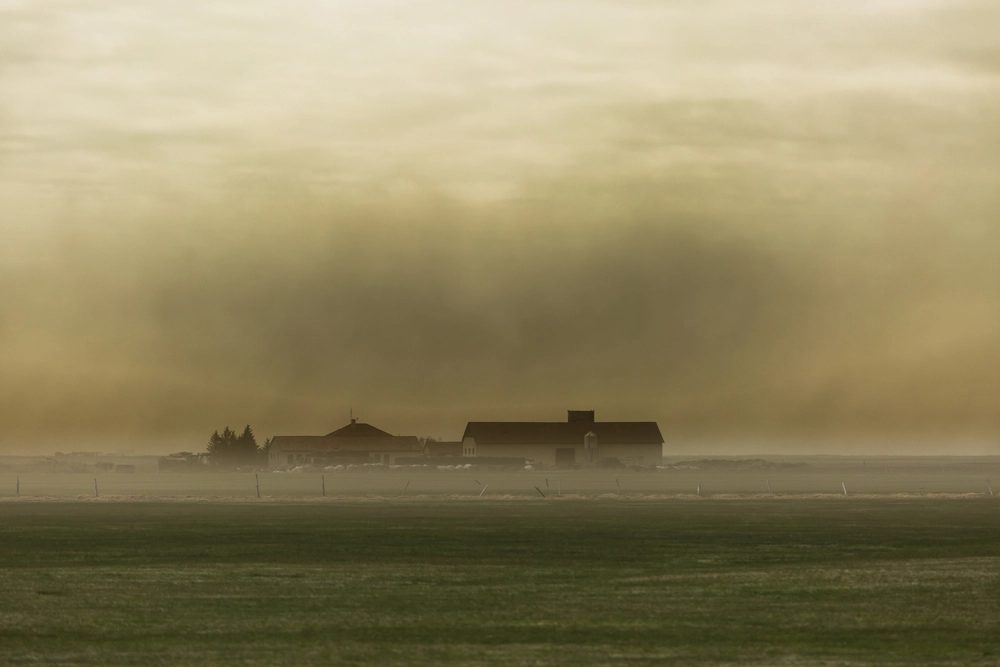
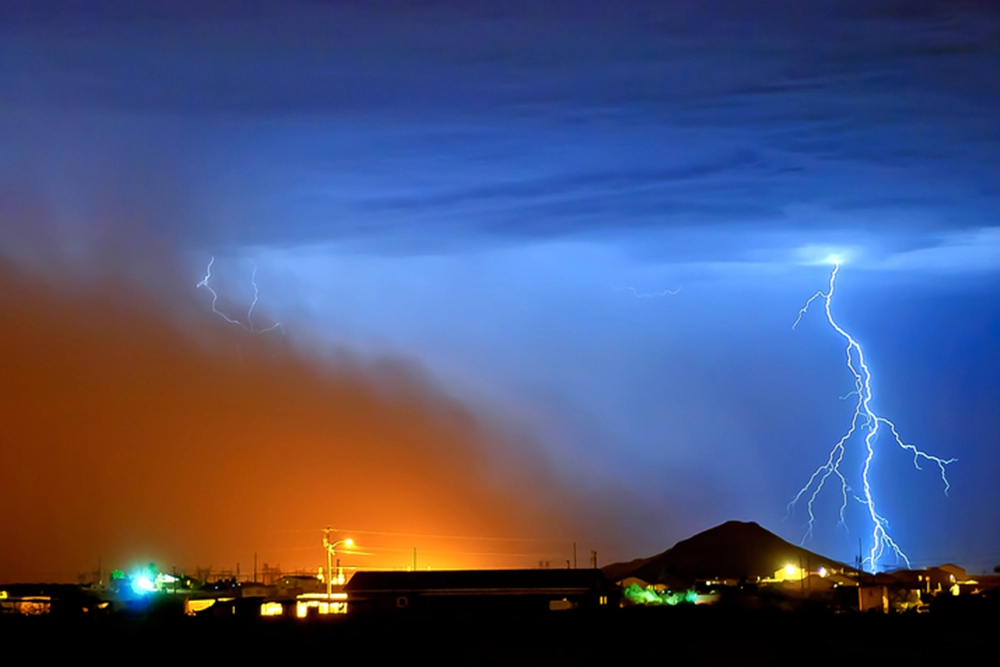
Haboobs are born from collapsing thunderstorms, which is why they often arrive just ahead of monsoon rain. That combination is the problem: first the wind opens up the roof, then the rain finds the openings. The leading edge carries gusts strong enough to lift shingle edges, hurl branches, and drive dust into every gap. The dust itself is abrasive; over repeated storms it wears at coatings and granules like slow sandpaper.
Signs of roof damage after a dust storm
Loose or missing shingles
Wind gets under shingle edges, curls them, and tears them free, especially at roof edges and ridges where pressure concentrates. Shingles in the yard after a storm are the clearest signal you have an opening up top. Even shingles that stayed put may have broken their adhesive seal, which makes them easy pickings for the next storm. Get missing shingles covered or replaced quickly; exposed underlayment and decking don't last long in monsoon rain.
Granule loss on asphalt shingles
Those granules are the shingle's sunscreen. Wind-driven sand strips them, and Arizona UV then ages the exposed asphalt fast, drying, cracking, premature failure. Check your gutters and downspout splash areas after storms: dark, sandy accumulation is granule loss. A little is normal on newer roofs; heavy deposits or visible bald patches mean the roof needs a look.
Cracked or shifted tiles and debris impact
On tile roofs, flying debris cracks tiles and strong gusts can shift or lift them out of position. A shifted tile leaves the underlayment beneath exposed, which is exactly where leaks start. From the ground, look for tiles sitting crooked, gaps in the pattern, or broken pieces on the ground and in the yard.
Interior signs to check
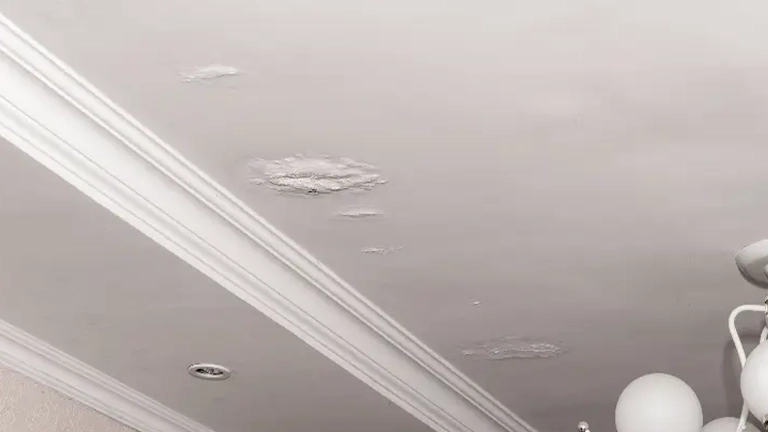
Sometimes the roof damage announces itself from inside first. After a storm cycle, look for water stains (gray, brown, or yellow) on ceilings, bubbling or blistering paint, and any new musty smell. If you can get into the attic safely, check for damp insulation and daylight showing through the deck. Fine dust appearing in the attic after a haboob also tells you the roof has gaps that wind is exploiting.
Just had a storm roll through?
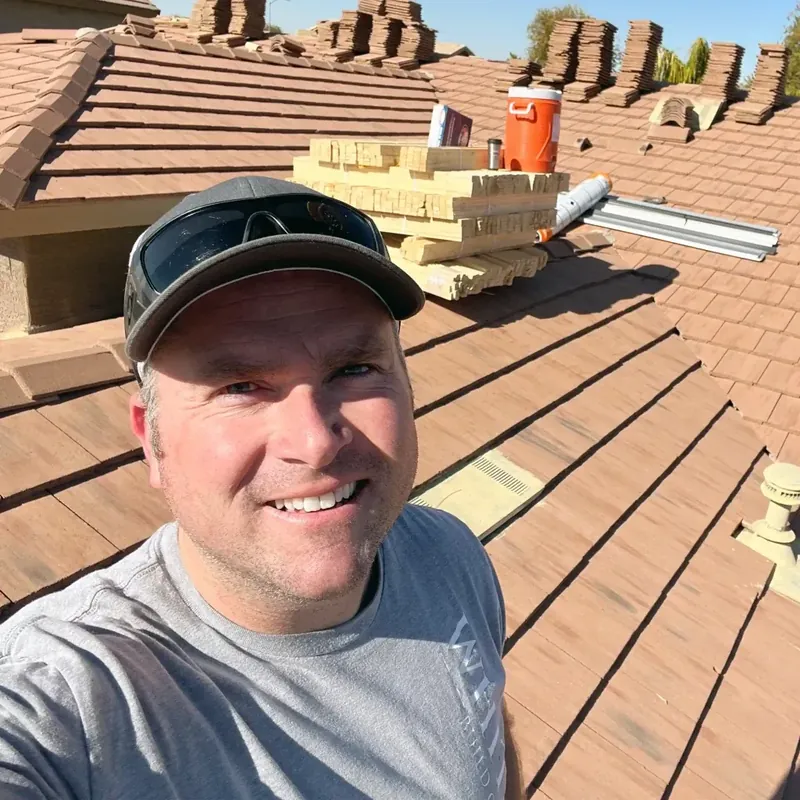
Don't climb up there. I'll inspect the roof myself, for free, document anything the storm did, and tell you straight whether it needs repair or just made a mess.
Call or text Andy: 480-363-2898How to handle the post-storm inspection
From the ground and inside the house, you can check for everything above safely. Photograph anything you find, wide shots and close-ups, with dates. What you shouldn't do is walk the roof; storm-loosened tiles and shingles are exactly what makes footing unpredictable, and foot traffic itself breaks tiles.
A professional inspection covers what you can't see from the ground: seal integrity, flashing, underlayment exposure, and hidden impact damage. If the storm was severe or you found any of the warning signs, get eyes on it before the next storm. For active leaks or serious damage, my emergency roof repair service exists for exactly this situation. Once the dust settles, cracked and shifted tiles are the usual repair list; that work is covered on my Chandler roof repair page.
Filing an insurance claim for haboob damage
Wind and storm damage is typically covered by homeowners policies; gradual wear is not, so the documentation showing storm-related damage matters. The short version of the process: photograph everything, file promptly, and keep receipts for any temporary fixes like tarping. Your insurer sends an adjuster; you have the right to choose your own contractor for the actual repairs, the insurance company can't dictate that. If a claim gets denied, you can appeal or bring in an independent adjuster.
I walk East Valley homeowners through this regularly, including meeting the adjuster on site. The full process is covered in my roof insurance claims guide.
Protecting your roof before the next haboob
- Pre-season inspection. Loose tiles and unsealed shingles are what the wind takes first. Finding them in May beats finding them in your yard in July.
- Trim overhanging branches. Most impact damage I see comes from the homeowner's own trees.
- Keep gutters and drains clear. The rain behind the dust needs somewhere to go.
- Fix small damage promptly. Storm damage compounds; each storm works on the openings the last one made.
Common questions
Does insurance cover roof damage from dust storms?
Wind damage from a specific storm event is generally covered under standard homeowners policies. Damage attributed to age and deferred maintenance is not, which is why prompt documentation matters.
How long do I have to file a claim after a storm?
It varies by policy, commonly six months to two years, with one year typical. Check your policy and don't sit on it; fresh damage is easier to attribute to a specific storm.
What if the roof looks fine from the ground?
Ground checks miss broken seals, hairline tile cracks, and flashing damage. If the storm was strong enough to make the news, a free professional inspection is cheap insurance. Mine costs nothing and I do it personally.