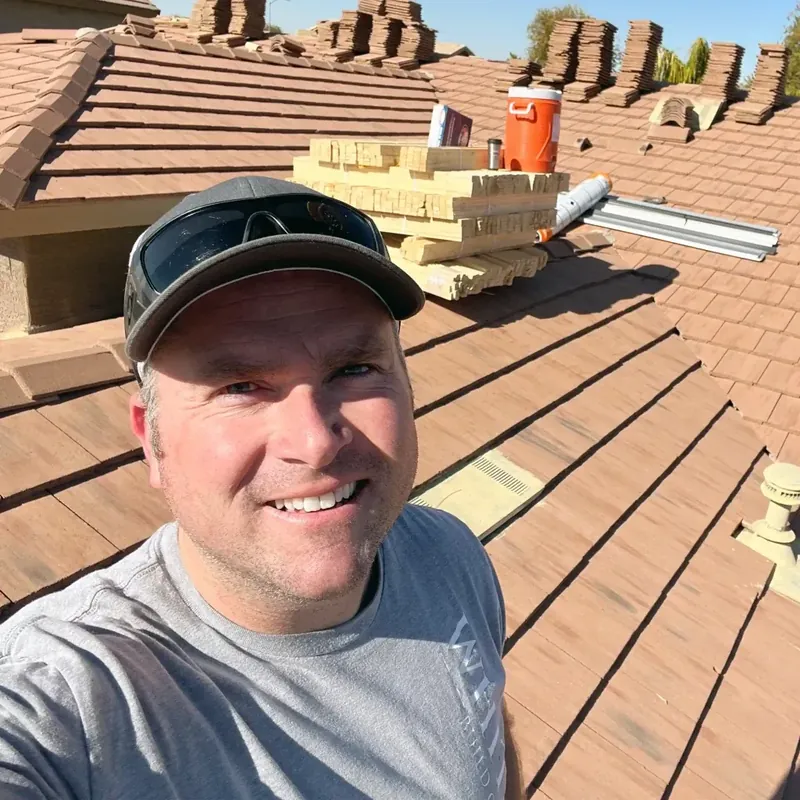
Shingle or tile is the most common question I get standing on an East Valley driveway, and the honest answer is not the same for every house or every budget. Arizona heat, UV, and monsoon wind punish the two materials differently, and the roof that is right for a ten year house is not always right for a forever house. Here is the shingle roof vs tile roof comparison the way I would give it to you in your own yard, with the numbers included.
Key takeaways
- Shingle roofs cost less up front, roughly $3.50 to $5.50 per square foot in our area, install fast, and last about 15 to 25 years in Arizona heat. They also let more heat into the house.
- Tile roofs cost more up front, roughly $5 to $12 per square foot, and handle our climate better. The tiles last 50 years or more, but the underlayment underneath needs renewal every 15 to 25 years.
- The deciding factors are budget, how long you plan to own the home, and what the rest of your street looks like at resale time.
- On a tile roof, the tiles are almost never the problem. Nearly every tile roof I get called out to needs a re-felt and relay, not new tile.
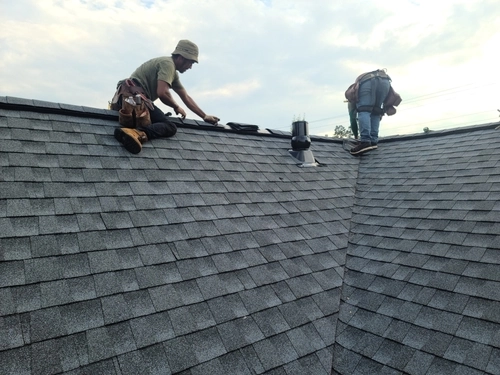
Shingle roof vs tile roof, side by side
This is the comparison I would sketch on the back of a bid sheet. The cost rows use the same East Valley ranges as my Arizona roof replacement cost guide.
| Asphalt shingle | Concrete or clay tile | |
|---|---|---|
| Cost per square foot | Roughly $3.50 to $5.50 | Roughly $5 to $12, less when your tiles can be reused |
| Typical 2,000 sq ft roof | About $7,000 to $11,000 | About $10,000 to $24,000 |
| Lifespan in Arizona | 15 to 25 years, architectural at the high end | 50 years or more for the tile itself |
| What actually wears out | The shingles. The whole roof gets replaced. | The underlayment, every 15 to 25 years. The tiles go back on. |
| Heat into the house | Higher. Shingles lie flat on the deck and conduct heat. | Lower. Thermal mass plus an air gap under each tile. |
| Monsoon wind | Gusts lift and tear shingles more readily | Weight holds tile down. Wind rarely moves it. |
| Weight and structure | Light. No reinforcement questions on any home. | Heavy. Older homes need a structural check before switching. |
| Repairs | Quick and inexpensive. Swap the damaged pieces. | Tiles lift off for access, so repairs are straightforward but need care. |
| Fire and pests | Rated but combustible | Does not burn, nothing eats it |
| East Valley resale fit | Fine on shingle streets, out of place on tile streets | What most Chandler and Gilbert buyers expect |
| Best for | Tighter budgets and shorter ownership horizons | Forever homes and matching the neighborhood |
Shingle roofing in Arizona
Types of asphalt shingles
- Three-tab shingles: the cheapest option, and the shortest-lived here, roughly 15 to 20 years in our climate, often less on west-facing slopes.
- Architectural shingles: thicker, better looking, better wind ratings, and up to 30 years with good maintenance. If you go shingle in Arizona, go architectural.
Where shingles win
- Upfront cost: meaningfully cheaper than tile, both material and labor.
- Weight: light enough for any structure, no reinforcement questions.
- Simple repairs: wind-damaged shingles are quick and inexpensive to swap.
- Speed: a straightforward shingle replacement is a short job, which matters when the monsoon is already running.
Where shingles struggle here
- Heat and UV: Arizona sun dries shingles out, cracks and curls them, and shortens their lifespan versus milder climates. More on that in how sun damages roofs.
- Monsoon wind: gusts lift and tear shingles more readily than they move tile.
- Heat gain: darker shingles absorb heat, which your air conditioner pays for all summer.
- Layer limits: Arizona code allows two layers of shingle at most, so an overlay is a one-time option. I cover the trade-offs in re-roof vs full replacement.
Tile roofing in Arizona
Types of tile
- Clay tiles: the traditional choice, excellent heat resistance, lifespans up to a century.
- Concrete tiles: the East Valley standard. Versatile, durable, 50 plus years, and more affordable than clay.
- Slate: extremely durable but heavy and expensive; rare on Arizona homes.
Where tile wins
- Durability: tile shrugs off heat, UV, and monsoon storms. See my full guide on how long tile roofs last in Arizona.
- Energy efficiency: tile's thermal mass and the air gap under each tile keep attic temperatures lower, which shows up on the power bill.
- Fit and value: tile is what East Valley buyers expect. It suits the architecture and helps resale value.
- Fire and pest resistance: tile doesn't burn and nothing eats it.
Where tile costs you
- Upfront price: a significant step up from shingles.
- Weight: older homes occasionally need a structural check before switching from shingle to tile.
- The hidden clock: the underlayment beneath the tiles wears out every 15 to 25 years and needs replacement. It's much cheaper than a new roof, but it's a real cost shingle salesmen love to skip and tile salesmen love to hide.
Want a recommendation for your actual house?
I'll look at your roof, your structure, and your neighborhood, and tell you which material makes sense and which doesn't. Free inspection, no pressure either direction.
Call or text Andy: 480-363-2898Shingle vs tile roof cost, in real numbers
Most cost comparisons online quote national averages that have nothing to do with what a crew charges in Chandler. Here is what these roofs actually run in the East Valley.
Shingle replacement lands around $3.50 to $5.50 per square foot. Tile lands around $5 to $12 per square foot, and it sits at the lower end of that range more often than people expect, because on most tile jobs your existing tiles come off, the underlayment gets replaced, and the same tiles go back on. You are paying for labor and underlayment, not for a truckload of new tile.
On a 2,000 square foot roof that works out to roughly $7,000 to $11,000 for shingle and roughly $10,000 to $24,000 for tile. Pitch, access, layers, and how much of your existing tile survives handling all move those numbers, which is why I put a real figure in writing after I have been on the roof rather than over the phone.
The tile roof vs shingle roof cost question gets more interesting when you stretch the timeline. Over 40 years of ownership, a shingle roof is typically two full replacements. A tile roof over the same span is usually one installation plus two underlayment renewals, and a re-felt and relay costs less than a full roof because you are not buying the tile again. That is the whole argument for tile, and it only pays off if you are actually staying.
If you want to run your own square footage, the calculator on my roof replacement cost page uses these same per square foot ranges.
Climate suitability
This one isn't close. Arizona heat is the hardest thing a roof here faces, and tile handles it structurally better than asphalt. Shingles work in Arizona, millions of them are up there working now, but they age faster here than the packaging suggests, and they run hotter over your living space. Every roof in Arizona is in a slow argument with the sun. Tile just argues back longer.
Maintenance
Shingle roofs need periodic inspection and prompt replacement of wind-damaged pieces. Tile roofs need less frequent attention to the tiles themselves, but the underlayment schedule is non-negotiable, and both benefit from a yearly professional look. The one thing I would add for tile owners: stay off it. Concrete tile cracks under foot traffic if you do not know where to step, and I have replaced plenty of tile broken by a homeowner hanging Christmas lights. Either way, a free inspection tells you where your roof stands today.
Aesthetics and resale
Tile carries the Southwestern and Mediterranean look that defines Chandler and Gilbert neighborhoods. Shingles offer more color flexibility at a lower price and suit ranch and contemporary styles. If every house on your street is tile, that is worth weighing, because buyers notice the odd roof out and appraisers notice it too. If your whole subdivision is shingle, a good architectural shingle roof is the right answer and a tile roof will not return the premium you paid for it.
So which one should you pick?
Rather than declaring a winner, here is how I actually sort it on a driveway.
- You have tile now and the tiles look sound. You almost certainly need an underlayment replacement, not a new roof and not a material decision. This is the most common situation in the East Valley by a wide margin.
- You have shingle now and plan to stay 20 plus years. Price both. Tile usually wins on cost per year and on resale, if the structure supports it.
- You have shingle now and plan to sell within five years. Architectural shingle. Do not fund a 50 year roof for the next owner.
- Budget is the binding constraint. Architectural shingle over three-tab, every time. The upgrade is small money and buys real years.
- Your street is all tile. Stay tile. Matching the neighborhood is worth more at closing than the upfront savings.
The bottom line
For most East Valley homeowners planning to stay put, tile is the better long-term investment: it outlasts, outperforms in heat, and matches what the market expects. Shingles are the right call when budget is the constraint or the ownership horizon is short. And if your current roof only needs a repair, that is what I will tell you. A salesman gets paid when you buy a roof. I get paid when your roof stops leaking. Those are different jobs.
Common questions
What is the difference between a shingle roof and a tile roof?
A shingle roof is layers of asphalt shingles nailed to the decking. It costs less up front, installs fast, and in Arizona heat it lasts roughly 15 to 25 years before the whole roof needs replacing. A tile roof is concrete or clay tile sitting over an underlayment membrane. The tile itself lasts 50 years or more, but the underlayment beneath it wears out every 15 to 25 years and has to be renewed. So the real difference is what fails and how often: on a shingle roof you replace the roof, and on a tile roof you usually replace what is under the roof and keep the same tiles.
Is a tile roof more expensive than a shingle roof?
Yes, up front. In our area shingle replacement runs roughly $3.50 to $5.50 per square foot and tile runs roughly $5 to $12 per square foot, often at the lower end when your existing tiles can be lifted and reused. On a 2,000 square foot roof that is about $7,000 to $11,000 for shingle against about $10,000 to $24,000 for tile. Over a long ownership the gap narrows, because a shingle roof gets replaced two or three times in the span one tile roof lasts.
Which lasts longer in Arizona, shingle or tile?
Tile, and it is not close. Shingles run roughly 15 to 25 years here, with three-tab at the low end and architectural shingles at the high end. Concrete tile lasts 50 years or more and clay can approach a century. The catch is that the tile is not the whole roof. The underlayment under the tile fails at roughly 15 to 25 years in our heat, so a tile roof needs a re-felt and relay on about the same clock a shingle roof needs replacing, at a lower cost each time.
Which is better for hot climates?
Tile. Concrete and clay tile have thermal mass, and each tile sits above the roof deck with an air gap under it. That gap vents heat before it reaches your attic. Asphalt shingles lie flat against the deck and conduct heat straight through, and darker shingles absorb more of it. Your air conditioner pays the difference every summer.
What is the cost difference between shingle and tile over 40 years?
Work it out with the ranges above rather than trusting a slogan. Over 40 years a shingle roof is typically two full replacements. A tile roof is usually one installation plus two underlayment renewals, and an underlayment replacement costs less than a full roof because the same tiles go back on. That math is why tile tends to win for a forever home while shingle can win for a shorter horizon. Your actual numbers depend on roof size, pitch, and how much of your existing tile survives handling.
Can I switch from shingles to tile?
Often yes, but tile is heavier than shingle, so the structure has to be checked before anyone quotes it. Some homes need framing reinforcement and some do not. Any honest bid for a shingle to tile conversion includes that assessment in writing rather than assuming it. Going the other direction, tile to shingle, is simpler structurally but usually hurts resale in East Valley neighborhoods where tile is the norm.
Do tile roofs leak more than shingle roofs?
No, but they leak differently. Water gets past tile routinely by design. The underlayment beneath is the actual waterproof layer, so a tile roof leaks when that underlayment tears or ages out, or when flashing and valley metal fail. A shingle roof leaks when shingles crack, curl, or blow off. On tile the leak often shows up far from where the water got in, which is why finding it takes a proper walk-around rather than a glance from the driveway.
Which roof is better for resale value in Chandler and Gilbert?
In most East Valley neighborhoods tile matches what buyers expect, and a roof that matches the street does not become a negotiating point. Where the whole subdivision is shingle, a good architectural shingle roof is fine and a tile roof is not going to return the premium you paid for it. Look at your own street before you decide. That is the cheapest market research available.
How do I know which one my house should have?
Start with what is up there now, how long you plan to own the home, and what the rest of your street looks like. Then have someone get on the roof. I inspect free, I will bid both materials if you want to compare them side by side, and if your existing roof only needs a repair I will tell you that instead of selling you either one.