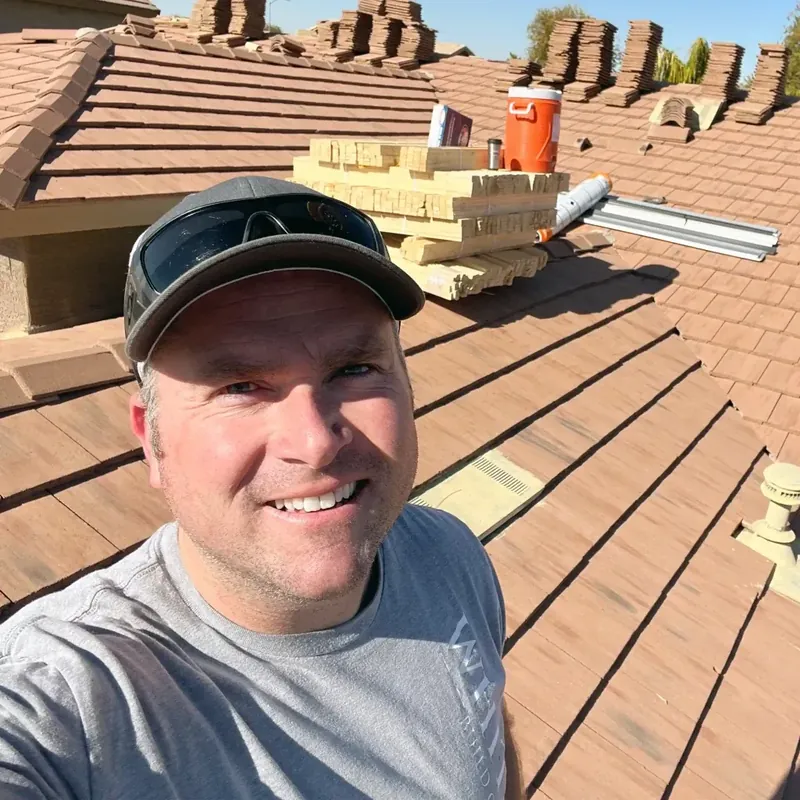
Straight answer first: most roof leak repairs I do in Chandler, Gilbert, and the East Valley land between $500 and $3,500. Where your repair falls in that range depends on how bad the leak is, what your roof is made of, and how hard the spot is to reach. This guide breaks down each factor so you can read a repair bid and know whether it's fair.
Key takeaways
- Typical East Valley roof leak repairs run $500 to $3,500. Severity, roof material, and access drive where you land in that range.
- Waiting makes leaks more expensive. Water damage spreads into decking, insulation, and drywall within days, not months.
- The cheapest repair is the one you catch early. A free inspection tells you what's going on before you spend anything.
Understanding roof leaks
Almost every leak I trace in the East Valley comes back to a handful of causes: monsoon wind lifting or breaking shingles and tiles, flashing that was installed wrong or has pulled loose, and, on tile roofs especially, underlayment that has simply aged out. The tiles look fine from the street while the waterproof layer beneath them has cracked from twenty summers of heat. If your roof stays dry most of the year and only leaks in a hard storm, that pattern has its own causes, which I cover in why your roof only leaks in heavy rain.
How to spot a leak early
- Water spots or discoloration on ceilings and walls
- Missing, cracked, or slipped shingles and tiles
- Damaged flashing or cracked vent pipe boots
- Musty smells or mold, especially in the attic
If you're seeing active dripping right now, start with my guide on what to do if your roof is leaking, then come back to the cost question. Not sure where the water is getting in? Here's how to find a roof leak.
What happens if you wait
Water doesn't stay put. It soaks insulation (which then stops insulating), rots decking, feeds mold, and eventually stains and sags drywall. A leak that would have been a simple repair in March can involve carpentry and drywall work by August. How quickly a leak should be repaired has a short answer: as soon as you know about it.
What drives the cost of a roof leak repair
1. Severity of the leak
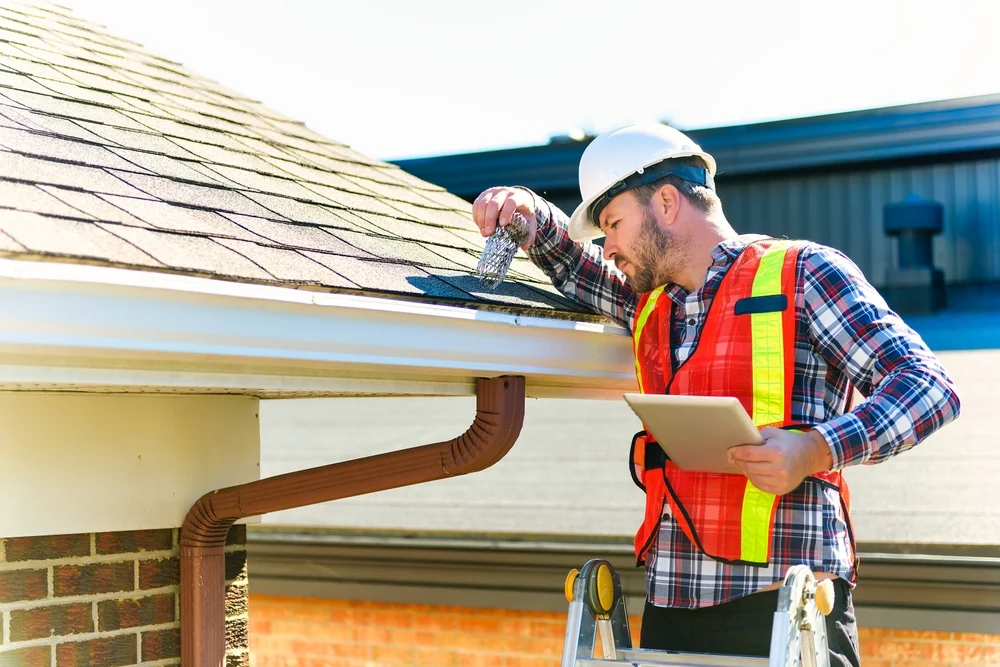
This is the biggest factor. A lifted flashing or a few broken tiles sits at the low end of the $500 to $3,500 range. A leak that has run for months and taken decking or a section of underlayment with it pushes toward the high end, because now the job includes tear-out and rebuilding layers, not just sealing a spot.
2. Roofing material
Shingle repairs are usually the most straightforward. Tile repairs take more time and care, tiles have to come up and go back without breaking, and if the underlayment underneath is the real problem, the fix is bigger than the symptom. Foam and flat roofs are their own trade; patches and recoats need to be done with compatible materials or they fail early.
3. Accessibility and complexity
A leak over an open, walkable slope costs less to fix than one behind a chimney on a steep two-story roof. Height, pitch, and how much has to be moved to reach the problem all show up in labor.
4. Who you hire
Rates vary between companies, and so does what you're actually buying. A big outfit with sales staff and overhead needs to charge for all of it. I keep White Leaf lean on purpose: I diagnose the leak myself, my bid says exactly what the repair covers, and the number is the number. Compare bids line by line, not just totals.
Want a real number instead of a range?
I'll come look at the leak myself, for free, and give you a firm bid. No sales pitch, no scare tactics, just what's wrong and what it costs to fix right.
Call or text Andy: 480-363-2898What it costs to fix a leaky roof, by severity
Here's how the $500 to $3,500 range actually breaks down. Where your leak lands comes down to how far the water got and how much has to come apart to fix it right.
| Severity | Typical cost | What the repair usually covers |
|---|---|---|
| Low | $500 to $1,200 | Isolated fixes with a clear cause: a cracked pipe boot, a small flashing repair, a handful of broken tiles or wind-lifted shingles, resealed and done. |
| Middle | Roughly $1,200 to $2,500 | A larger area or more layers: a section of underlayment replaced under tile, valley flashing rebuilt, storm damage across part of a slope. |
| High | Toward $3,500 | Long-running leaks with consequences: rotted decking replaced, larger underlayment sections redone, multiple problem areas fixed in one visit. |
And sometimes the honest answer is that a roof is past the point where repairs make sense. When the repair bill starts chasing the roof's remaining life, I'll tell you, and my repair or replace guide explains how I make that call. For full replacement numbers, see the Arizona roof replacement cost guide.
DIY vs. professional repair
I'm not going to pretend a homeowner can't swap a shingle or caulk an exposed nail head. If the problem is small, visible, and on a low, safe slope, and you know what you're doing, go ahead. But be honest about two risks: roofs hurt people who aren't used to walking them, and a wrong patch (wrong sealant, wrong overlap, foot traffic cracking tiles on the way) often turns one leak into three. Finding where water is actually entering is the hard part; the entry point is frequently several feet uphill from the drip.
My rule of thumb: if the leak's source isn't obvious from the ground or a ladder at the eave, get it diagnosed professionally. The diagnosis is free; the bad patch isn't.
Preventing the next leak
- Yearly inspections. Especially before monsoon season. Small problems found in May are cheap; the same problems found during a July storm are not.
- Keep the roof and gutters clear. Debris holds moisture and blocks drainage, which is where trouble starts. More in my Arizona roof maintenance guide.
- Fix small damage promptly. One slipped tile is a ten-minute fix. The same tile after a monsoon season is a wet-decking repair.
Common questions
How much does it cost to fix a leaky roof?
For most homes I work on, fixing a leaky roof runs $500 to $3,500, with the typical repair landing in the middle of that. A single cracked pipe boot or a few slipped tiles sits at the low end; a long-running leak that has soaked decking or a whole section of underlayment sits at the high end. National average figures you see online tend to be lower because they lump in easy shingle patches on simple roofs. Arizona tile work is more involved, so the honest number for your roof comes from a look at it, not an average.
How long can a roof leak before damage sets in?
Days to weeks, not months. Insulation and drywall start absorbing water immediately; mold can establish within a couple of days in the right conditions.
Does a leak mean I need a new roof?
Usually not. Most leaks are repairable. Multiple leaks on an aging roof, though, are usually the roof telling you something. That's when we talk about repair versus replacement honestly, with numbers for both.
How long does a leak repair take?
Most take a few hours to a day. Bigger repairs involving decking or large underlayment sections can run a day or two.
Will insurance cover my roof leak?
If the leak came from a specific storm event, possibly. If it came from age and wear, generally no. My insurance claims guide covers how that process works in Arizona.
Why are roof leak repair estimates so different from one company to the next?
Because a leak repair is priced by what the fix actually involves, not by a flat rate. One company bids to reseal the visible spot; another bids to open it up, find the real source, and fix the underlayment or decking behind it. Those are different jobs at different prices, both called leak repair. Compare bids line by line, not just totals, and be careful with the lowest number, because a cheap patch on the wrong spot means paying again.
Is it cheaper to repair or replace a leaking roof?
Almost always cheaper to repair, at least at first. Most single leaks are a $500 to $3,500 repair, while a replacement runs many times that. The math changes when a roof is leaking in several places and is near the end of its life, because then you're paying for repeat repairs on a roof that needs replacing anyway. When the repair bill starts chasing the roof's remaining years, I'll tell you plainly and price both, the same way my repair or replace guide walks through it.
How much does emergency roof leak repair cost?
An active leak coming through the ceiling during a storm gets moved to the front of the line, and the repair itself still falls in the usual $500 to $3,500 range once we can work safely. What raises the cost of an emergency repair isn't a rush fee from me, it's the extra damage from water that ran unchecked. Temporary containment to stop the water buys time until the roof is dry enough to fix right.
Can I patch a roof leak myself to save money?
If the source is small, visible, and on a low, safe slope, and you know what you're doing, a homeowner can sometimes handle it. The catch is that finding where water actually enters is the hard part, and the entry point is usually several feet uphill from the drip. A wrong patch, wrong sealant, or a cracked tile from foot traffic often turns one leak into three. The diagnosis is free from me; the bad patch is not.