Here's a call I get every single monsoon season: "My roof never leaks. It rained in the winter, nothing. Then that storm last night came through and water was running down the wall." The homeowner half suspects they imagined it, because by morning everything is dry again. You didn't imagine it, and your roof isn't haunted. A roof that only leaks in heavy rain has a real, physical, findable problem. It just needs specific conditions to show itself. Let me explain what's actually happening up there.
Key takeaways
- A leak that only appears in heavy rain is still a leak. The gap is there year round; it just takes wind and volume to push water through it.
- Monsoon rain arrives nearly sideways. Wind-driven rain reaches under tiles, behind flashing, and into gaps that vertical rain never touches.
- On tile roofs, the tiles shed water but the underlayment does the sealing. When old felt has cracked, a hard storm finds it.
- The worst move is the most common one: the storm passes, the drip stops, and the whole thing is forgotten until the next storm does more damage.
Why a roof passes normal rain and fails in a storm
Think about what your roof deals with most of the year in the East Valley. Nothing. Then a winter rain comes through: light, vertical, polite. Water lands on the tiles or shingles, runs downhill the way the roof was designed, and exits. Any small gap in the system never gets tested, because water under normal conditions simply doesn't reach it.
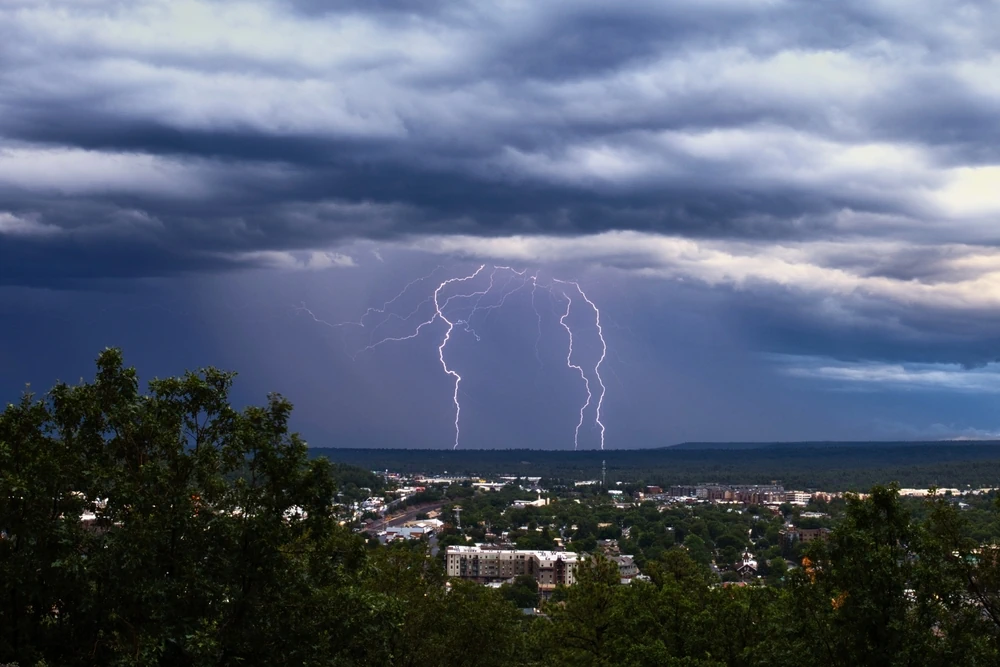
A monsoon storm is a different exam. Three things change at once:
- Volume. A hard storm can drop a huge share of the year's rain in under an hour. Valleys, gutters, and scuppers designed for steady drainage suddenly run full, and water backs up above them.
- Wind. Monsoon outflow winds drive rain at a steep angle, sometimes close to horizontal. Water gets pushed uphill, under laps, and into openings that face sideways instead of up.
- Duration of contact. When drainage backs up, water sits against seams and flashing instead of flowing past them. Standing water probes every weakness it touches.
An Arizona roof can go months without seeing a drop, then take a year's worth of weather in one July evening. It is not a fair test. It is, unfortunately, the test.
Wind-driven rain: the flashing finder
Flashing is the metal that seals the joints of your roof: where a slope meets a wall, wraps a chimney, or dies into a parapet. Good flashing handles water coming from above. But when wind drives rain sideways, water attacks those joints from angles the original installer may never have accounted for, and any flashing that has lifted, cracked its sealant, or was cut short to begin with becomes a funnel. This is why sideways-rain leaks so often show up on walls below a roof-to-wall transition rather than in the middle of a ceiling. If your leak appears on a wall during storms with strong wind from one particular direction, tell your roofer that detail. It narrows the search enormously.
Tile roofs: the tiles shed, the underlayment seals
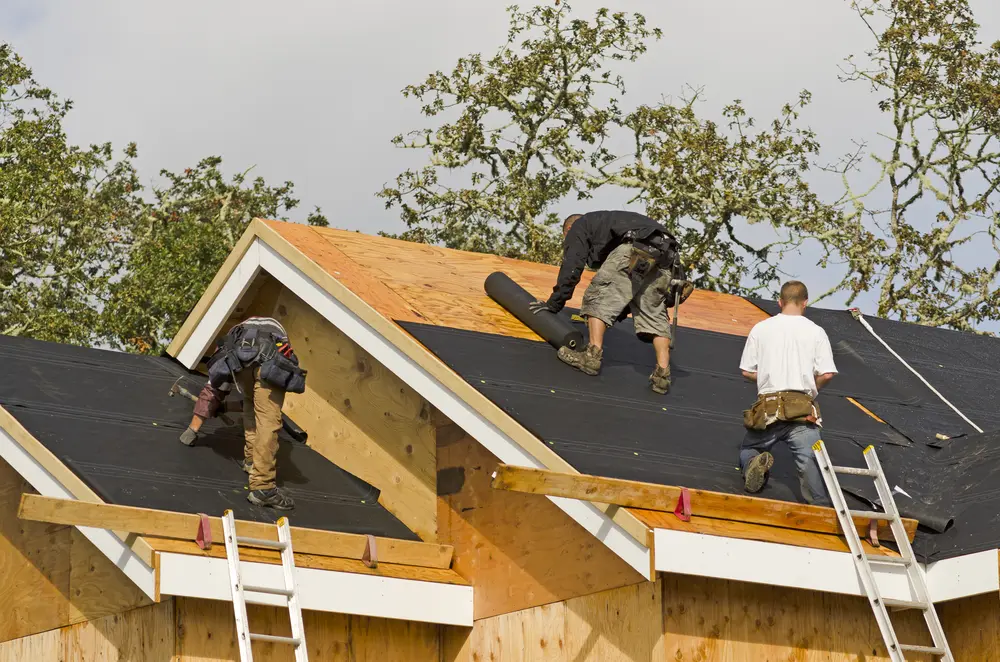
Most East Valley homes wear concrete tile, and here's the thing about tile that surprises homeowners: the tiles were never meant to be waterproof. They're armor. They shed the bulk of the water, block UV, and take the physical abuse. The actual waterproof layer is the underlayment, the felt sitting between the tiles and the wood decking.
In normal rain, the tiles shed nearly everything and the underlayment barely gets wet. In a wind-driven storm, plenty of water gets past the tiles, and that is by design; the underlayment is supposed to catch it and carry it out. When the underlayment is 15 or 20 years old and Arizona heat has baked it brittle, it can't do that job anymore. Cracks that sat harmlessly dry all year suddenly have water running over them, and the decking below gets soaked. The tiles still look perfect from the street. That's the trap. If this describes your roof, the honest fix is a re-felt and relay, lifting the tiles, replacing the underlayment, and relaying the same tiles. The details are on my tile underlayment replacement page.
Overwhelmed valleys and scuppers
Valleys are where two roof slopes drain into one channel, which means a valley carries multiples of what any single slope sheds. Fill that channel with a year of haboob dust, leaves, and debris, and a hard storm turns it into a dam. Water rises, spreads sideways under the tile or shingle edges, and enters the roof in a place that stays bone dry the rest of the year.
Flat roofs have their own version: scuppers, the drainage openings in the parapet wall. One blocked scupper in a heavy storm and the roof holds water like a very shallow, very expensive pool. Ponding water finds every crack in the coating. If you have a flat roof section, checking the scuppers before and during monsoon season is the cheapest insurance there is.
Leaked during the last storm?
Don't wait for the next one to confirm it. I'll inspect the roof myself, free, find where the storm got in, and give you a firm bid to close it up. Leaks and storm damage go to the front of the line.
Call or text Andy: 480-363-2898The forgetting cycle (and why it's expensive)
Here's the pattern that costs East Valley homeowners real money. The storm hits, water comes in, everyone panics for an evening. Then the storm passes, the drip stops, and in our climate the evidence practically erases itself; a damp spot can dry before the weekend. The leak drops off the to-do list. Six weeks later the next storm arrives and the same gap lets in more water, except now the insulation was already compromised and the decking already stained, and every cycle grows the eventual repair bill.
Every hard storm your roof leaks through is not a repeat of the same damage. It's cumulative. Wet decking rots a little further, stains spread a little wider, and a repair that started in the low hundreds climbs toward the kind of numbers in my repair pricing that nobody enjoys. Most East Valley leak repairs run $500 to $3,500, and I can tell you which end of that range you land on usually depends on how many storms the leak was allowed to see. If you're local, my Chandler roof repair page walks through how I handle storm leaks in town.
What to do about a heavy-rain leak
During the storm
Contain the water, protect what's under it, and document everything with your phone: where the water shows, how fast, which direction the wind was blowing. That evidence is gold once everything dries out. If water is coming in fast or a ceiling is bulging, treat it as urgent and use the emergency roof repair line.
After the storm
Once things settle, trace what you can: check the attic for water trails while they're fresh, and scan the roof from the ground with binoculars. My guide on how to find a roof leak walks through the whole process step by step. Then get the actual entry point diagnosed and fixed before the next storm, because during monsoon season the next storm is never far away.
What the fix usually looks like
- Resealing or replacing flashing at walls, chimneys, and penetrations
- Clearing and re-securing valleys, and replacing damaged valley metal
- Replacing cracked or slipped tiles and, where the felt has failed, re-felting the affected section
- Clearing scuppers and patching or recoating flat roof sections
Common questions
Why does my roof only leak when it rains hard?
Because the gap in your roof sits somewhere normal rain never reaches. Heavy rain adds wind that drives water sideways and volume that backs water up above drainage points, and both push water into openings that stay dry the rest of the year.
The leak stopped when the storm ended. Is it fixed?
No. It's dormant. The opening is still there, and every storm that finds it does a little more damage to the layers you can't see. Get it diagnosed while the storm evidence is fresh.
Can I just have the spot sealed?
Sometimes, if the cause really is a small flashing gap or one cracked boot. But sealing over failed underlayment or a chronically flooded valley just relocates the leak. The fix has to match the cause, which is why diagnosis comes first. Mine is free.
When is monsoon season in Arizona?
Mid-June through September. If your roof leaked in a storm last season and nothing was done, you're reading this with the exam already in progress.
If your roof passed every quiet month and failed the last loud one, let's find out why before the next storm runs the same test. Call or text me at 480-363-2898. I inspect the roof myself, the inspection is free, and you'll get photos and a straight answer.