What is a foam roof? It's an energy-efficient roofing system made from spray polyurethane foam (SPF) that forms one seamless barrier over your entire roof. In Arizona, foam is one of the most common choices for flat and low-slope roofs, and for good reason. Here's how it actually works.
Key takeaways
- Spray polyurethane foam (SPF) is applied as a liquid that expands and hardens into a seamless, insulating roof surface. It's a natural fit for the flat roofs common across the East Valley.
- Foam insulates at roughly R-6.5 per inch and has no seams or joints, which removes the most common places flat roofs leak.
- With correct installation and a recoat every 5 to 7 years, a foam roof in Arizona can last decades. The recoat schedule is not optional; skipping it is how foam roofs fail.
Understanding foam roofs: a primer
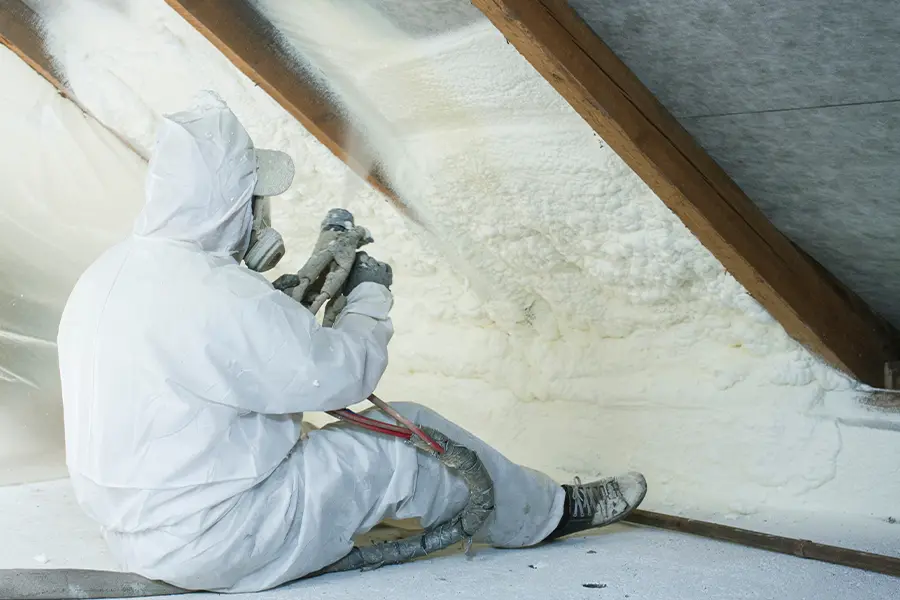
Foam roofing, or SPF roofing, is a mixture of two liquid components, polyol resin and isocyanate, sprayed onto the roof with a specialized rig. The liquids react, expand and cure into a solid, rigid, insulating membrane that bonds directly to the roof deck. SPF has been in use since the late 1970s, so this isn't an experimental material; it has a long track record, especially in hot, dry climates like ours.
Composition of SPF
The chemistry matters less to you than the result, but two numbers are worth knowing. Roofing foam needs enough density to hold up as a roof surface: roughly 2.7 to 3.0 pounds per cubic foot to be rigid enough to walk on. That's very different from the soft insulation foam sprayed inside walls, and it's one reason foam roofing is a professional-only job.
Types of foam insulation
Spray foam comes in closed-cell and open-cell versions. Roofing uses closed-cell foam, which acts as a thermal, air and moisture barrier all at once. Open-cell foam is softer, absorbs water, and belongs indoors, not on a roof. If a bid ever mentions open-cell foam for a roof surface, that's a red flag.
The advantages of choosing a foam roofing system
Foam earns its popularity in Arizona on three fronts: insulation, waterproofing and low weight.
Superior insulation value
SPF insulates at about R-6.5 per inch, which is high for a roofing material. On a Phoenix-area home, that means less heat driving through the roof deck in June and a lighter load on your air conditioner. The foam also seals air leaks as it expands, so you get insulation and an air barrier in one layer. Many homeowners notice the difference on their summer power bill.
Waterproof and seamless
Most flat-roof leaks start at seams, joints and penetrations. Foam has none of those. It's sprayed as one continuous layer that self-flashes around vents, skylights and rooftop units, conforming to whatever shape your roof throws at it. Fewer joints means fewer failure points when monsoon rain sits on a flat roof.
Installation process of spray foam roofs
Installation is a three-step process: prepare the surface, spray the foam, then protect it with coatings.
Preparing the roof surface
The existing surface gets cleaned, usually pressure washed, so the foam can bond. If the roof has been leaking and water has soaked the insulation or decking, the saturated sections have to come out first. Spraying foam over wet material traps the moisture and guarantees problems later. A primer is often applied to help adhesion.
Applying the foam layer
The foam goes on as a liquid and expands within seconds, filling small imperfections and building up to the target thickness. It cures fast, but installers typically let the base layer sit before coating. This step is entirely weather-dependent: wind, moisture and cold all affect the result, which is one more reason experience matters.
Final coatings for protection
Cured foam cannot be left bare. UV rays break it down, so it gets covered with an elastomeric coating, usually silicone or acrylic, often with granules broadcast into the top layer for extra durability and a finished look. This coating is the sacrificial layer that takes the sun's abuse, and it's the part that gets renewed every 5 to 7 years.
Wondering if foam is right for your roof?
I'll come look at it myself, tell you honestly whether foam, coating or something else makes sense, and put a real number on it. The inspection is free and there's no pressure after it.
Call or text Andy: 480-363-2898Maintenance and longevity of foam roofing systems
A properly installed and maintained foam roof in Arizona can last 30 years or more, and the foam itself rarely wears out. What wears out is the protective coating.
Lifespan and recoating schedule
Plan on recoating every 5 to 7 years, depending on the coating type and sun exposure. A recoat is far cheaper than a new roof, and each one essentially resets the clock. Foam roofs that fail early almost always failed because the coating was neglected until the sun pitted the foam underneath.
Routine maintenance tips
Inspect twice a year and after big storms. Look for cracks, blisters, exposed yellow or orange foam (a sign the coating is gone), and water stains on interior ceilings. Keep debris off the roof and drains clear. If you'd rather not get on a ladder, I do free roof inspections and foam is a big part of what I look at in the East Valley.
Common challenges and misconceptions about foam roofs
Debunking myths
The common knocks on foam mostly trace back to bad installations. Properly installed roofing foam is walkable, handles monsoon wind and rain well, and holds up to Arizona sun as long as the coating is maintained. Birds can peck at exposed foam, but on a coated roof that's a maintenance item, not a fatal flaw. Foam does have real tradeoffs, which I cover honestly in my post on foam roof disadvantages.
Addressing ponding water
Standing water is the enemy of every flat roof. One advantage of foam is that the installer can build up slope with the foam itself, directing water toward drains and scuppers. On older flat roofs with low spots, that ability to correct drainage during installation is a genuine fix, not a patch.
Foam roof repair techniques
Foam is one of the easier roof types to repair because damage tends to be localized and visible.
Small fixes with caulk and mastic
Minor cracks and punctures can be cleaned and sealed with roofing-grade mastic or sealant. Done promptly, these are quick, inexpensive repairs that keep water out of the foam.
Handling major repairs
Larger damage gets ground out down to sound foam, then new foam is sprayed in, blended level, and recoated. Because the material bonds to itself, a good repair is genuinely seamless. If you're weighing a bigger repair against starting over, my guide on repair versus replacement walks through how I make that call. For reference, most roof repairs I do run between $500 and $3,500 depending on scope.
Tailoring foam roofs to different roofing substrates
SPF can be applied over metal, built-up roofing, modified bitumen and single-ply membranes like TPO and EPDM, as long as the substrate is sound and dry. That versatility is why foam is often the practical answer for aging flat roofs: in many cases it goes over the existing roof without a full tear-off.
Selecting a qualified foam roofing contractor
Foam is unforgiving of sloppy application, so the installer matters more than the material. Look for a licensed Arizona contractor (check the ROC number, mine is #325377), real foam experience, and references from jobs that are several years old, because that's when bad foam work shows up. If you're in Chandler, Gilbert or anywhere in the East Valley and considering foam, my foam roofing page covers exactly how I approach these projects, and the estimate is free and bid-based.
Summary
Foam roofing gives Arizona flat roofs three things they badly need: real insulation against our heat, a seamless surface with no joints to leak, and drainage that can be corrected during installation. Its one demand is maintenance: keep the coating renewed and a foam roof will quietly outlast most alternatives.
Frequently asked questions
What are the disadvantages of a foam roof?
The main ones are UV sensitivity (it must stay coated), vulnerability to careless foot traffic, and the fact that installation quality varies a lot between contractors. I break these down in detail in my post on foam roof disadvantages.
Is a foam roof better than shingles?
They mostly serve different roofs. Shingles need slope; foam is built for the flat and low-slope roofs common in Arizona. On a flat roof, foam's insulation and seamless waterproofing beat almost anything else.
How does a foam roof work?
Two liquid components are mixed at the spray gun and applied to the roof, where they expand and cure into a rigid, seamless foam layer. A protective elastomeric coating then shields the foam from the sun.
Are foam roofs expensive?
Foam costs more upfront than a basic coating job but is competitive with other full flat-roof systems, and the energy savings offset part of the cost over time. Every roof is different, which is why I price by bid after actually looking at the roof.
How long do foam roofs last in Arizona?
Decades, if the coating is renewed on schedule. See my full post on foam roof life expectancy for the honest numbers.