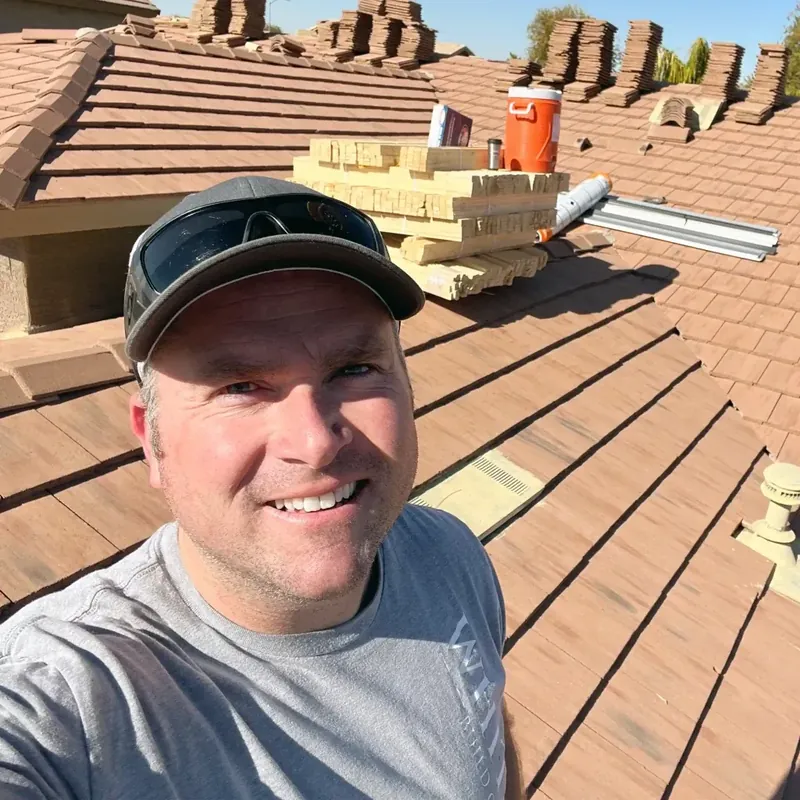
I install foam roofs, and I'll still tell you straight: foam isn't right for every roof or every homeowner. It has real drawbacks alongside its real strengths. Here are the cons, without the sales gloss, so you can decide with your eyes open.
Key takeaways
- Foam costs more upfront than patch-and-coat approaches, and installation is strictly a professional job. There is no DIY path here.
- Foam must stay protected from the sun. That means a recoat every 5 to 7 years, forever. Skip it and the roof fails early.
- Installer quality varies wildly, and foam punishes bad application more than almost any other roofing system. The contractor decision is the biggest one you'll make.
High initial cost
The most obvious drawback is the upfront price. A full SPF system costs meaningfully more than restoring an existing flat roof with coating alone, and the total depends on roof size, foam thickness, the condition of what's underneath and the coating system on top. The honest counterweight: foam's insulation trims cooling bills and a recoat renews the roof for a fraction of replacement cost, so the math over 20 or 30 years often favors foam. But you do have to write the bigger check first, which is why I price these by bid after actually seeing the roof, and why financing exists for the homeowners who want it.
Professional installation requirement
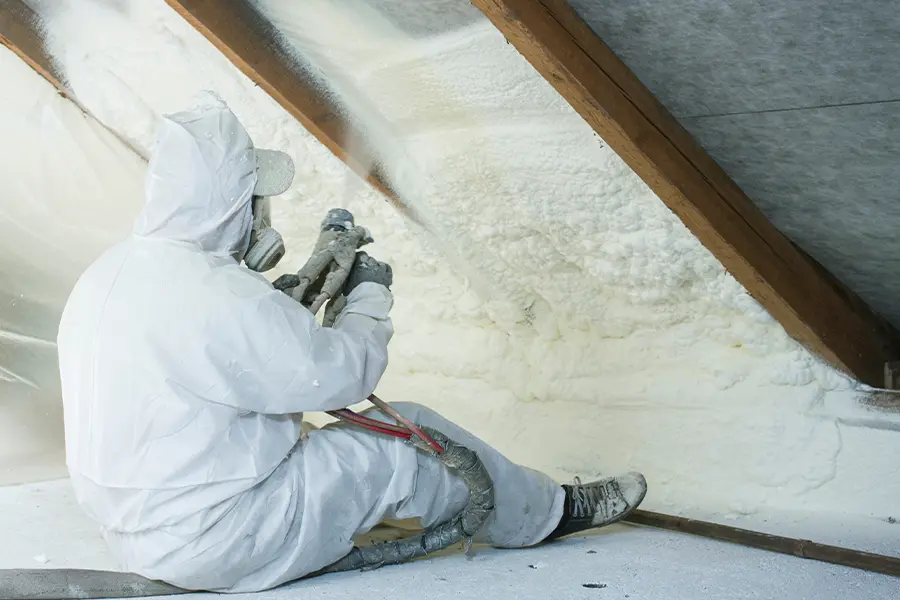
Foam roofing goes on as a chemical reaction happening in real time. Thickness, temperature, mix ratio and technique all have to be right, and there's no sanding out a mistake afterward. That rules out DIY completely and it also rules out the general handyman. An inexperienced crew can leave you with foam that blisters, sheds coating or traps moisture, and fixing bad foam costs more than doing it right once.
Sensitivity to weather conditions
Foam can't be sprayed onto a wet surface or in cold temperatures, and wind complicates everything. In Arizona this is a scheduling nuisance more than a serious obstacle (we have no shortage of warm, dry days), but monsoon season can push a project around, and a contractor who sprays anyway to stay on schedule is creating your future leak.
Potential for overspray
Foam is applied as an airborne spray, and wind can carry particles onto cars, landscaping and neighboring property. Careful crews check wind conditions, shield the work area and cover anything nearby. It's a manageable risk, but in a tight East Valley subdivision it's a real one, and it's another reason experience matters more with foam than with most systems.
UV light degradation
Bare foam and Arizona sun do not get along. UV breaks down exposed polyurethane surprisingly fast, which is why every foam roof wears an elastomeric coating as its sunscreen. The foam itself can last decades; the coating cannot. If the coating is neglected until foam shows through yellow or orange, the sun starts eating the roof itself.
Weighing foam against other options?
I'll look at your roof for free and tell you honestly whether foam, coating, or something else entirely is the right call for your house. No pressure either way.
Call or text Andy: 480-363-2898Regular maintenance needs
Foam is not a spray-and-forget roof. Plan on looking it over every six months, keeping drains clear, sealing small cracks promptly, and recoating every 5 to 7 years. None of this is difficult or expensive compared to replacing a failed roof, but it's a commitment, and homeowners who won't keep up with it are better served by a different system. A free professional inspection twice a year covers the checking part without you climbing a ladder.
Health and safety concerns during installation
Spraying foam releases fumes that require proper ventilation, protective gear and trained handling. This is the installer's problem to manage, not yours, but it's worth knowing: plan to be out of the house during application and curing, pets included, and expect a legitimate crew to show up with real safety equipment.
Impact resistance issues
Foam is walkable but softer than membrane systems like TPO or built-up roofing. Hail, dropped tools and careless foot traffic can dent or puncture it. In the East Valley, hail is occasional rather than constant, and a granule-embedded coating adds a lot of toughness, but if your roof doubles as a patio or gets regular HVAC service traffic, walk pads are worth discussing up front.
Limited installer availability
Foam requires specialized rigs and specialized skill, so qualified foam contractors are scarcer than shingle and tile crews. That can mean longer waits, and it also means less competition to keep everyone honest. Vet carefully: verify the Arizona ROC license, ask how many foam roofs the crew has actually sprayed, and ask for references several years old. My guide on choosing a roofing company applies doubly to foam.
Moisture sensitivity
If foam is applied over a damp substrate, or if damage lets water in and it goes unrepaired, moisture gets trapped and causes blisters and adhesion failure. Cured closed-cell foam itself resists water well; the vulnerability is at installation time and at neglected damage. Both trace back to the same two themes: a careful installer and timely repairs.
Aesthetic limitations
Foam looks like what it is: a uniform, utilitarian surface. On the flat roofs where foam belongs, almost nobody can see it anyway, so this rarely matters in practice. But if your roof is visible from a second story or a hillside and appearance matters to you, tile offers curb appeal that foam simply doesn't.
Summary
Foam's disadvantages are real: higher upfront cost, a permanent maintenance commitment, sun sensitivity managed only by recoating, and an installer market where quality varies a lot. For most Arizona flat roofs, the advantages still win, which is why foam is everywhere here. But the right way to decide isn't a blog post, mine included. It's someone qualified actually looking at your roof and telling you the truth about it. That inspection is free when I do it, and if foam is the wrong answer for your house I'll say so.
Frequently asked questions
Is foam roofing expensive?
It costs more upfront than coating an existing roof, less over decades than repeatedly replacing cheaper systems. Exact numbers depend entirely on your roof, which is why I bid every job individually after a free inspection.
Why is professional installation necessary for foam roofing?
Because the material is created on your roof in real time. Mix, temperature and technique determine whether you get a 30-year roof or an expensive problem, and there's no correcting it after it cures.
How sensitive is foam to weather during installation?
Very. The surface must be dry, temperatures warm enough, and wind manageable. In Arizona that mostly means scheduling around monsoon storms rather than any long seasonal limitation.
What are the maintenance requirements for foam roofs?
Twice-yearly inspections, prompt sealing of small cracks, and recoating every 5 to 7 years. My DIY roof inspection tips cover what to look for between professional checks.
How does UV light affect foam roofing?
Direct sun degrades exposed foam quickly, so the elastomeric coating does all the UV protection. Keep the coating maintained and UV stops being a problem; neglect it and UV becomes the roof's main failure mode.