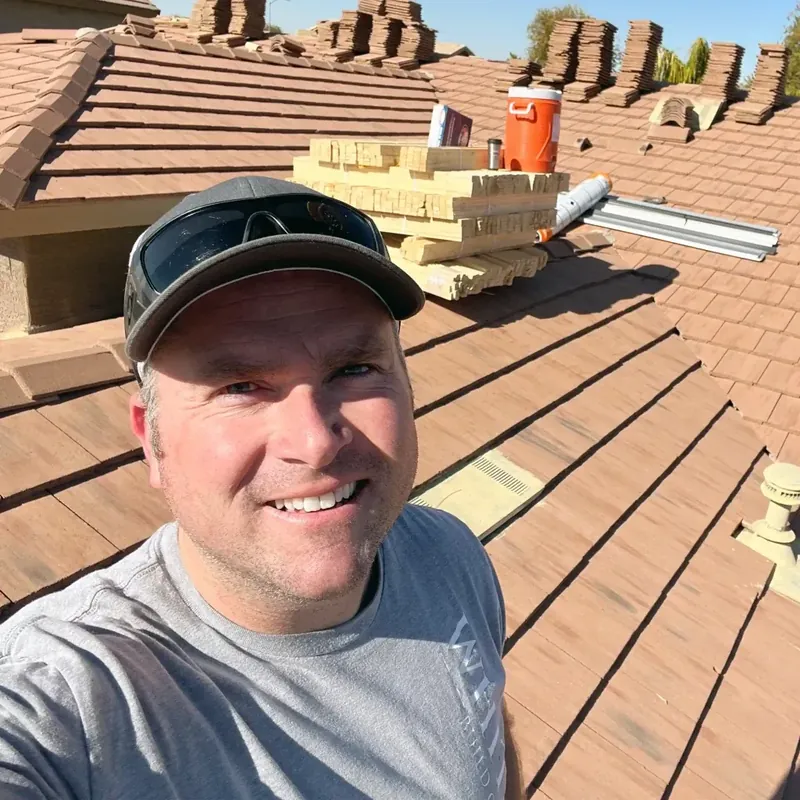
Every roof in Arizona is an answer to the same question people have been asking here for a thousand years: how do you stay comfortable under this sun? From indigenous dwellings of mud and thatch to Spanish clay tile to today's foam and tile systems, Arizona's roofing history is a long run of practical problem-solving. Knowing that history actually helps you understand why East Valley roofs look the way they do, and why some materials keep winning.
Key takeaways
- Arizona roofing evolved from mud, clay, and thatch to tile, asphalt, and foam, driven mostly by one force: the desert climate.
- Spanish colonial architecture gave Arizona its signature clay tile look, and clay's heat resistance is why the style stuck for centuries.
- Material choice still follows the same logic today: whatever survives extreme heat, UV, and monsoons earns its place on Arizona homes.
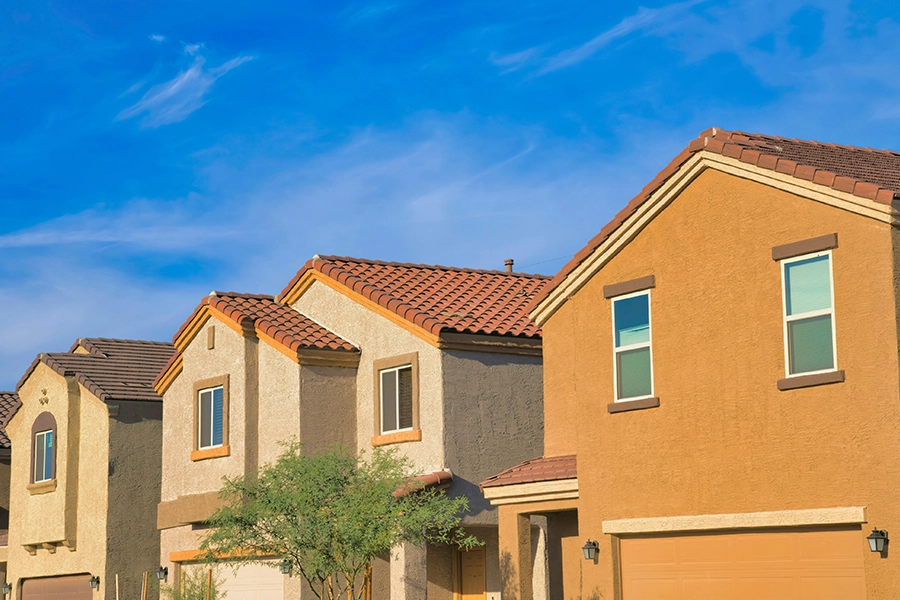
Arizona's roofing journey: from clay to modern materials
The earliest roofs in Arizona were built from what the desert offered: dried grass, branches, and leaves over timber, then mud and clay packed into thick, insulating layers. Those adobe-style roofs worked on the same principle we still use, thermal mass and reflectivity against the sun.
As settlement grew, materials diversified: slate, terracotta clay, copper, and tin all showed up on Arizona territory buildings. The big shift came in the early 20th century when asphalt shingles, introduced in the United States in 1901, made mass-produced roofing affordable, and wood shingles faded out of use.
The significance of clay tiles
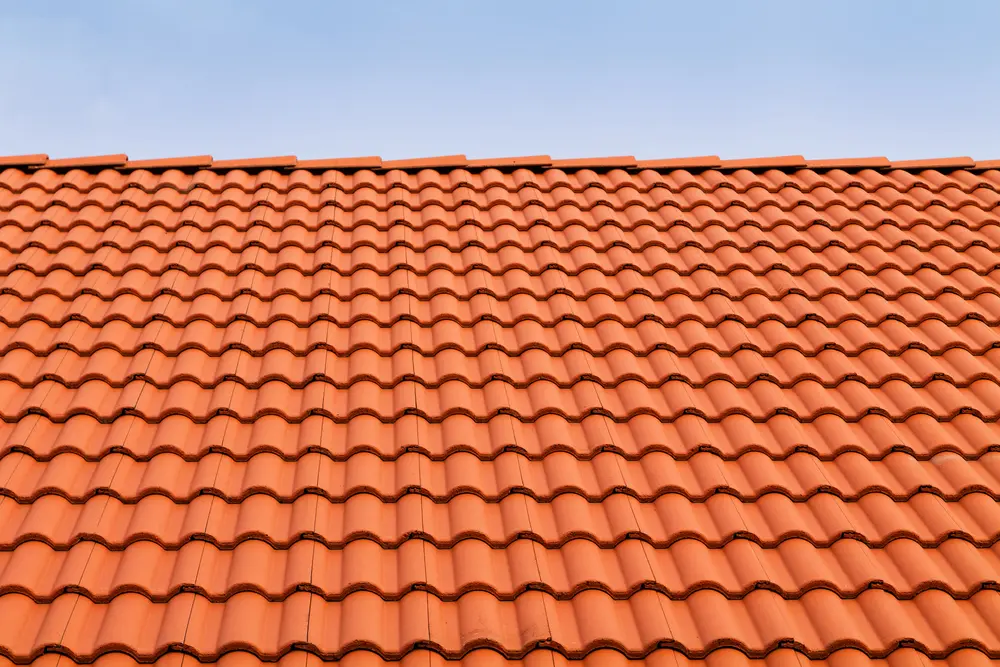
Clay tile roofing traces back to ancient China and Mesopotamia, and it arrived here through Spanish colonial building. It stuck because it fits the place: clay resists rot, fire, and insects, shrugs off extreme heat, and Arizona has never lacked for clay. The tiles' thermal mass keeps homes cooler, and their look became the visual signature of Southwestern architecture. Most "clay look" roofs in modern Chandler and Gilbert are actually concrete tile, the more affordable descendant, but the lineage is direct.
Wood shingles and thatched roofs
Cedar and redwood shingles had their era here, laid in overlapping rows and sometimes steamed and bent to mimic thatch. A handful of Spanish Colonial and Mission style homes built in the late 1920s still show jerkinhead roofs imitating that look. But wood never made long-term sense in a place this dry and fire-prone, and it quietly disappeared from Arizona rooflines.
Modern materials and techniques
Tin roofing had a run from the 1860s to the 1920s (Arizona's first tin roof reportedly went on a retail store). Today the East Valley palette is settled: concrete and clay tile on pitched roofs, sprayed polyurethane foam on flat roofs, and asphalt shingles as the budget option. Ranch, Pueblo Revival, midcentury modern, and Spanish Mission architecture each pushed the materials that suited them.
The Spanish influence on Arizona roofing
You can still visit the origins: Mission San Xavier del Bac near Tucson and the Tumacácori mission ruins date to the late 1600s and early 1700s. Red clay tile became the defining feature of Spanish Colonial and Mission homes, and the S-shaped "barrel" tile profile they used is still molded into concrete tiles going onto new East Valley roofs this year.
Barrel tiles: a style that never left
Barrel tiles (also called Spanish barrels or double roman tiles) earn their staying power. The curved profile creates air channels that help with heat, the material lasts, and some barrel tile roofs have protected buildings for over a century. When people picture an Arizona roof, this is usually what they're picturing.
Own a tile roof with some history of its own?
Older tile roofs usually need new underlayment, not new tiles. I'll inspect yours for free, personally, and tell you what's actually going on under there.
Call or text Andy: 480-363-2898The role of roofing contractors in Arizona's growth
Early Arizona roofers were artisans working mud, clay, and thatch by hand. As the industry grew it organized: the Arizona Roofing Contractors Association (ARCA) formed in 1969 to bring standards and shared knowledge to the trade. The state's population boom did the rest; by early 2024 Arizona had over 1,700 licensed roofing contractors, and modern crews now routinely integrate solar into their work.
The licensing system that grew out of that era is your best protection as a homeowner today. Every legitimate Arizona roofer carries an ROC number you can verify in seconds; mine is ROC #325377, check it here.
Climate: the force that shaped it all
Every chapter of this story is really about the climate. Arizona sun makes asphalt shingles brittle and loose, cracks and shifts tile, and fades everything. Monsoons pond water on flat roofs, drive rain under coverings, and overwhelm neglected drainage. The materials that survived history, clay, concrete tile, and foam, are the ones that handle heat, UV, and storm cycles best. That's not nostalgia; it's natural selection. My guide to common Arizona roofing problems covers what the climate does to modern roofs in detail.
Maintenance: the lesson history keeps teaching
Adobe roofs needed re-mudding. Clay tile needs underlayment renewal. Foam needs recoating. No Arizona roof, in any century, has ever been maintenance-free. A yearly inspection and prompt attention to small problems is what separates roofs that reach their potential lifespan from roofs that fail early. If yours hasn't been looked at in a few years, a free inspection is the easy place to start.
Common questions
Why are the roofs flat in Arizona?
Flat roofs are common here because they handle heat efficiently and cost less to build, a tradition that runs straight back to adobe construction.
Why do houses in Arizona have tile roofs?
Durability and fit. Tile resists heat, fire, and insects, lasts decades, and matches the Southwestern architecture the region inherited from Spanish colonial building.
What are the main tile types on Arizona roofs?
Concrete tile, clay tile, and sandcast tile. Concrete dominates modern East Valley neighborhoods; clay and sandcast show up on older and higher-end homes.