Are solar panel roofs a good investment in Chandler? With roughly 300 sunny days a year, the East Valley is about as good as it gets for rooftop solar. I'm a roofer, not a solar salesman, so this guide covers the whole picture, including the part solar companies tend to skip: whether your roof is actually ready to hold panels for the next 25 years.
Key takeaways
- Arizona's sunshine, 7 to 8 peak sun hours daily much of the year, makes solar genuinely productive here, not just fashionable.
- Federal and state tax incentives take a real bite out of the cost, and Arizona exempts solar systems from property and sales taxes.
- The roof under the panels is the make-or-break detail. Panels last 25+ years; if your roof won't, fix that first or pay to remove and reinstall everything later.
Solar panel roofs in Arizona: an overview
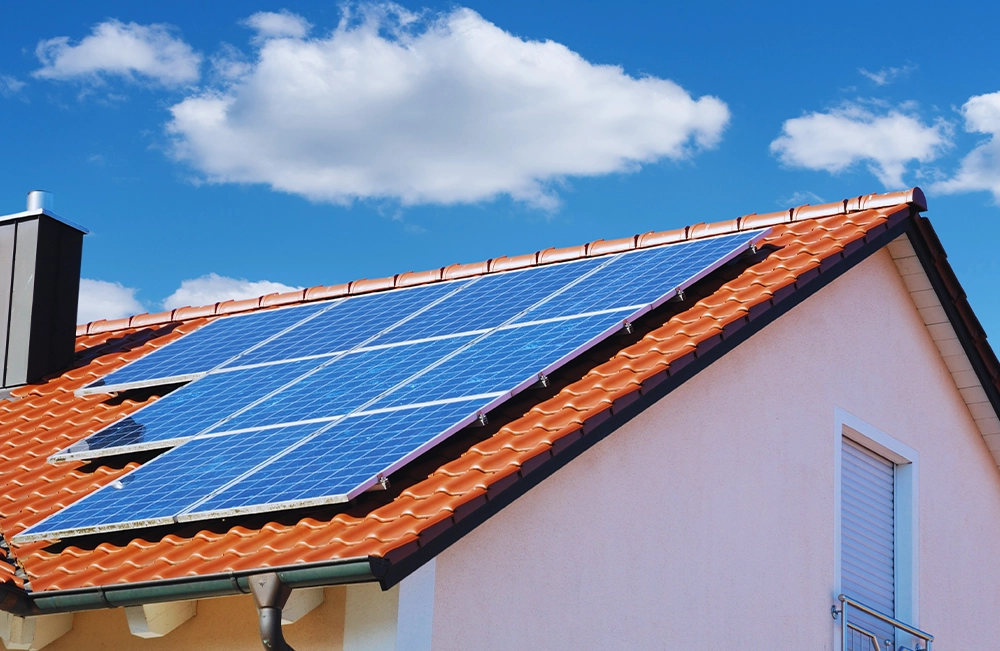
Arizona ranks among the top states in the nation for solar power generation, and it's not hard to see why: the resource literally shines on us most days of the year. Rooftop installations have spread steadily across Chandler and the East Valley, driven by real utility savings rather than novelty. For homeowners, the question has shifted from "does solar work here" (it does) to "does it pencil out for my house and my roof."
How much solar energy can you generate?
The Valley averages about 7 to 8 hours of peak sunlight daily, which is elite production territory. Your actual output depends on your specific roof: orientation (south-facing planes produce most), slope (roughly 15 to 40 degrees is ideal), shading from trees and neighboring structures, and available unbroken roof area. The free PVWatts calculator from the National Renewable Energy Laboratory gives a solid production estimate for your exact address before any salesperson visits.
One factor the online calculators can't judge: the roof's condition. Panels bolt through your roofing into the structure, and everything about the mounting assumes a sound roof underneath.
Cost of installing solar panels on your roof
Solar pricing in Arizona has fallen substantially over the years and typically runs below the national average per watt, with total system cost depending on system size, equipment and installer. Incentives do real work on the number: the federal residential clean energy credit covers a substantial percentage of system cost, Arizona adds a state income tax credit for residential solar, and the state exempts solar equipment from both property tax assessment and sales tax. Since incentive amounts and rules change, confirm current figures with your tax professional and installer before signing anything.
Between incentives and financing options, most Chandler homeowners find the payback period lands around a decade, with the system producing for well over two.
Financial benefits of solar panel roofs
The core math is monthly: many solar owners pay less on their loan payment than they previously paid APS or SRP, which means the system is cash-flow positive from early on. Add the tax incentives, protection against future rate increases, and the value a paid-off system adds at resale, and the investment case is solid for most well-oriented Chandler roofs. A sound roof with solar also tends to show well to buyers, as I cover in my post on roofs and home value in Arizona.
Environmental impact of solar panel roofs
Every kilowatt-hour your roof generates is one that doesn't come from fossil fuel, which means less air pollution and, notably for the desert, far less water consumption than conventional power generation. In a drought-prone state, rooftop solar is one of the more meaningful environmental choices a homeowner can make, and it pairs naturally with an energy-efficient roof underneath.
Thinking about solar? Get the roof checked first.
Before you sign a 25-year solar commitment, let me inspect the roof it's going to sit on. Free, honest, and it can save you the miserable cost of pulling panels off a failing roof in year five.
Call or text Andy: 480-363-2898Is your roof ready for solar?
Here's the part I see go wrong: panels get installed on a roof with ten years left, and in year ten the whole array has to come off (at real cost per panel) so the roof can be redone, then go back on. In Chandler that scenario has a local twist, because tile underlayment ages invisibly under great-looking tiles. Before any install, get the roof professionally assessed, and if it's within striking distance of needing work, do the roof first. My full breakdown of that decision is in should I get a new roof before installing solar panels, and the process itself is covered in replacing a roof with solar panels.
Customizing your solar panel system
A good solar design starts from your actual usage: 12 months of utility bills, your roof's geometry and sun exposure, and your budget. Be wary of one-size-fits-all proposals; the right system for your neighbor's west-facing shingle roof isn't the right system for your south-facing tile one. Insist the design account for roof attachment details specific to your roofing material, because tile penetrations done wrong are future leaks.
Choosing the right solar company
Vet solar installers like you'd vet a roofer: years in business (five or more is a good bar), proper licensing and insurance, reviews going back years, and warranty terms in writing, including who covers roof penetrations if they leak. That last question is the one to ask twice, because it lives exactly on the line between the solar company's responsibility and your roofer's. A quality installer answers it precisely; a bad one waves it off.
Permitting and installation process
In Chandler, roof-mounted residential solar is processed as a minor residential electrical permit with online submittal, and straightforward applications move quickly. Your installer should handle the paperwork, including the site-specific roof plans the city wants. If your project pairs solar with roof work, the roofing side has its own permit requirements, which a licensed roofer manages as part of the job.
Maintenance and longevity of solar panels
Solar is low-maintenance in our climate: occasional cleaning when dust and pollen build up (our dust storms accelerate this), keeping the array clear of shade and debris, and watching your production numbers for unexplained drops. What deserves equal attention is the roof around the panels: an annual look at the mounts, flashings and surrounding tiles catches small issues before they become leaks under an array that's expensive to move. I check panel-adjacent roofing as part of any free roof inspection.
Net metering and energy credits in Arizona
Arizona utilities run a net billing program: excess power your roof exports earns bill credits, but at a rate below the full retail price you pay for power you import. That asymmetry matters for system sizing; the economics favor covering your own usage over building a rooftop power plant. Your installer should model this honestly with current utility rates rather than quoting old full-retail net metering math.
Summary
For most Chandler homes with decent sun exposure, solar is a sound investment: elite production, meaningful incentives, and real monthly savings. The asterisk is the roof underneath. Get it inspected before you commit, do any needed roof work first, and the panels get to live out their full 25-year life without an expensive mid-course interruption. The roof half of that equation is exactly what I do, and the inspection is free.
Frequently asked questions
How much does it cost to install solar panels in Arizona?
It depends on system size and equipment, though Arizona pricing typically runs below the national average and incentives reduce the net cost substantially. Get multiple quotes and have your tax professional confirm current credit amounts.
How much solar energy can I generate in Chandler?
With 7 to 8 peak sun hours daily much of the year, a well-oriented Chandler roof is among the most productive residential solar sites in the country. PVWatts gives you a free estimate for your exact address.
Should I replace my roof before going solar?
If the roof (or on tile roofs, the underlayment) has less life left than the panels, yes, and it's much cheaper done in that order. My post on roof-before-solar decisions walks through it.
What maintenance do solar panels need?
Occasional cleaning, especially after dust storms, keeping shade and debris off the array, and monitoring output. Add an annual check of the roof penetrations and surrounding roofing.
How does net metering work in Arizona?
Excess energy exported to the grid earns bill credits at a rate below retail. It still improves the economics, but size the system around your own consumption first.