Wondering whether your roof is due? It's one of the most common questions I get, usually asked with a little dread attached. The good news: roofs telegraph their condition if you know what to look for, and in Arizona the signs follow predictable patterns. Here's how to read them, and how to know for certain.
Key takeaways
- Age is the first clue: shingles last 15 to 25 years here, tile underlayment 20 to 25, while the tiles themselves go much longer.
- Most damage is repairable. Replacement enters the conversation when problems are widespread, structural, or the roof has simply aged out.
- The only certain answer comes from an inspection, and mine are free, so you never have to guess.
Age of the roof
Start with the calendar. Every roofing material has a service life, and Arizona's sun shortens the brochure numbers. In the East Valley, asphalt shingles realistically give you 15 to 25 years depending on quality and exposure. Foam renews itself with recoating. And tile is the special case that confuses everyone.
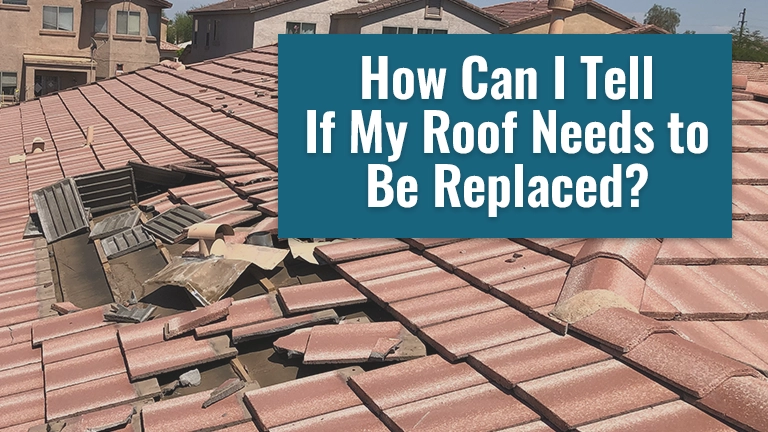
Tile roofs here have two clocks running: the tiles last 50 years or more, but the underlayment beneath them, the actual waterproof layer, lasts 20 to 25. When it fails, the roof leaks even though the tiles look showroom-perfect from the street. The fix is usually underlayment replacement: your tiles come off, new underlayment goes down, your same tiles go back on. It's the most common "roof replacement" in Chandler and Gilbert, and it costs far less than people fear when they hear the word replacement.
If you don't know your roof's age, your home's build date or the last permit on file gives you a solid estimate.
Roof damage
Damage and age are different problems. A monsoon can crack tiles on a five-year-old roof, and that's a repair, not a replacement. Missing shingles, a few broken tiles, failed flashing and localized leaks are all fixable, typically in the $500 to $3,500 range depending on scope.
Replacement enters the conversation when damage is widespread rather than localized: shingles failing across multiple planes, chronic leaks in different spots, water damage reaching the decking, or storm damage extensive enough that repair costs approach replacement value. The honest framework for that decision is in my repair or replace guide, and it's the exact framework I use when I bid.
Indoor signs of roof issues
Your ceilings often report roof problems before the roof shows them. Watch for:
- Water stains on ceilings or walls, the classic sign water is getting past the roof. On tile roofs this usually means underlayment failure.
- Damp or moldy patches, or a musty smell in rooms or the attic after rain.
- Sagging or drooping ceiling sections, which mean water has been accumulating; that one's urgent.
- Daylight through the attic roof deck, or wet insulation up there after a storm.
A stain doesn't automatically mean replacement; it means investigate now, because leaks compound their damage every storm they're left alone.
Seeing one of these signs at your house?
Don't guess for another season. I'll inspect your roof for free, personally, and tell you plainly: repair, replace, or leave it alone. Photos included, pressure not.
Call or text Andy: 480-363-2898Outdoor signs of roof issues
From the ground, with binoculars if you have them, look for:
- Missing, cracked or curling shingles, or shingle granules collecting in gutters. Widespread granule loss means the shingles' sun protection is going, and in this climate that's the beginning of the end.
- Slipped, cracked or broken tiles, especially in patterns rather than one-offs.
- Rotting or stained wood at the eaves and fascia, a sign water has been escaping the roof edge for a while.
- A wavy or sagging roofline, which points to decking or structural problems underneath.
- After storms: debris impact damage and anything that looks freshly different. My storm damage guide covers the post-monsoon checklist.
Professional inspection
Everything above narrows the question; an inspection answers it. A proper inspection covers the roof surface, the flashing and penetrations, the attic, and, on tile roofs, the underlayment condition that ground-level looking can't assess. That last one is the judgment call that matters most in the East Valley.
If you're in Chandler, Gilbert, Sun Lakes or Gold Canyon, my inspections are free and I do them myself, not a salesman on commission. You get photos of what I find and a straight answer, including "your roof is fine" when it is. That's how I'd want it done at my own house, so it's how I do it at yours.
Cost of roof replacement
If replacement turns out to be the answer, the cost depends on your roof's size, pitch, material and what the tear-off reveals, which is why I only quote from an actual roof visit, never from the street or a satellite photo. My Arizona roof replacement cost guide breaks down honestly what drives the number, and financing options exist for spreading it out. Remember too that on tile roofs, "replacement" often means the far more affordable underlayment job rather than an entirely new roof.
Conclusion
Check the age, watch for the indoor and outdoor signs, and treat anything you find as a prompt to investigate rather than panic. Most roof problems I see are repairs; the ones that become replacements usually got there by being ignored for years. If your roof is raising questions, get the free answer: call or text me at 480-363-2898 or request a free estimate online, and I'll tell you exactly where your roof stands.
Frequently asked questions
How often should a roof be replaced in Arizona?
Shingle roofs typically every 15 to 25 years; tile roofs need underlayment replacement around 20 to 25 years while the tiles keep serving; well-maintained foam runs decades longer. Condition beats calendar, so inspect rather than assume.
Can I just repair instead of replacing?
Often, yes. Localized damage on a roof with life left in it is a repair. Widespread failure or an aged-out roof makes repairs throwaway money. My repair or replace guide walks through the decision honestly.
My tile roof looks perfect. Could it still need work?
Yes, and this is the most common East Valley surprise. The underlayment beneath the tiles fails on its own schedule regardless of how the tiles look. Past year 18 or so, its condition is worth a professional check.
How do I know for sure whether my roof needs replacing?
A professional inspection. Mine are free, done personally, and come with photos and a plain-English verdict, whichever direction it points.