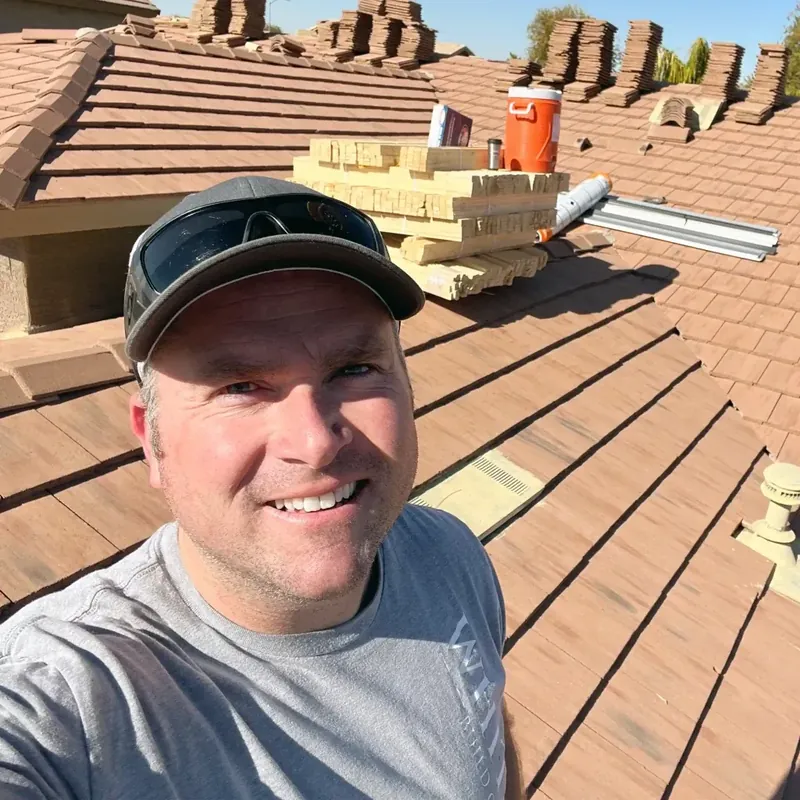
Monsoon season runs mid-June through September in the East Valley, which means if you're reading this in July, the season isn't coming. It's here. The good news: most of the roof damage I repair every August was preventable, and the window to prevent it hasn't closed. Storms come in waves with quiet stretches between them, and a roof squared away this week is ready for whatever the radar shows next week. Here's what I check on a walk-around before and during the season, what you can safely check yourself, and why the free inspection now beats the emergency call later.
Key takeaways
- Monsoon storms don't usually break healthy roofs. They find the weak points that were already there: slipped tiles, tired flashing, clogged valleys and scuppers.
- You can check a lot from the ground with binoculars. Tile lines, debris, overhanging branches, and stains on fascia all tell the story.
- Haboobs matter twice: the wind works on loose material going through, and the dust it leaves behind clogs the drainage that the rain behind it needs.
- A free pre-storm inspection catches problems while they're small and schedulable. An August emergency is the same problem, plus water, plus a wait.
What monsoon storms actually do to a roof
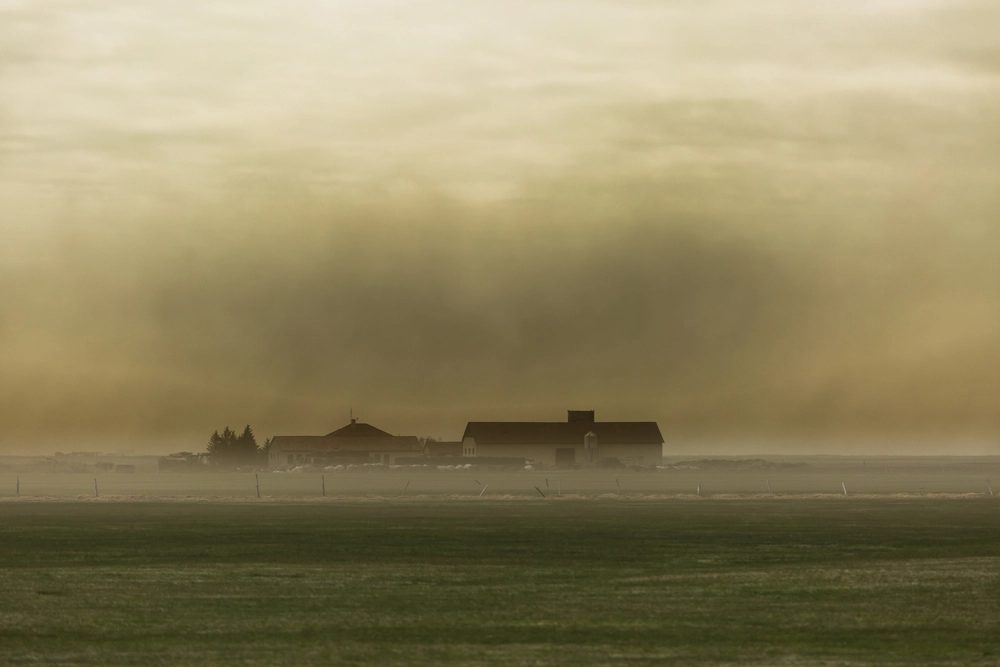
The monsoon brings three kinds of trouble, usually in the same evening. First the wind: storm outflow hits hard and gusty, lifting whatever isn't fastened tight, working loose tiles looser, and peeling at shingle edges. Then the dust: a haboob loads the roof with fine dirt that settles into valleys, gutters, and scuppers. Then the rain: heavy, wind-driven, and arriving right after the dust just blocked the drainage it needs. Each piece on its own is manageable. Stacked in sequence, they're a system for finding every weakness on your roof in one night. I cover the rain half of this in detail in why roofs only leak in heavy rain, and the dust half in dust storm roof damage.
What I look for on a walk-around inspection
When I do a pre-monsoon walk-around, I'm not looking for one big problem. I'm looking for the five or six small ones that a storm will turn into big ones.
Loose and slipped tiles
A tile that has slipped an inch out of line exposes the underlayment below it to sun and concentrated water flow, and it's the first thing a wind gust grabs. Slipped tiles are usually a fast, cheap fix in June and a wet-decking repair by September.
Aged flashing and sealant
Flashing at walls, chimneys, and pipe penetrations relies on sealant, and Arizona sun destroys sealant on a schedule. I check every joint for lifting metal and cracked, chalky caulk, because wind-driven rain attacks exactly these spots from exactly the angles they're weakest.
Debris in valleys and scuppers
Valleys carry the drainage of two slopes; scuppers drain entire flat roof sections. Last season's dust and leaf litter sitting in either one is a dam waiting for water. Clearing them is the single highest-value piece of monsoon prep there is.
Trees over the roof
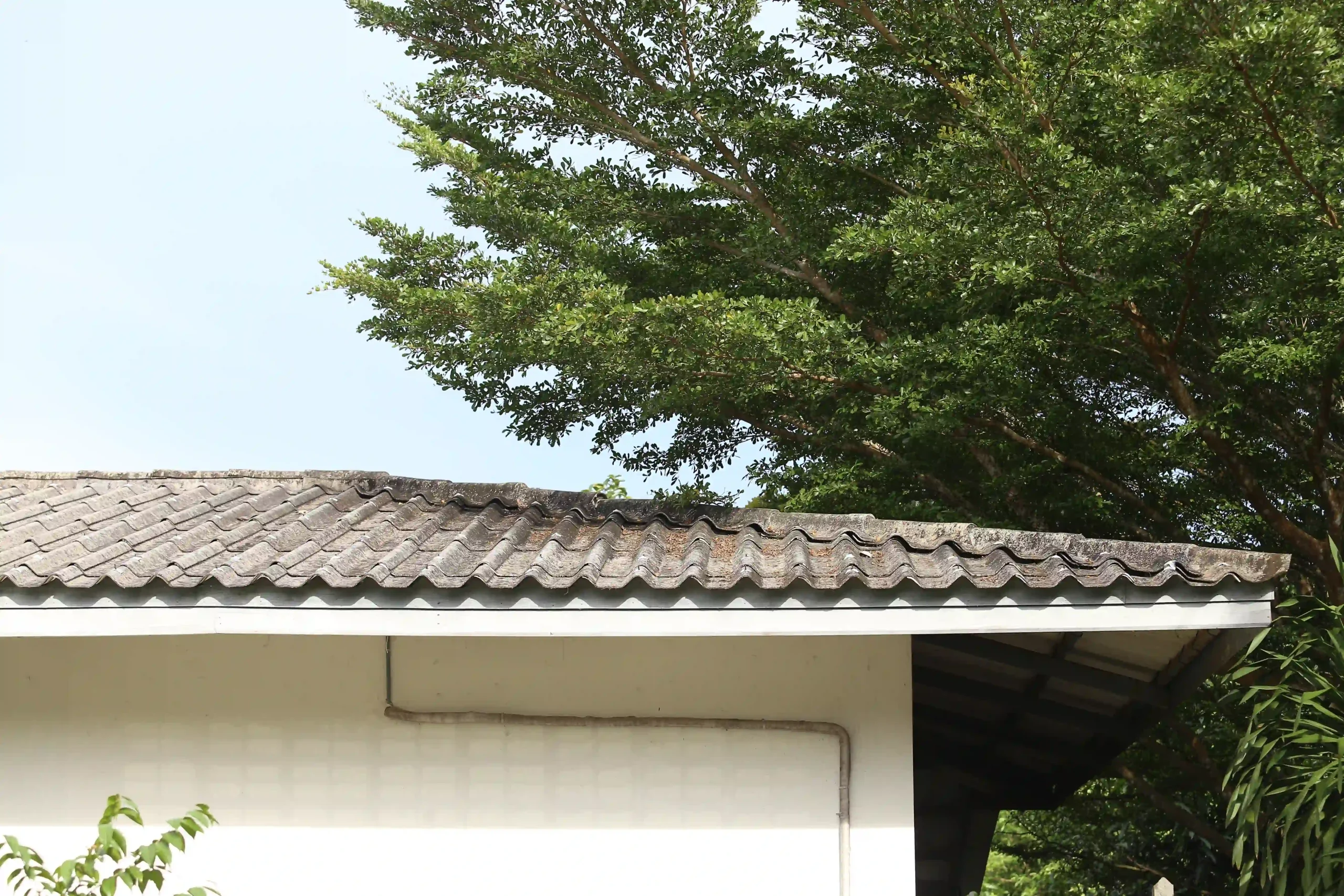
Trees are wonderful until they're on your roof. Any branch overhanging the roofline is a battering ram in a fifty-mile-per-hour gust, and even the ones that don't break scrub back and forth across tiles and shingles all storm long. Trim everything back from the roofline before the storms, not after.
Previous patchwork
Old repairs are where I slow down. A patch done right disappears into the roof. A patch done with a tube of mystery sealant on a hot Tuesday is a future leak with a date on it, and storm season is usually the date. If your roof has changed hands or seen handyman repairs, those spots deserve a professional look before the rain tests them for you.
What you can safely check from the ground
No ladder required for any of this, and I'd rather you never get on the roof at all. Take ten minutes with binoculars:
- Scan the tile or shingle lines. Anything crooked, cracked, slipped, or missing breaks the pattern and is easy to spot from the yard.
- Look at the valleys. Visible debris lines mean blocked drainage.
- Check the eaves and fascia. Stains, peeling paint, or rotted-looking wood at the roof edge mean water has already been going where it shouldn't.
- Walk the yard after any windy day. Tile fragments or shingle pieces on the ground are your roof filing a report.
- Look up at your trees. If a branch touches or overhangs the roof, put the trimmer's number next to mine.
- Check inside. Scan ceilings and closet corners for faint stains, and if you have attic access, a flashlight sweep for water trails after the first storm tells you a lot.
What I don't want you doing: climbing on tile, leaning a ladder against a gutter, or clearing a valley by hand on a pitched roof. Tile breaks under foot traffic, and the emergency room costs more than I do.
Storms on the radar? Get ahead of them.
I do the walk-around myself, free. You get photos of anything I find and a firm bid if something needs fixing. If it's all good news, you get that instead, and I don't fix things that aren't broken.
Call or text Andy: 480-363-2898Why the free inspection beats the August emergency
Same roof, same weak spot, two very different experiences. Found in a pre-storm walk-around, a slipped tile or a tired piece of flashing is a small, scheduled repair done on a dry roof at your convenience. Found by a storm, it's water in the insulation, a stained ceiling, a tarp, and a repair that now includes everything the water touched. Most East Valley repairs run $500 to $3,500, and prevention is how you stay at the left end of that range.
There's also the calendar problem. After a big storm rolls through the East Valley, every roofer's phone lights up at once, and scheduling stretches exactly when you can least afford the wait. I put leaks and storm damage at the front of the line, but the smarter play is not needing the line at all. The free inspection is the whole pitch: I look, you know, and nothing about it costs you anything.
Already mid-season? Prep between the waves
The monsoon doesn't schedule appointments, but it does take breaks. Storm activity comes in bursts with dry stretches between, and those stretches are working windows. A roof inspected and buttoned up in mid-July is protected for the bigger storms that tend to show up later in the season. And if a storm has already gotten to you, check storm roof damage on Arizona homes for what to look for, or go straight to emergency roof repair if water is coming in now.
After each storm: the two-minute check
Prep isn't one-and-done during the season. After each significant storm, do a quick loop: walk the yard for tile and shingle debris, glance at the roof lines with binoculars, check ceilings inside, and note anything new. Catching a storm's damage before the next storm compounds it is most of the battle.
Common questions
When is monsoon season in Arizona?
Mid-June through September. The biggest storm activity often arrives in July and August, which is why a July inspection is still well worth doing.
Can a haboob alone damage my roof?
Yes, two ways. The wind at the leading edge lifts loose tiles and shingle edges, and the dust load settles into valleys, gutters, and scuppers where it blocks drainage for the rain that usually follows. Details in my dust storm roof damage guide.
Is it too late to prepare my roof if storms have already started?
No. Every storm your roof faces prepared instead of unprepared is damage avoided. The season runs into September, and the repair done this week is protecting you for months of storms still ahead.
What does monsoon roof prep cost?
The inspection costs nothing; I do it myself. If something needs fixing, you'll get a firm bid before any work happens, and most repairs land between $500 and $3,500 depending on what the roof needs.
The storms are coming whether the roof is ready or not, so let's make it ready. Call or text me at 480-363-2898 and I'll do the walk-around myself, free, usually within days. Ten minutes of your time now is worth a lot more than a bucket brigade in August.