Looking to fix a small roof leak without a full repair bill? A roof patch can be a legitimate stopgap, and in Arizona's climate it can buy you real time if it's done right. The key word is stopgap. Here's when a patch works, what materials survive our heat, and when patching is the wrong move entirely.
Key takeaways
- Patches are temporary fixes for minor, localized damage. They buy time; they don't replace a proper repair.
- Arizona heat kills cheap patch materials fast. Whatever you use has to survive 160-degree roof surfaces and sudden monsoon downpours.
- Finding the actual leak is often harder than patching it. Water travels, so the stain on your ceiling is rarely under the hole in your roof.
What is a roof patch?
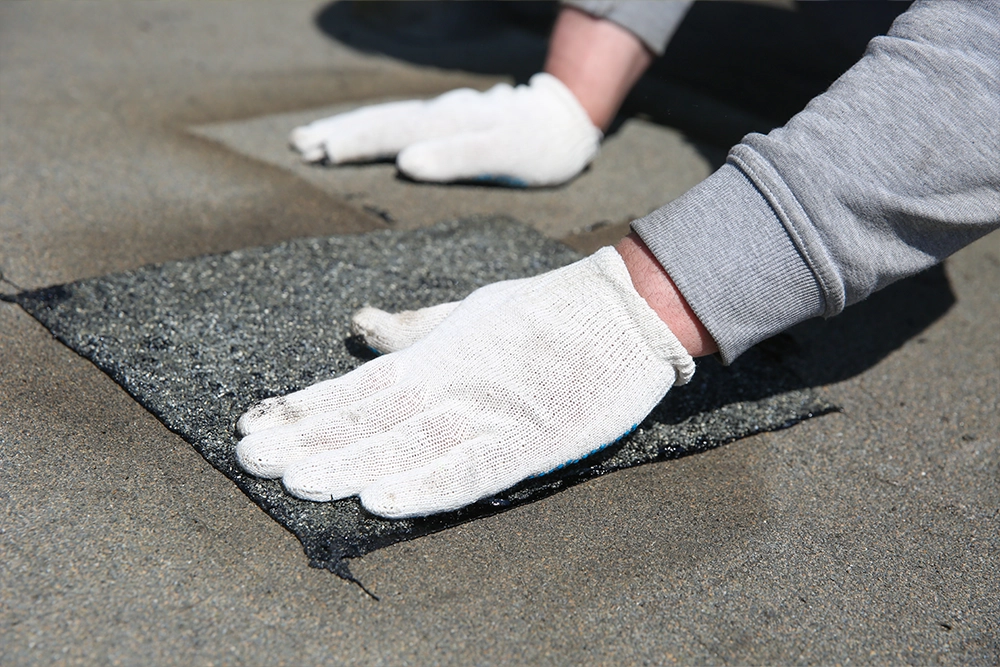
A roof patch is a repair for a small, localized area of damage, using tar, sealants or repair tapes to close a leak or seal minor damage until a proper repair happens. It's the right tool when the damage is genuinely small and contained, and the wrong tool when it's masking a bigger problem like failed underlayment or widespread storm damage.
Done well, a patch prevents further water damage and gives you breathing room. What it never does is fix the underlying reason the roof failed in the first place, which is why the question behind every patch is really repair or replace.
Identifying roof leaks
Before you can patch anything, you have to find the actual entry point, and water is sneaky about that. It runs along rafters and decking and shows up on your ceiling several feet from where it got in. A garden hose run over sections of the roof while someone watches the attic can isolate a stubborn one.
Inspecting the attic
Start in the attic with a flashlight, ideally during or right after rain. Look for wet insulation, water-stained or darkened wood, drips on rafters and any musty smell. Pay special attention around vents, chimneys and other penetrations, since those are the usual suspects. Mold or moisture up there is often the first warning, long before the ceiling shows anything.
Examining shingles and flashing
Outside, look for cracked, curled or missing shingles and get them replaced promptly. Then check the flashing around vents, chimneys and skylights for corrosion, lifted edges, cracks and failed sealant. In my experience, flashing failures cause more East Valley leaks than the roofing material itself.
Essential materials for roof patching in Arizona
Arizona is hard on patch products. The surface of your roof can pass 160 degrees in summer, then take a monsoon downpour an hour later. Buy the good stuff:
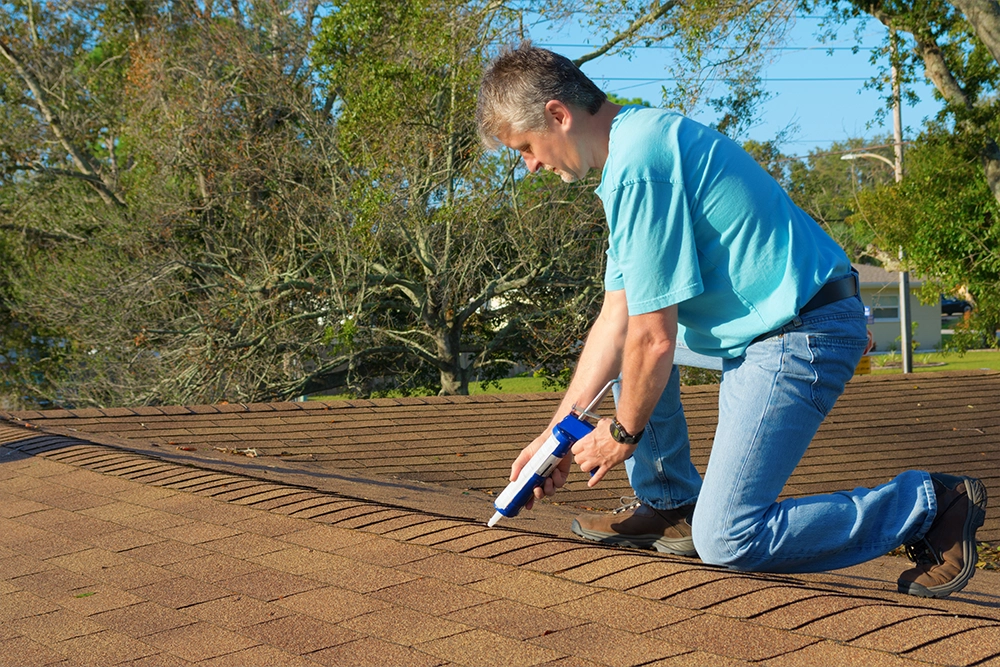
- Roofing-grade mastic and wet-patch sealants for asphalt surfaces; the wet-patch formulas can even go on during an active leak.
- Polyurethane and silicone sealants for seams and flashing; silicone handles UV far better than cheap caulk.
- Butyl and roofing repair tapes for small punctures on flat roofs and for sealing joints and overlaps.
- Tile adhesive for re-securing loose clay or concrete tiles.
Match the product to the roof type, and skip anything not rated for high-temperature exposure. Bargain-bin sealant in this climate is a patch on your patch by next summer.
How to apply a roof patch, step by step
Preparing the surface
Clean the damaged area completely and let it dry. Dirt, dust and moisture are the main reasons patches peel and leaks come back. Remove any loose or failed material before anything new goes on.
Applying the patch
Work the sealant or mastic into the damage generously, filling gaps fully rather than skimming the surface. On shingle repairs, asphalt cement seals small cracks well, and replacement shingles get nailed and sealed. Follow the manufacturer's directions on thickness and coverage; more is usually better than less.
Ensuring proper sealing
Edges are where patches fail. Once the first application cures, inspect the perimeter and add a second pass of sealant over the edges and any exposed nail heads. Give everything its full curing time before the next storm tests it.
Not sure if a patch will hold?
Send me a photo or have me come look. I'll tell you honestly whether a patch buys you time or wastes your money. The inspection is free and I do it personally.
Call or text Andy: 480-363-2898Temporary vs. permanent solutions
A patch is the right answer when the damage is small, localized and recent, and you need to stop water now. It's the wrong answer when leaks keep coming back, when the roof is near the end of its life, or when the damage is structural. Repeatedly patching a failing roof is the most expensive way to own one: you pay for the patches, then you pay for the interior damage, then you pay for the roof anyway. When you're at that fork, my repair or replace guide walks through the honest math.
Common issues with roof patches
The failures I see most: edges not sealed (water finds the gap), surface not cleaned (patch peels), curing time not respected (bond fails), and flashing problems patched over instead of fixed. A patch over bad flashing is a bandage over a broken bone. If any of those apply, the patch will leak again, usually mid-monsoon.
When to call a professional
Call a pro for anything on tile or slate, anything involving structural damage, anything you can't safely reach, and any leak that's come back after a previous patch. A professional assessment establishes whether patching, a proper roof repair or replacement makes sense. For reference, most repairs I do run between $500 and $3,500 depending on scope, and I'll tell you up front which category your problem falls into. If water is actively coming in, that's emergency repair territory; don't wait on it.
Preventative measures to avoid future leaks
- Replace missing or damaged shingles and cracked tiles promptly.
- Keep flashing around chimneys, vents and skylights sealed and intact.
- Clear gutters and downspouts so water leaves the roof instead of backing up onto it.
- Maintain proper roof ventilation to reduce heat stress on materials.
- Get an annual inspection before monsoon season. My full Arizona maintenance guide covers the routine.
Summary
Roof patches work in Arizona when they're the right size solution for the right size problem: small, localized damage, quality high-temp materials, clean surface, sealed edges. They fail when they're asked to substitute for a real repair. Patch to buy time, then use that time to fix the roof properly. And if you're not sure which situation you're in, that's exactly what a free inspection settles.
Frequently asked questions
What is a roof patch?
A temporary repair for small, localized roof damage using tar, sealants or repair tapes. It stops water intrusion until a permanent repair can be made.
How can I identify roof leaks?
Check the attic for moisture, stains and mold with a flashlight, inspect shingles and flashing outside, and use a garden hose to simulate rain if the leak is hard to trace. Remember water travels; the ceiling stain is rarely directly under the entry point.
What materials do I need for roof patching?
Roofing-grade mastic or wet-patch sealant, polyurethane or silicone sealant for seams, butyl repair tape for flat surfaces, and tile adhesive for loose tiles. Buy products rated for high heat; Arizona destroys the cheap ones.
How long will a roof patch last in Arizona?
A quality patch on a sound roof can hold for a few years. A patch on a roof with failing underlayment or chronic problems might not survive one monsoon season. The roof underneath matters more than the patch.
When should I call a professional roofer?
For tile or slate roofs, structural damage, recurring leaks, or anything you can't reach safely. A free professional inspection tells you whether a patch is even the right conversation.