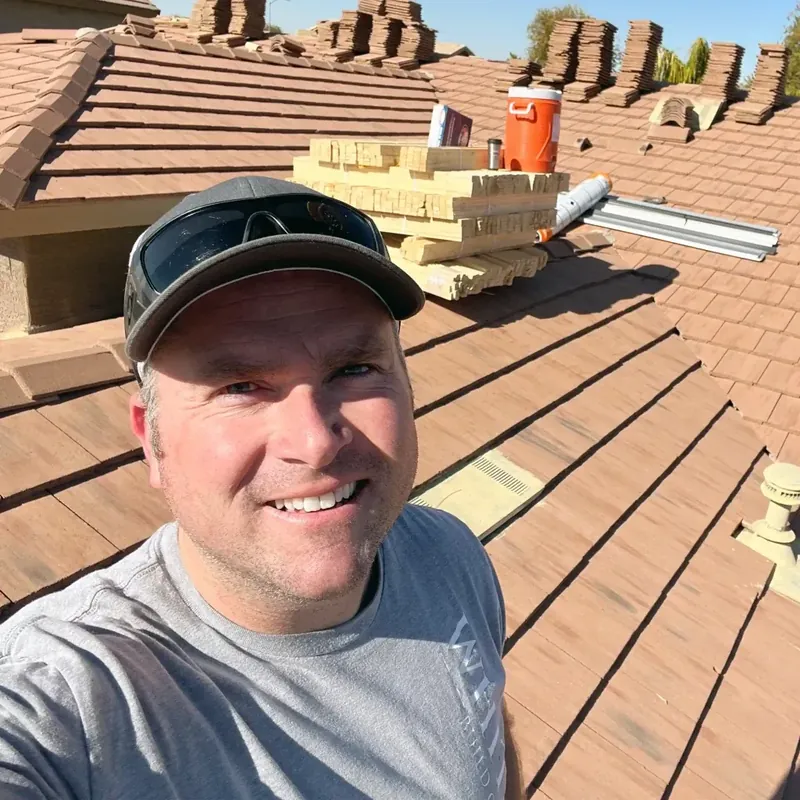
A denial letter after a monsoon tore up your roof is a gut punch. You paid premiums for years, the storm was real, and now a letter says the damage isn't covered. Take a breath before you accept that as the final word, because a first denial often isn't. I'm Andy Johnson, an East Valley roofer, not a lawyer or an adjuster, so nothing here is legal advice and nobody can promise you an outcome. What I can give you is what I've learned working alongside homeowners and adjusters on roof insurance claims: why denials happen, what the letter actually means, and the steps that give a legitimate claim its best second look.
Key takeaways
- Most denials come down to one dispute: whether the damage is sudden storm damage or long-term wear and tear. The evidence, not the argument, settles it.
- A denial is a position, not a verdict. Re-inspections, supplemental documentation, and written appeals exist precisely because first decisions get revised.
- A detailed, dated inspection report from a licensed roofer is the strongest tool a homeowner has in that process, and honest documentation cuts both ways.
Why roof claims get denied
Wear and tear vs storm damage
This is the big one. Homeowners policies are built to cover sudden events, like monsoon wind or hail, and to exclude gradual deterioration. On an Arizona roof those two things sit side by side: a storm rips tiles off a roof whose underlayment was already brittle from fifteen summers of heat. The insurer sees the old felt and writes "wear and tear." The homeowner sees the missing tiles and sees a storm. Both are looking at the same roof. Which story the file tells depends almost entirely on how well the storm damage was documented, and how clearly it's separated from the aging.
Late filing
Policies require prompt notice, and waiting months after a storm hands the insurer an easy argument: if the damage were storm-related, why the delay? In monsoon country the delay is usually innocent, because the leak doesn't show up until the next storm finds the opening. Innocent doesn't help the file, though. Filing promptly does.
Missing documentation
Claims are decided on paper. No dated photos, no inspection report, no record of which storm did the damage, and the adjuster has little to weigh against the "wear and tear" default. Thin files get denied.
Pre-existing damage and exclusions
If the roof had unrepaired damage from before the storm, or the policy carries specific exclusions or a separate roof deductible, the denial may rest on policy language rather than the roof itself. That's why the first step below is reading the letter and the policy carefully instead of arguing from memory.
What a denial letter actually means
The letter is required to state the reason for the denial and the policy language behind it. Read it closely, because the reason dictates your next move. "Damage is consistent with wear and tear" is an evidence dispute, and evidence disputes can be reopened with better evidence. "Repair estimate falls below your deductible" isn't really a denial at all, just math. A denial letter is the insurer's position based on the file they had that day. It is not a court ruling, and every carrier has a process for disputing it. The letter, or your policy, will describe that process.
The path after a denial, step by step
1. Reread the letter and your policy
Identify the exact reason for denial and pull your policy's sections on roof coverage, exclusions, and dispute procedures. Note your deadlines. Policies set time limits on appeals and supplements, and those limits are enforced.
2. Get an independent roof inspection
Before you argue, know what's actually on your roof. A licensed roofer's inspection report, with dated photos, notes on the damage pattern, and a clear separation of storm damage from age, gives you something the first file may have lacked: specific, documented evidence. That report is the backbone of everything that follows.
3. Request a re-inspection
If the adjuster's findings don't match your roofer's, you can ask the carrier for a second inspection. Have your roofer present for it. When I attend adjuster visits, my job is to point at specific damage, hand over the photos, and answer questions on the spot, so the second file is more complete than the first one was.
4. Supplement and appeal in writing
Submit the new documentation with a written request that the decision be reviewed, referencing the claim number and the specific findings you're disputing. Keep copies of everything and a log of every call, date, and name. Paper wins these disputes far more often than phone calls do.
5. Consider a public adjuster for large disputes
A public adjuster works for you, not the carrier, and negotiates the claim on your behalf for a percentage of the settlement. On a small repair dispute, that percentage rarely makes sense. On a large, clearly documented loss where the carrier won't move, it can. Verify licensing and references before hiring one, the same way you'd verify a roofer.
6. Know the state resources exist
Arizona has a state department that regulates insurers and takes consumer complaints. If you believe your claim was handled unfairly and the carrier's own process is exhausted, that avenue and advice from an attorney are the next doors. That's beyond what a roofer should be advising you on, which is exactly my point: know the doors exist, and get the right professional when you reach them.
Denied and not sure the roof got a fair look?
Call or text me. I'll inspect the roof myself, free, and document exactly what's up there, whether it helps the claim or not. If the denial was right, I'll tell you that too, along with what the repair actually costs.
Call or text Andy: 480-363-2898How a roofer's report supports an appeal
Adjusters see a lot of inflated claims, so a credible report stands out. What makes it credible is specificity: dated photos tied to roof locations, the damage pattern described in trade terms, wind direction and the storm date noted, and the aging on the roof acknowledged rather than hidden. When a report says "these broken tiles and displaced ridge caps are consistent with the July wind event, and separately, the underlayment shows normal age for this roof," an adjuster can work with that. It reads like documentation instead of advocacy. That's the kind of report I write, and it's why honest documentation is more useful in an appeal than an exaggerated one, not just more comfortable. My insurance claims page covers how I work with homeowners and adjusters through the whole process.
Arizona notes: monsoons, haboobs, and prompt filing
Our storm calendar shapes these claims. Monsoon season runs mid June through the end of September, and the damage comes as wind-driven rain, downbursts, haboob dust storms, and the occasional hail cell. The monsoon doesn't schedule appointments, but you can still build habits around it. Photograph your roof from the ground before the season starts, so you have a dated "before." After any significant storm, look for broken tiles, displaced ridge caps, and debris, and photograph what you find the same week. If damage shows up, file promptly rather than waiting for the ceiling stain. My post on storm damage to Arizona roofs covers what monsoon damage actually looks like from the ground.
When the denial is right
Some denials are correct. If your underlayment is at the end of its life, no appeal changes that, and stretching a wear-and-tear roof into a storm claim is the game storm chasers play, usually leaving the homeowner holding the mess. If I inspect your roof and the damage is age, I'll say so plainly, and then we talk about the actual fix and the actual numbers. Typical roof repairs run $500 to $3,500 depending on scope, and knowing that number sometimes makes the whole insurance fight moot. The goal isn't winning a claim. It's a roof that keeps water out, paid for the sensible way.
Common questions
Can I reopen a denied roof claim?
Generally yes, carriers have processes for re-inspection and appeal, and new documentation is what reopens a file. Your policy and the denial letter spell out the specific procedure and deadlines, so start there.
How long do I have to appeal?
It varies by policy and carrier, and the deadlines are real. Read your denial letter and policy for the stated time limits, and move sooner rather than later.
Should I hire a public adjuster or a lawyer?
For most disputes, a re-inspection with a solid contractor report is the first and cheapest move. Public adjusters make sense on large contested losses. A lawyer is for when you believe the claim was handled in bad faith, which is a legal judgment I'm not qualified to make for you.
Will White Leaf inspect the roof even if it doesn't help my claim?
Yes. I document what's actually there, no more, no less. That's precisely what makes the documentation useful when the damage is real. Book a free roof inspection and you'll get the same honest report either way.